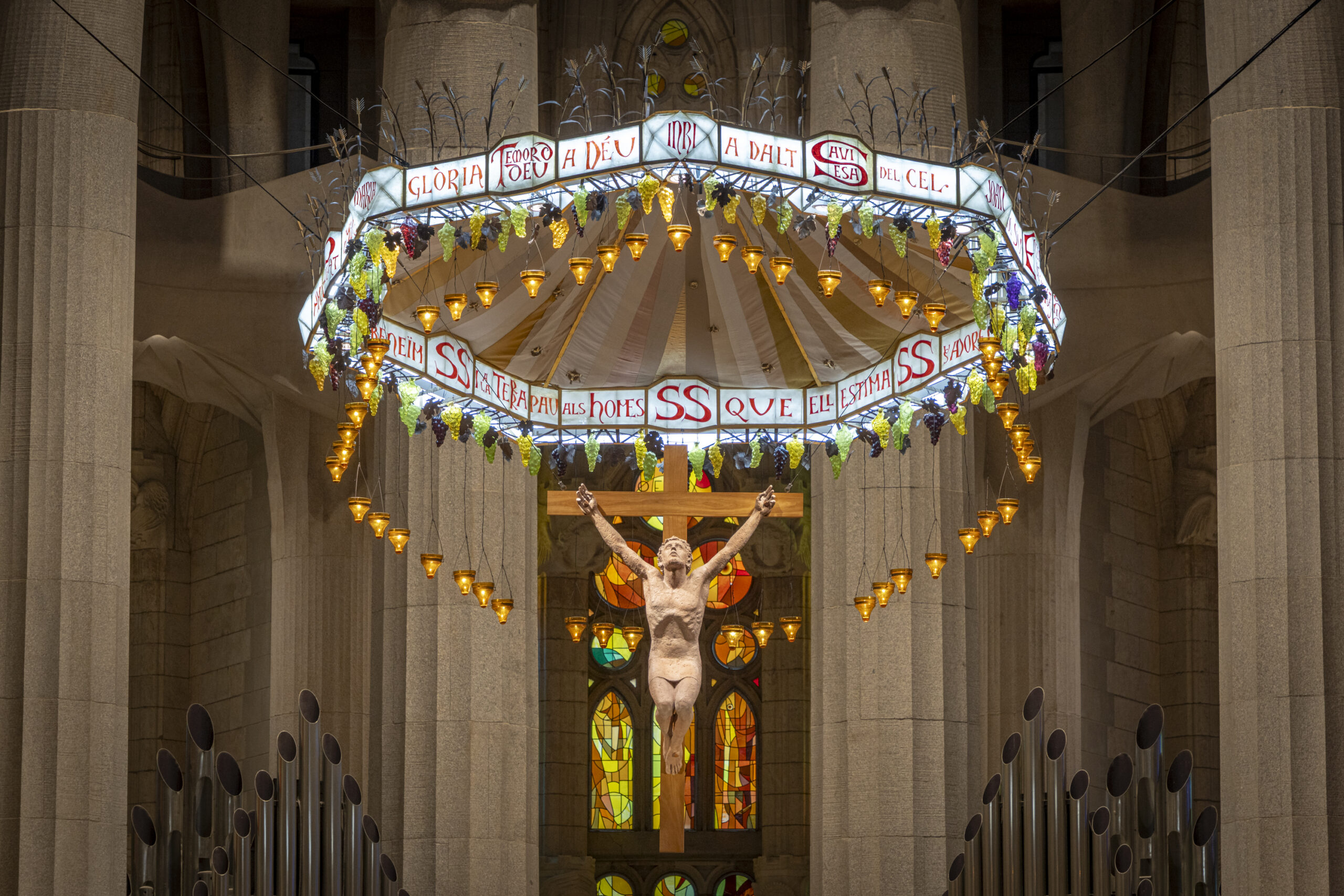
The baldachin on the main altar at the Sagrada Família was inaugurated in 2010 for the consecration of the Basilica. Now that another Holy Father has visited the Temple, Pope Leo XIV, it has recently been restored. This process included a general cleaning, resewing the parchment and updating the electrical installations and LED lighting. This post explains its history and meaning.
Baldachin: canopy or dais once placed over kings’ thrones, which the Christian Church adopted to ennoble and honour the altar. The word comes from the city of Baldac, an old name for Baghdad, which was the source of valuable silks often used to make the baldachins.
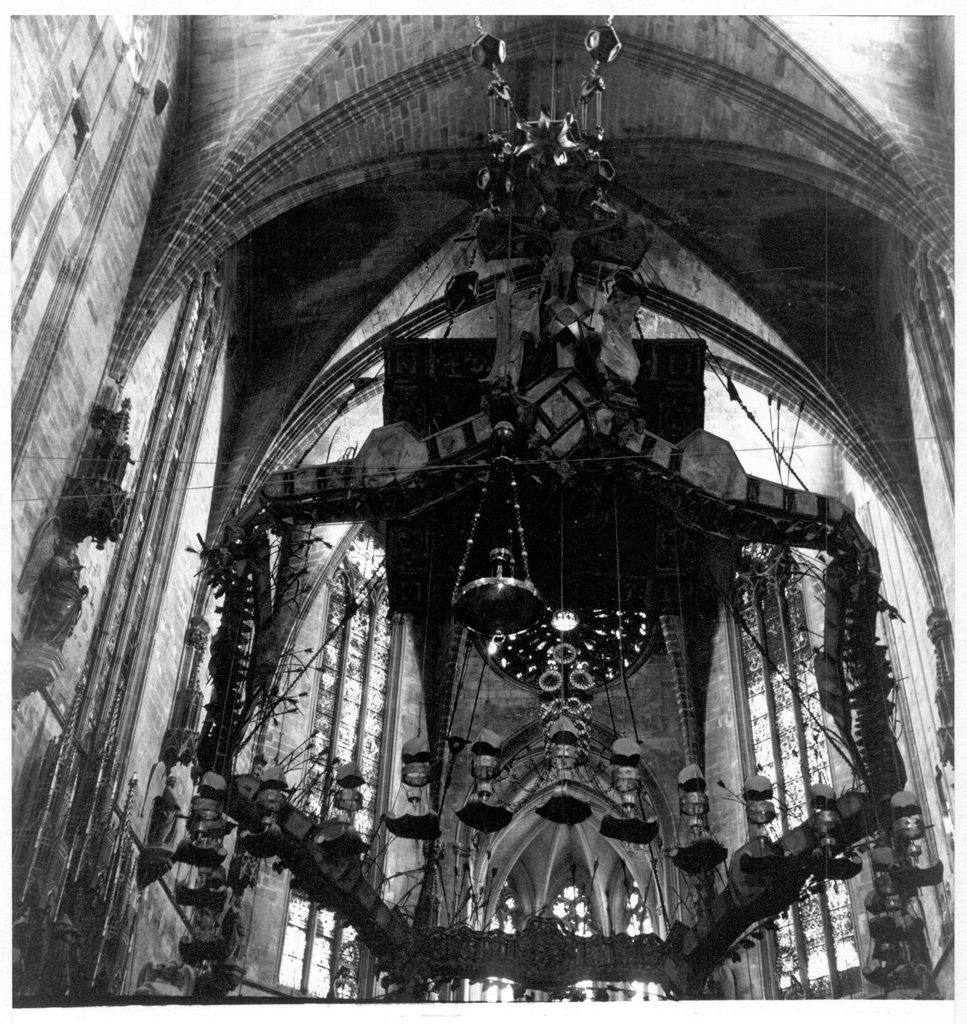
Per fer el baldaquí, Jordi Bonet, arquitecte director de la Sagrada Família des del 1985 fins al 2012, i el seu equip van agafar de referència el que Antoni Gaudí havia projectat durant la reforma de la catedral de Mallorca entre els anys 1903 i 1914. Com passa amb altres obres seves, l’estructura definitiva no es va arribar a construir i només se’n va executar un model provisional, que és el que hi ha actualment. Tot i això, l’expressió dels elements simbòlics que havia de contenir ja havia quedat completament definida.
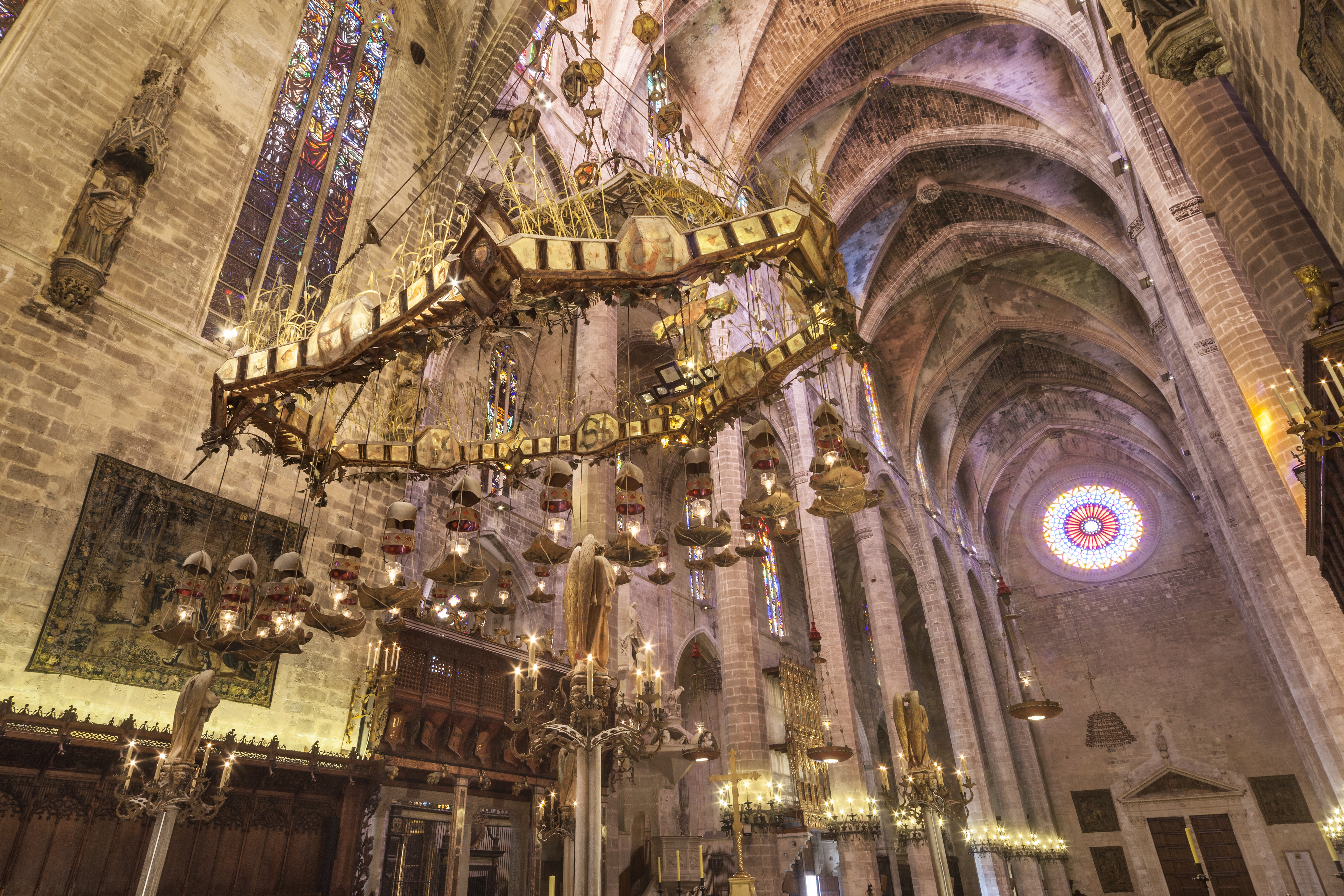
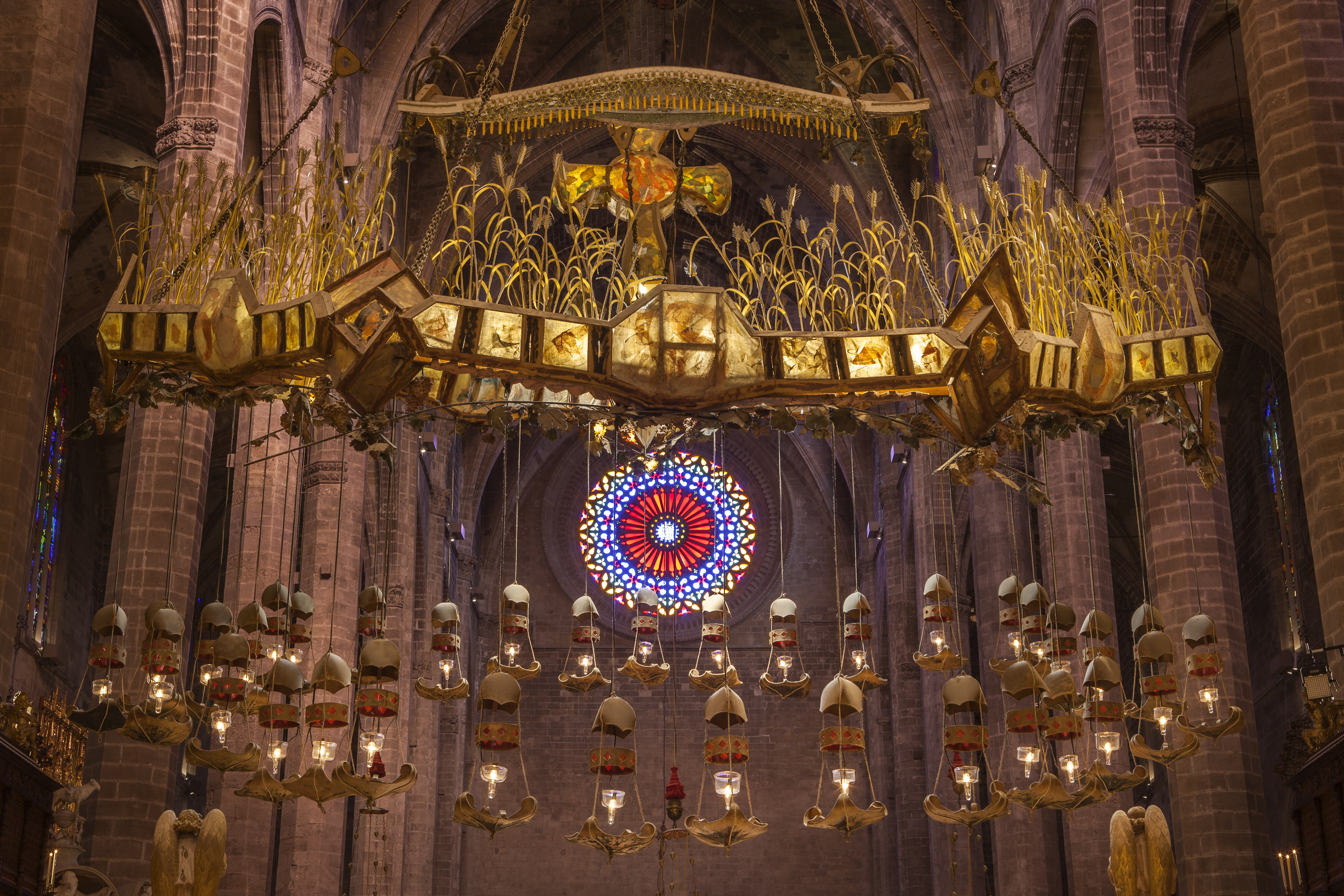
Baldachin for the Cathedral of Mallorca, designed by Antoni Gaudí. Source: Chapter of the Cathedral of Mallorca
Like the one in Mallorca, Sagrada Família dais, with a metal structure and gold and ochre tones, is a heptagon, alluding to the seven gifts of the Holy Spirit written on the outside of the parchment panels on its sides: wisdom, understanding, counsel, fortitude, knowledge, piety and fear of God. On the inner face, the panels have the letters “SS”, which stands for Sanctissimus (Most Holy).
In the centre, the letters “INRI”, from the Latin Iesus Nazarenus Rex Iudaeorum (Jesus of Nazareth, King of the Jews), refer to Jesus Christ on the cross just below, and the words to the song Gloria in excelsis Deo in Catalan complete both the interior and exterior faces. The letters, in red Gaudiesque calligraphy are lit up, so worshippers can read the beginning of the song without having to move. To read the whole thing, however, you have to move around the apse ambulatory.
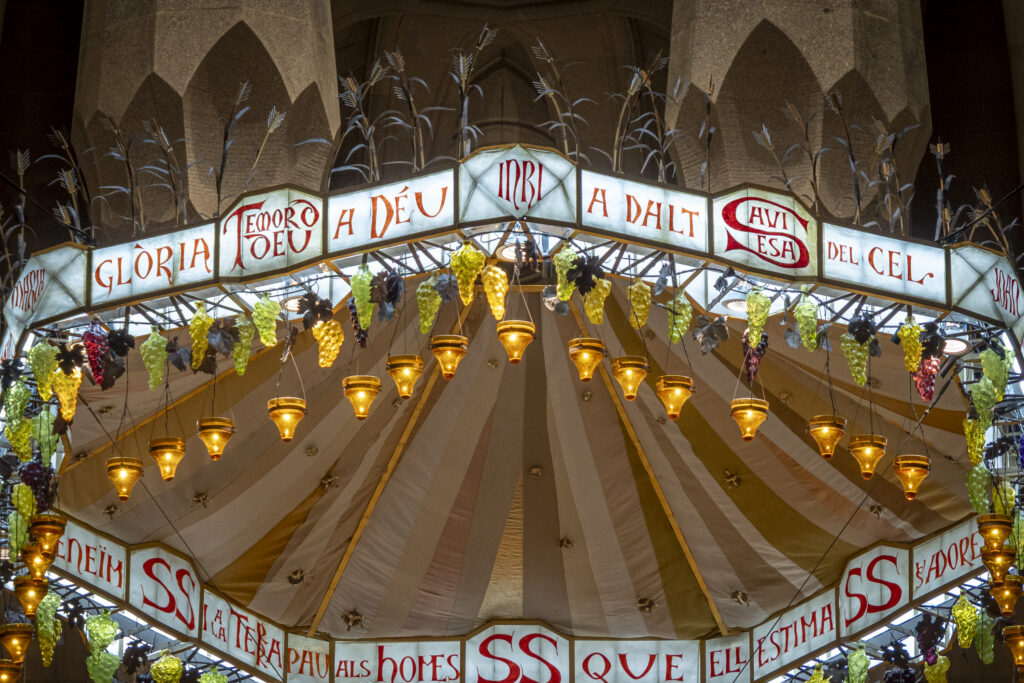
Heptagonal dais on the Sagrada Família baldachin
In allusion to the elements of communion, there are also glass grape bunches and copper leaves and vine shoots. On top, there are ears of wheat made of white wood and nails
On each side of the baldachin hang seven lamps, plus one in the centre, for the 50 lamps of Pentecost, inspired by the baldachin of the Roman Archbasilica of Saint John Lateran, former seat of Popes and mother of all Catholic churches.
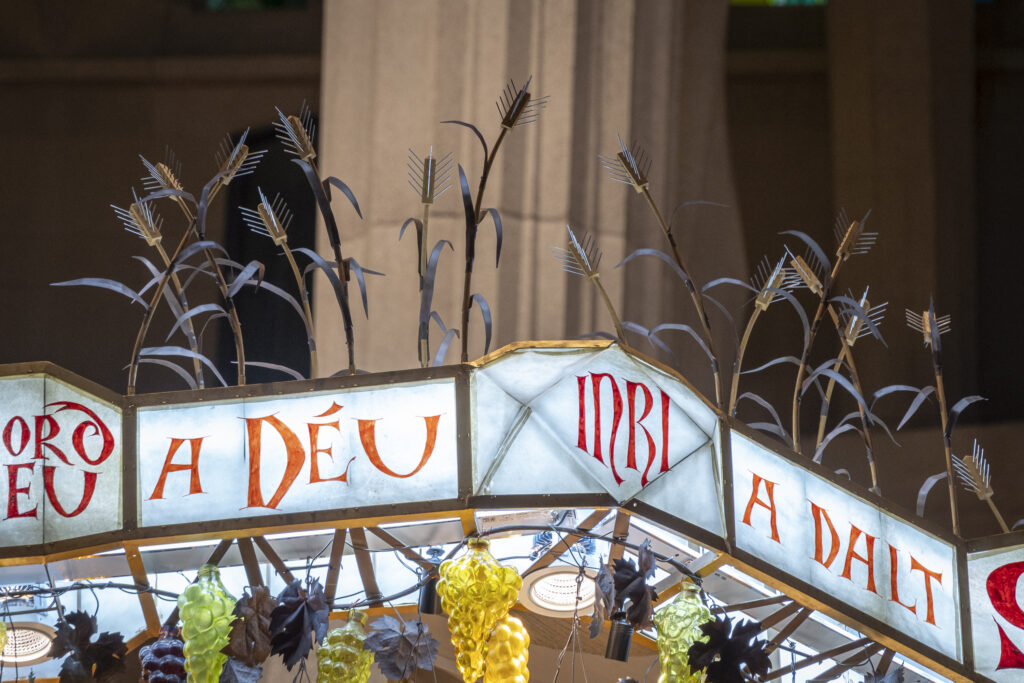
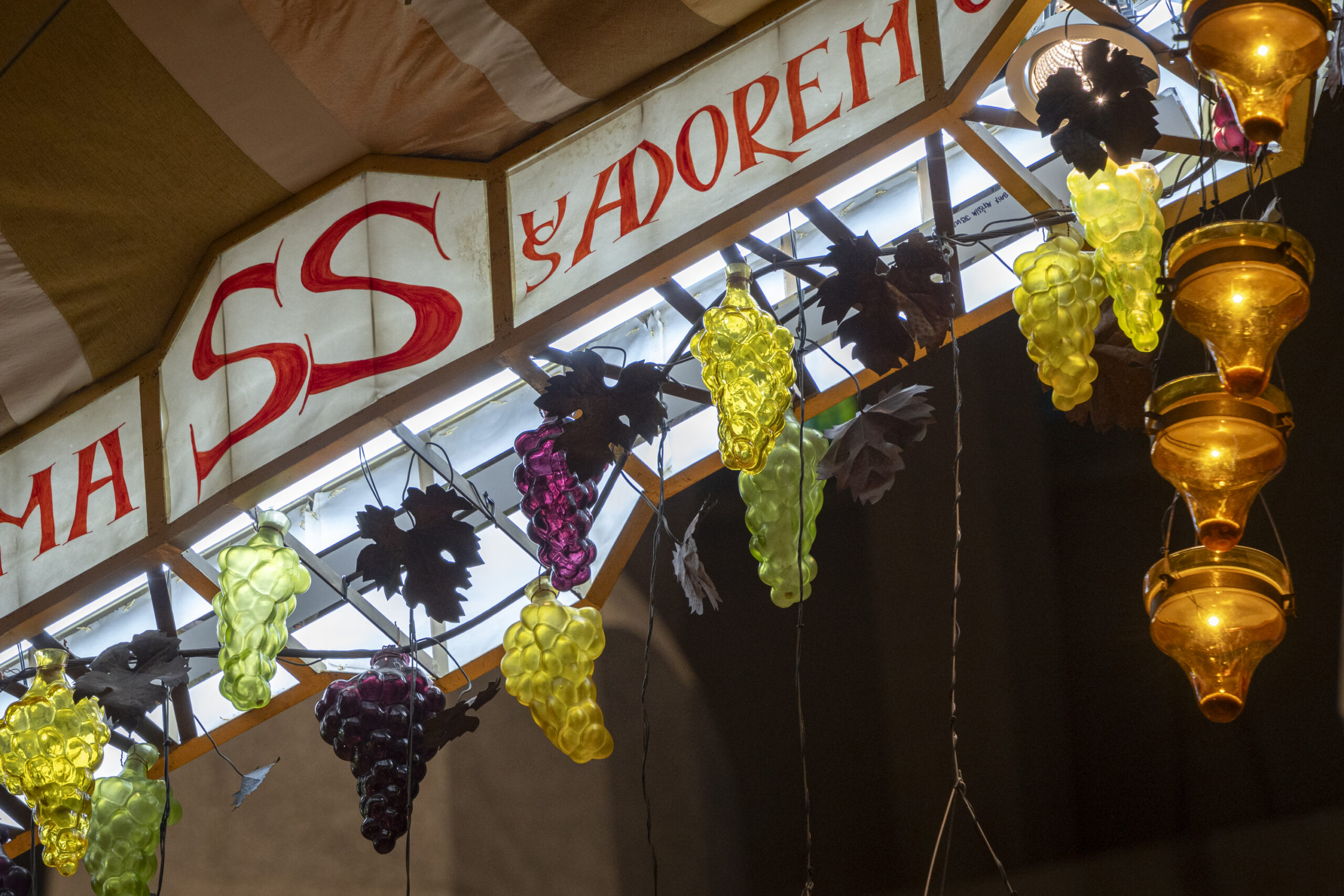
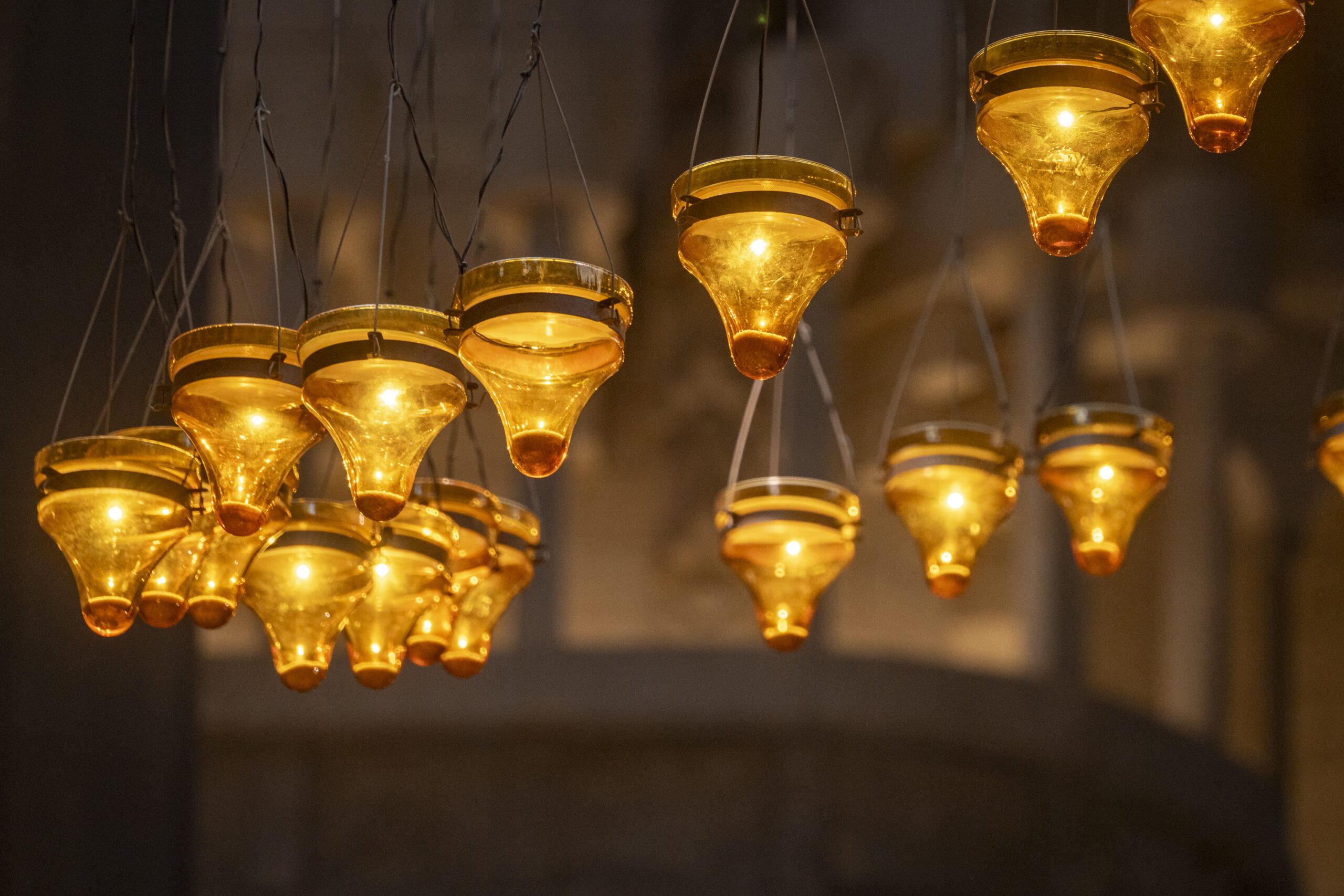
Details of the elements of communion and lamps hanging from the baldachin
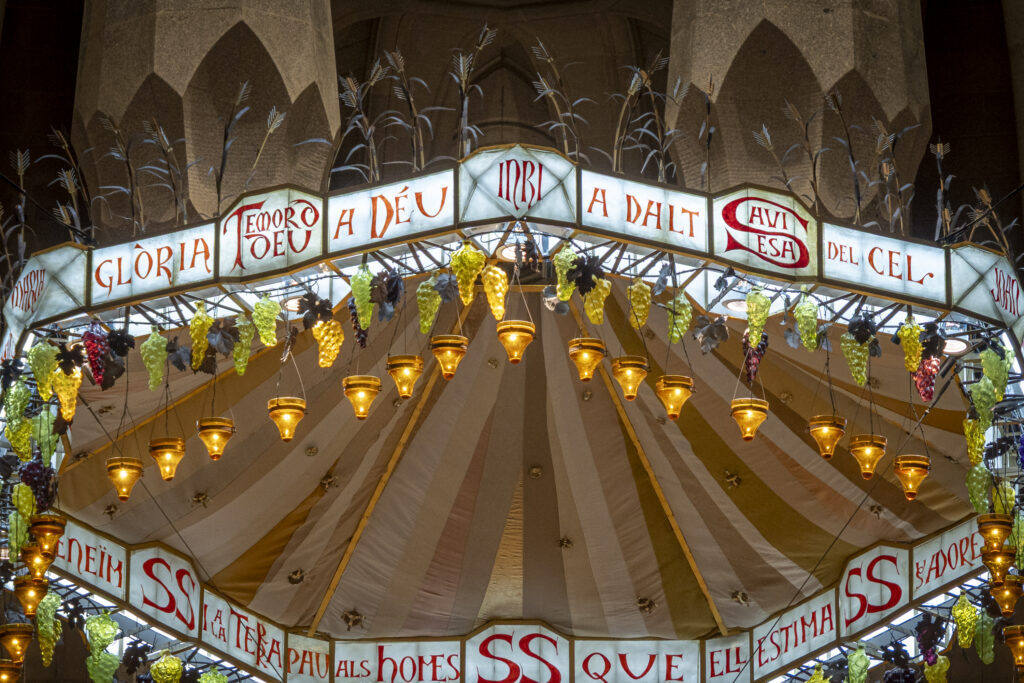
Pentecost: feast commemorating the descent of the Holy Spirit upon the apostles 40 days after the Resurrection of Jesus Christ, which was the beginning of the Church. The Gospels represent this with tongues of fire above the apostles’ heads.
The central element hanging from the Sagrada Família dais is the Christ, created by Francesc Fajula. To do so, the sculptor based his work on the crucifix in the chapel of prayer at Casa Batlló by Carles Mani, which is now in the Sagrada Família museum. As we explained in this previous blog post, Mariano Barceló, head stonemason at the Sagrada Família in Gaudí’s time, was chosen to be the model.
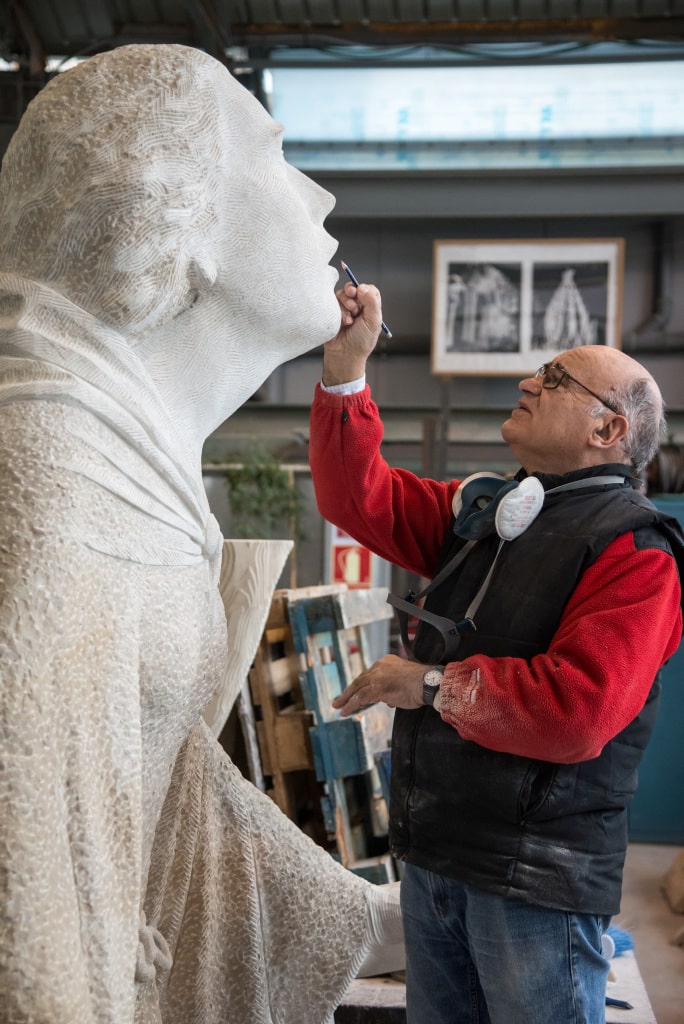
Francesc Fajula (Sant Joan de les Abadeses, 1945): architect, sculptor and PhD in Fine Arts and expert in heritage sites. He has worked with the Sagrada Família on several sculptures, including the sculpture group of the Empty Tomb on the Passion façade and the crucifix on the central altar baldachin.
Jesus on the cross dominates the view from the main nave as you walk through what will be the Basilica’s main entrance, the future Glory façade, and, with the sculptures of the Virgin Mary and Saint Joseph on the transept balconies, completes the three members of the Holy Family.
Along with God the Creator, represented in a triangular mosaic in Venetian glass on the apse vault, the baldachin and the Christ complete the representation of the Trinity of the Father, the Son and the Holy Spirit.
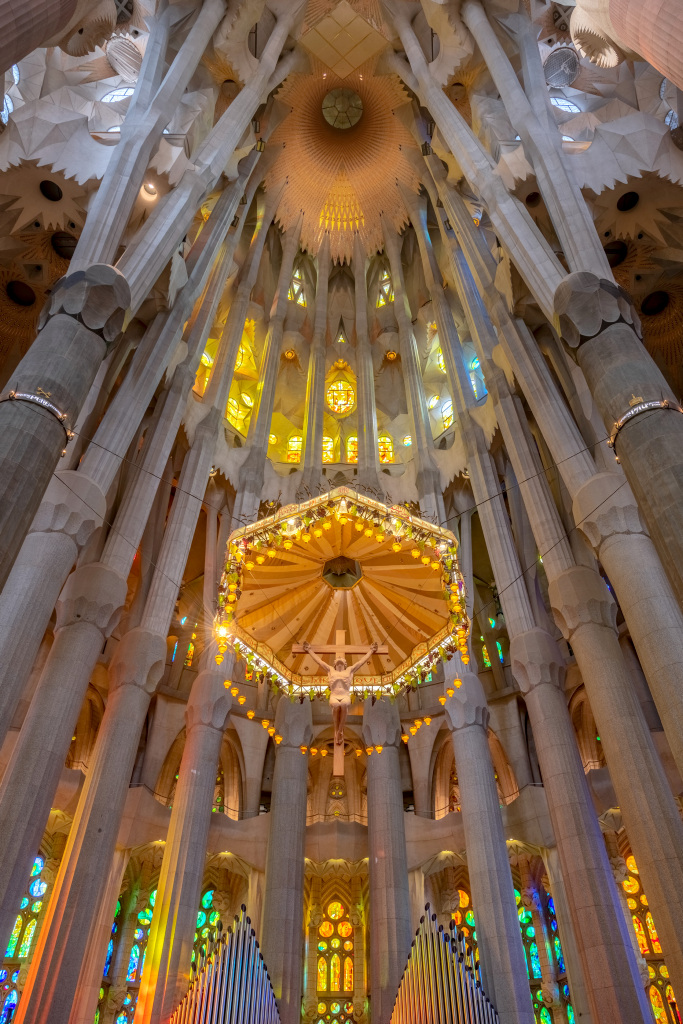
The whole baldachin, with Christ on the cross, and the triangular mosaic on the apse vault, representing the Father, the Son and the Holy Spirit
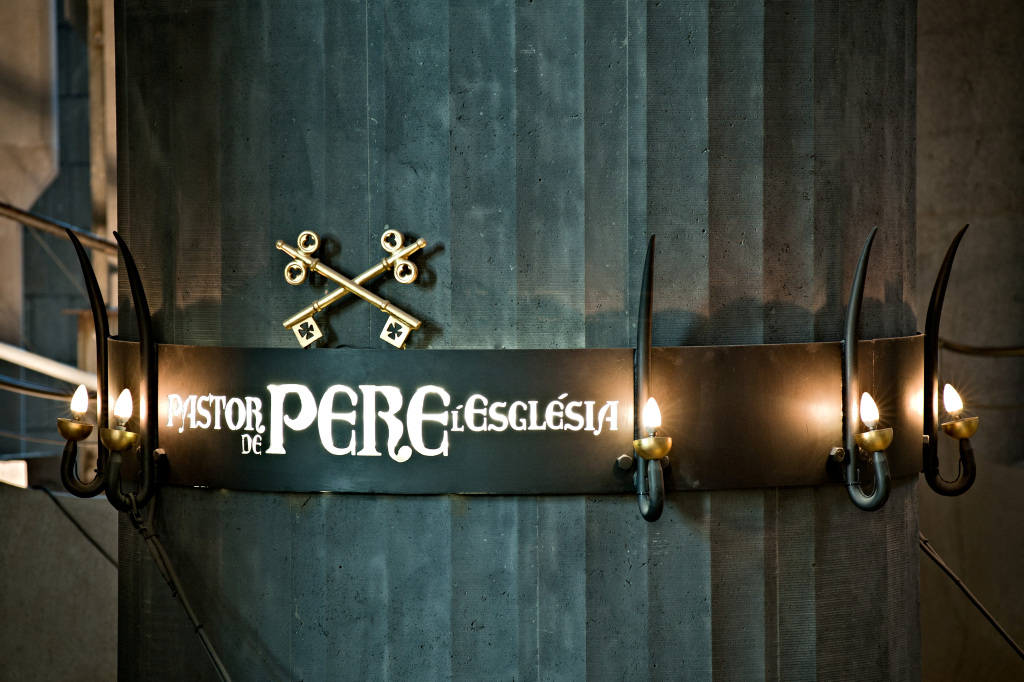
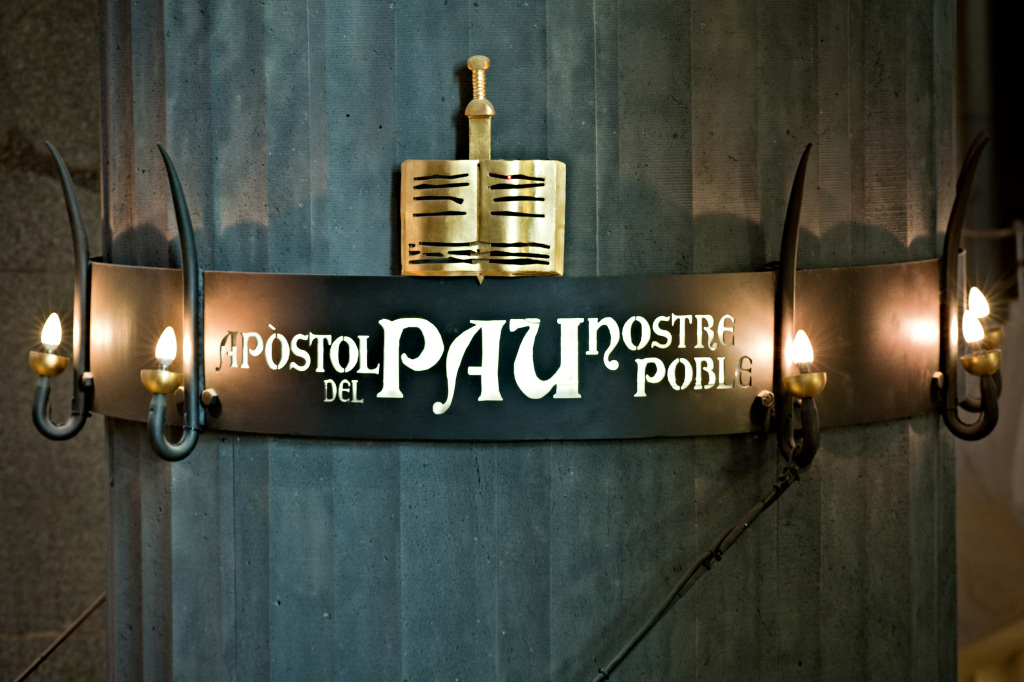
The whole structure hangs from two black basalt columns dedicated to Saint Peter and Saint Paul, with the following inscriptions:
2 comments
Josep Maria Soler Aragonés
Aquesta entrada del blog és del 27 de maig o del 27 de juny?
Diana Fernández
Hola Josep Maria,
L’article es va publicar el 26 de juny.
Moltes gràcies!