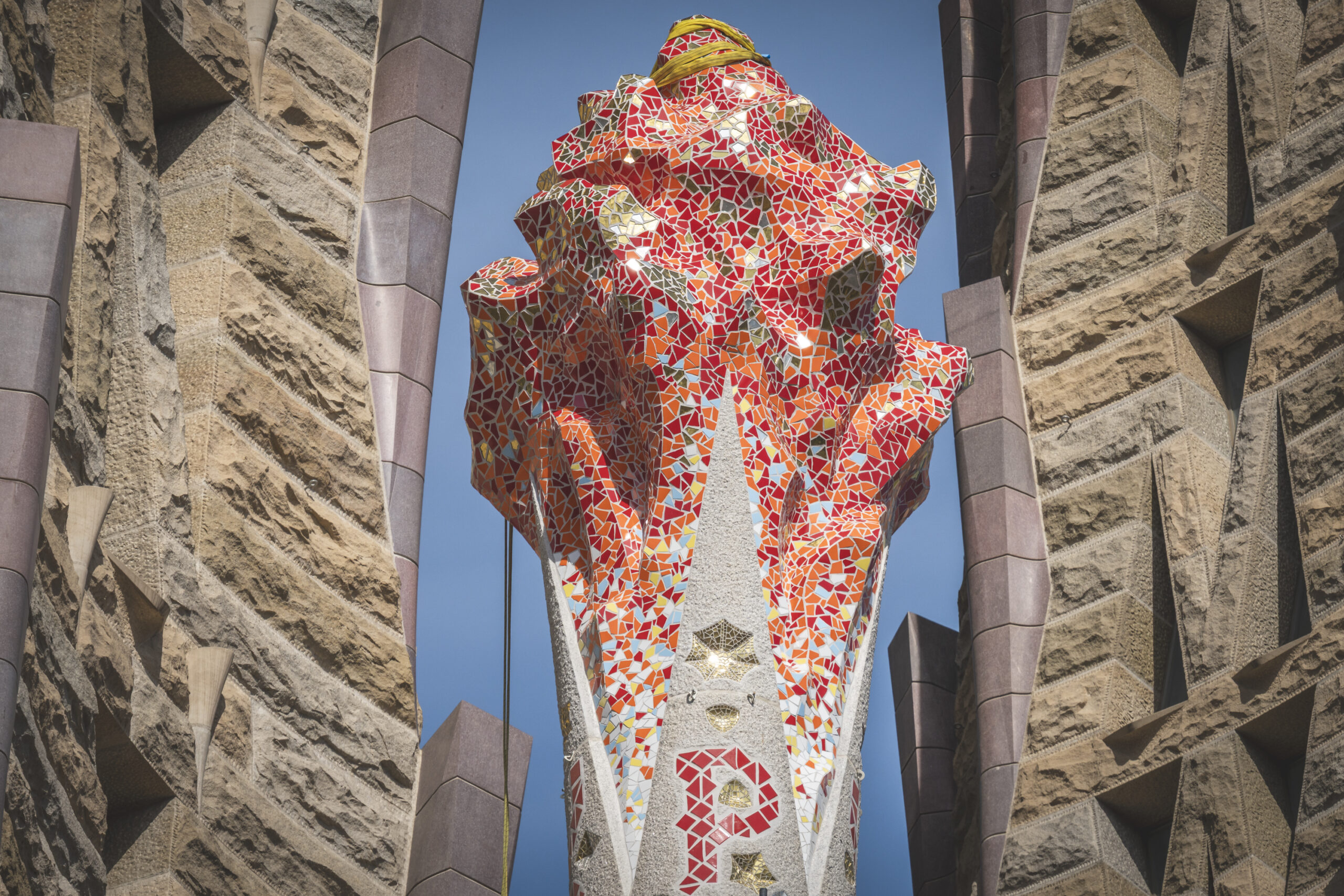
At the Sagrada Família, the windows are topped with a pediment with a spire. On the side façades, there are baskets of fruits and Eucharistic offerings, as we explained in this post. Now we’re looking at the ones on the outside of the Crossing Room, the latest to be installed.
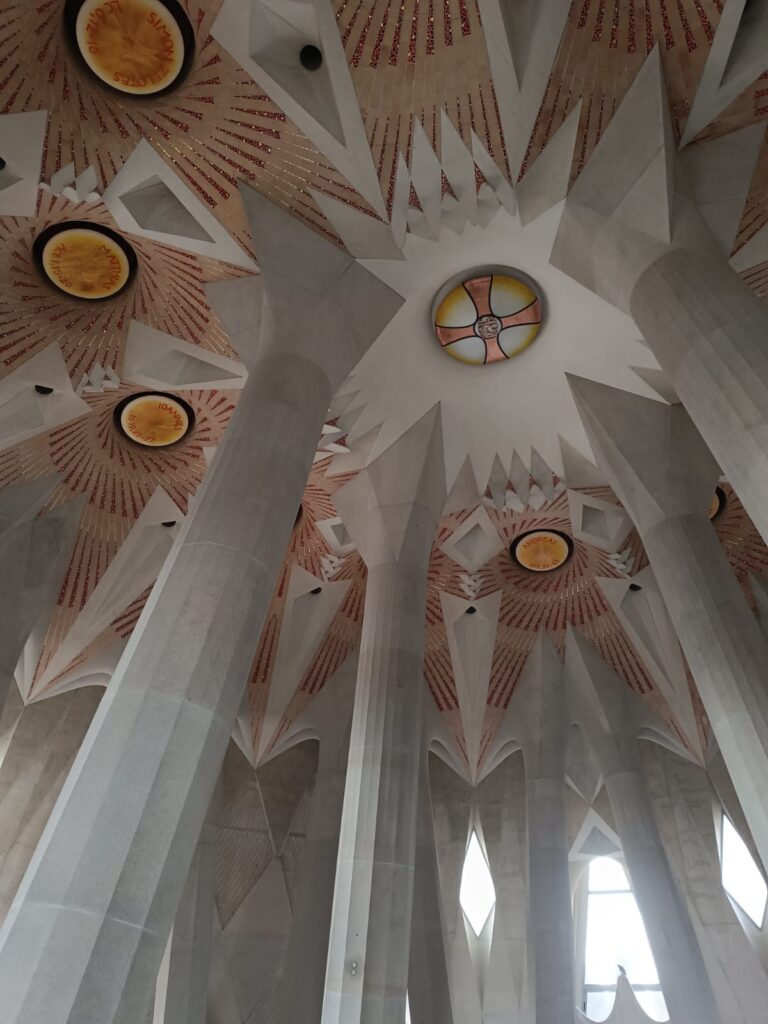
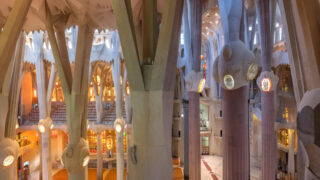
Crossing Room: just above the Temple crossing and below the tower of Jesus Christ, we find this space, where light filters down into the Basilica through 25 skylights. Plus, it is where the columns of the crossing branch out to become the base of the tower of Jesus Christ.
They are the spires of fire, water and wind: three representations of the arrival of the Holy Spirit according to the Gospels:
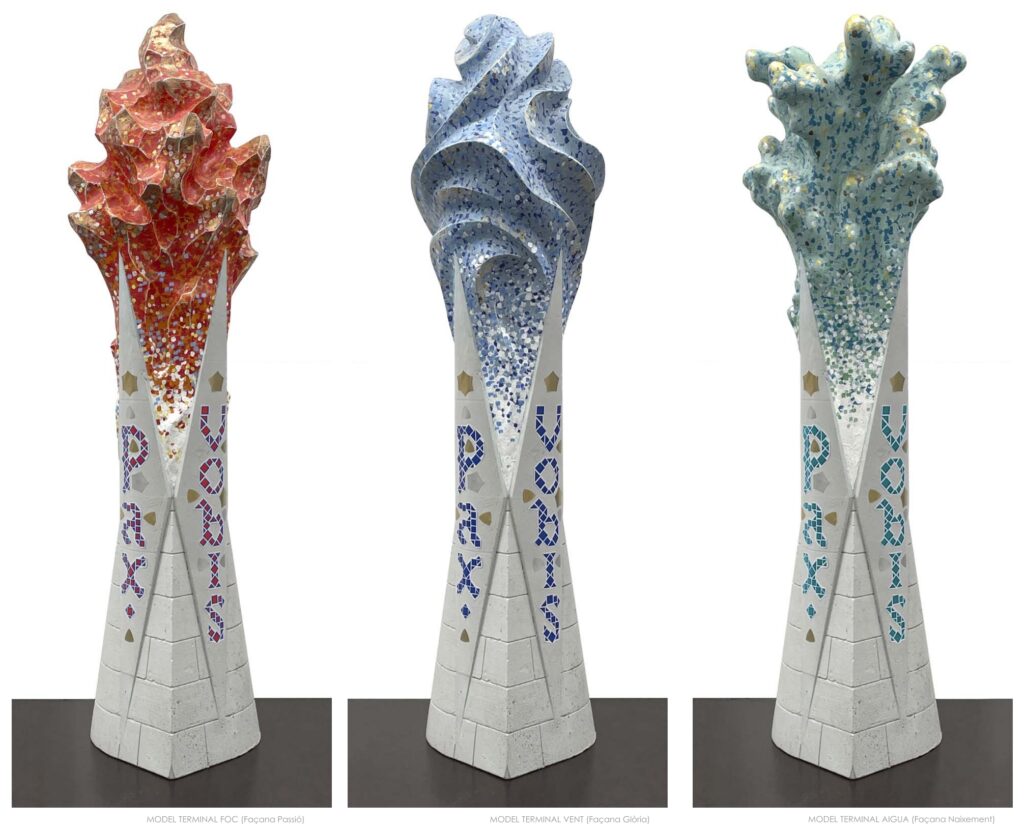
Models of the spires on the Crossing Room pediments
The elements, made of concrete and covered in ceramic tiles, emerge from the pediments through four paraboloids made of Vilachá granite with the inscription «Pax Vobis» in trencadís mosaic. Both the letters and the golden stars alongside them are inspired by similar elements on the tower of Barnabas, the only one Antoni Gaudí saw finished. So are the ceramic tiles, which are the same size as the ones on the tower.
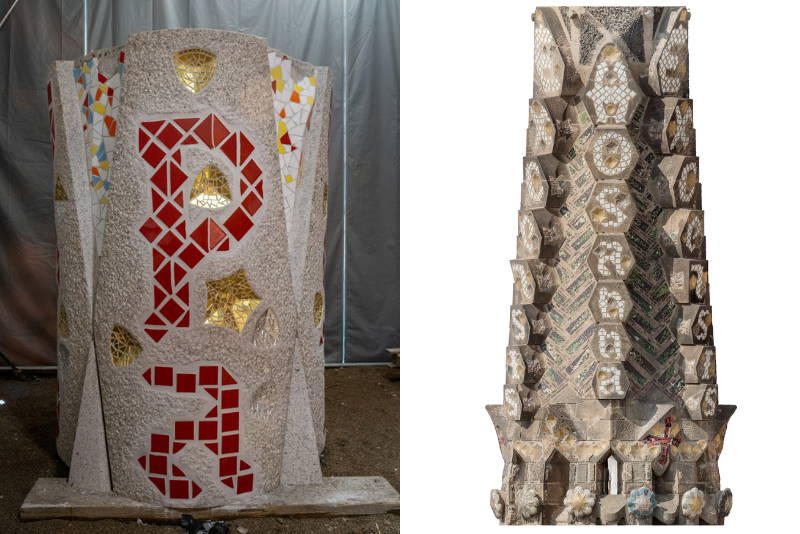
Piece with part of the inscription on the fire spire (left). Inscriptions on the spire of the tower of Barnabas, on the Nativity façade, the only one Antoni Gaudí saw finished (right)
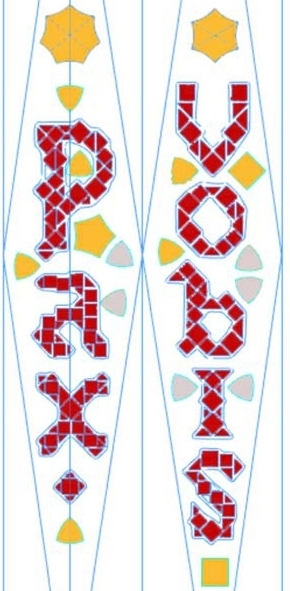
Pax Vobis: from the Latin meaning ‘peace to you’, the Gospels tell of Jesus using this phrase to greet his disciples after the Resurrection.
The fire element, the only one that has been installed so far, faces the Passion façade, as an expression of the Resurrection after the Death of Jesus Christ; the water spire, facing the Nativity façade, as the source of life and element of baptism; and the wind element, facing the future Glory façade, is a symbol of God’s breath.
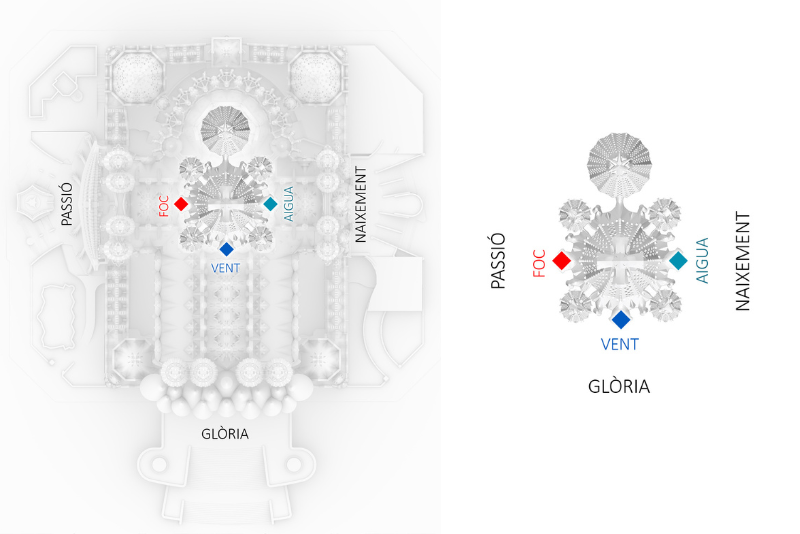
Floor plan of the Sagrada Família with the elements of fire, facing the Passion façade; wind, the Glory façade; and water, the Nativity façade.
As with other projects at the Basilica, the spires —designed by Etsuro Sotoo and the Temple team of artists and model-makers — are the result of a meticulous process of making and studying sketches and models, using Gaudí’s work method. Models are used to test and correct aspects such as shape and colour, which in the case of the spires apply a colour palette developed over the years that is exclusive to the Basilica.
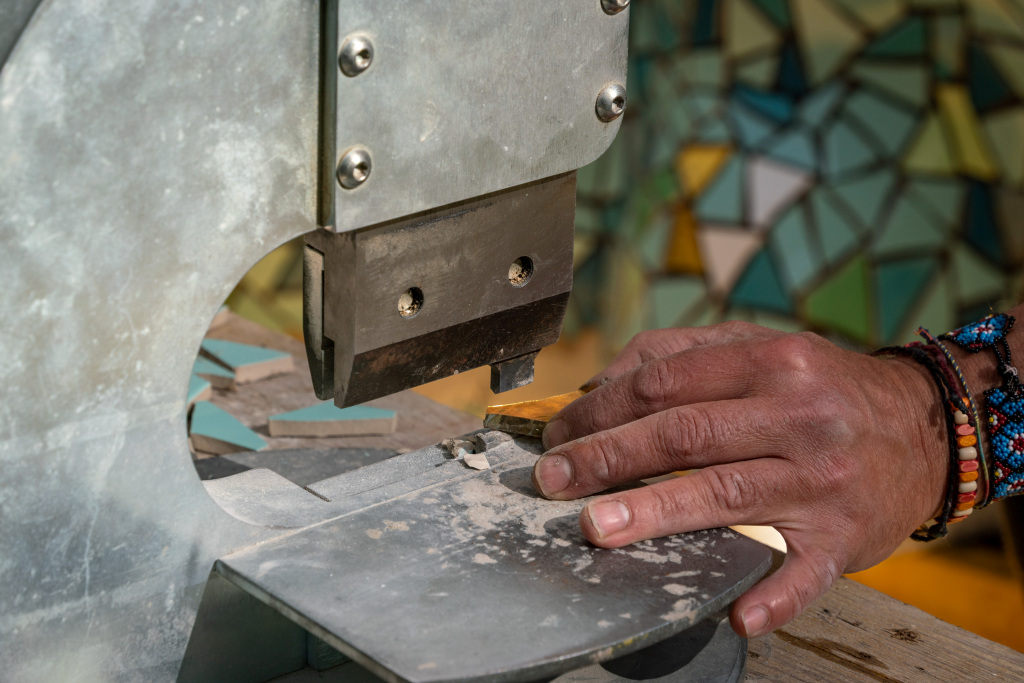
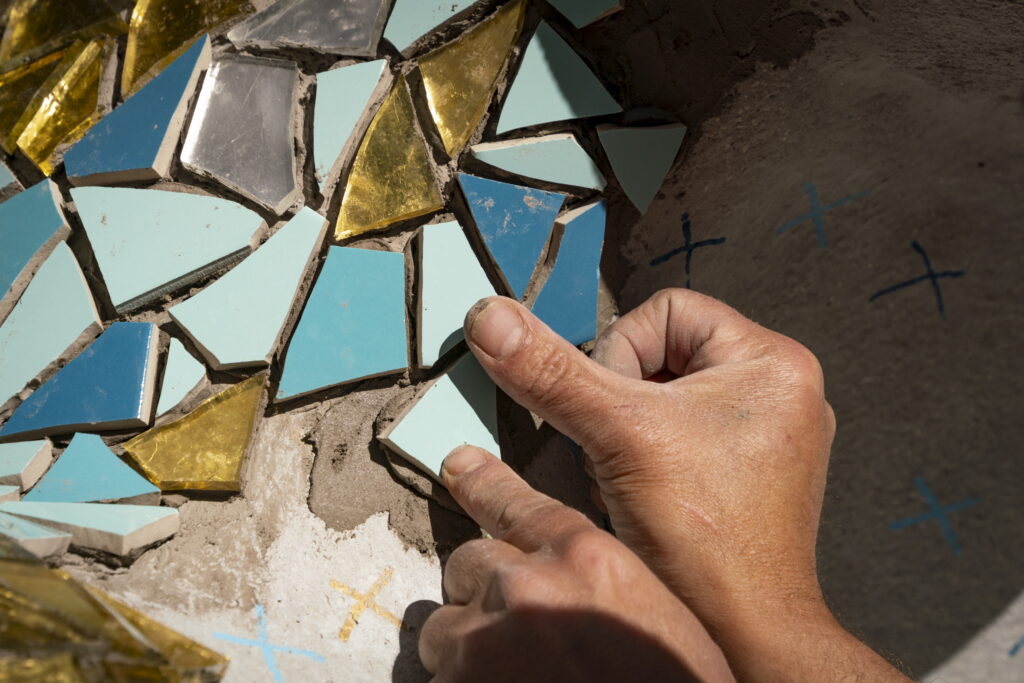
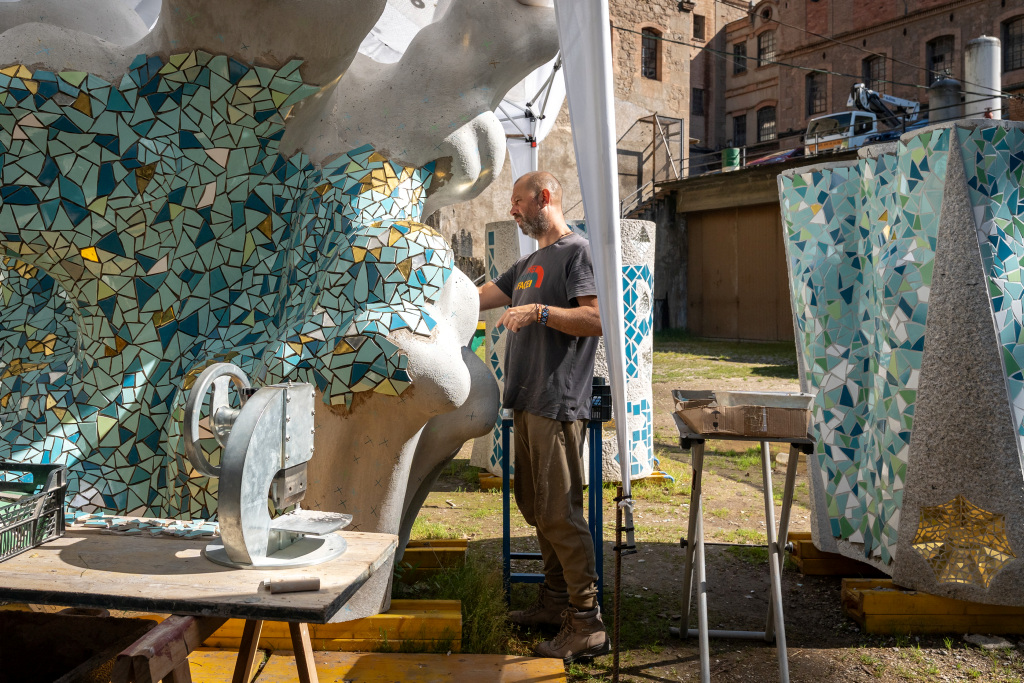
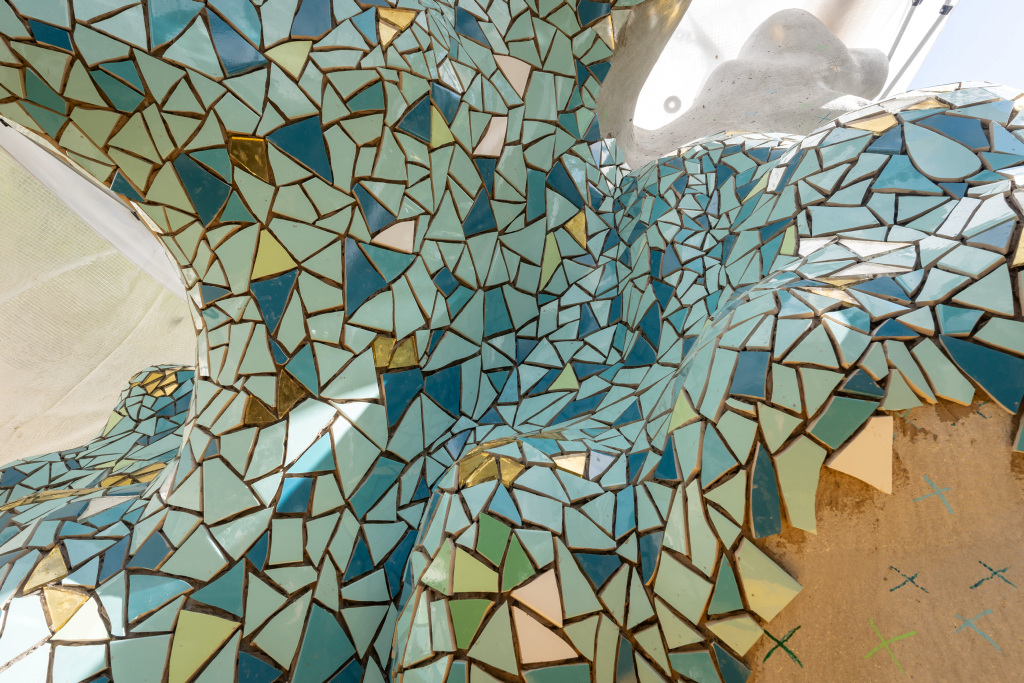
Once the art and projects teams reach a final solution, the piece is sent to production. In this case, the spires were made in pieces using moulds and covered in ceramic tiles by hand. These weeks, the pieces are being moved from the production centre in Galera, in the Bages region, to the Basilica, where each spire is assembled using metal anchors to connect the pieces. In total, each spire is 9.5 metres tall and weighs 30 tonnes.
Putting the ceramic tiles on the water spire
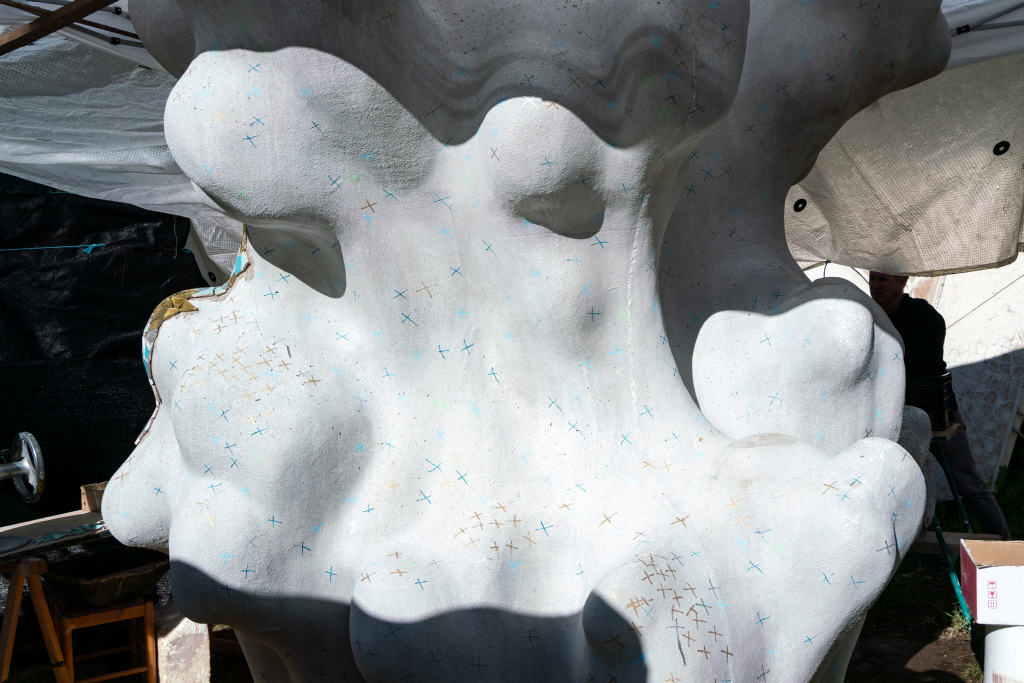
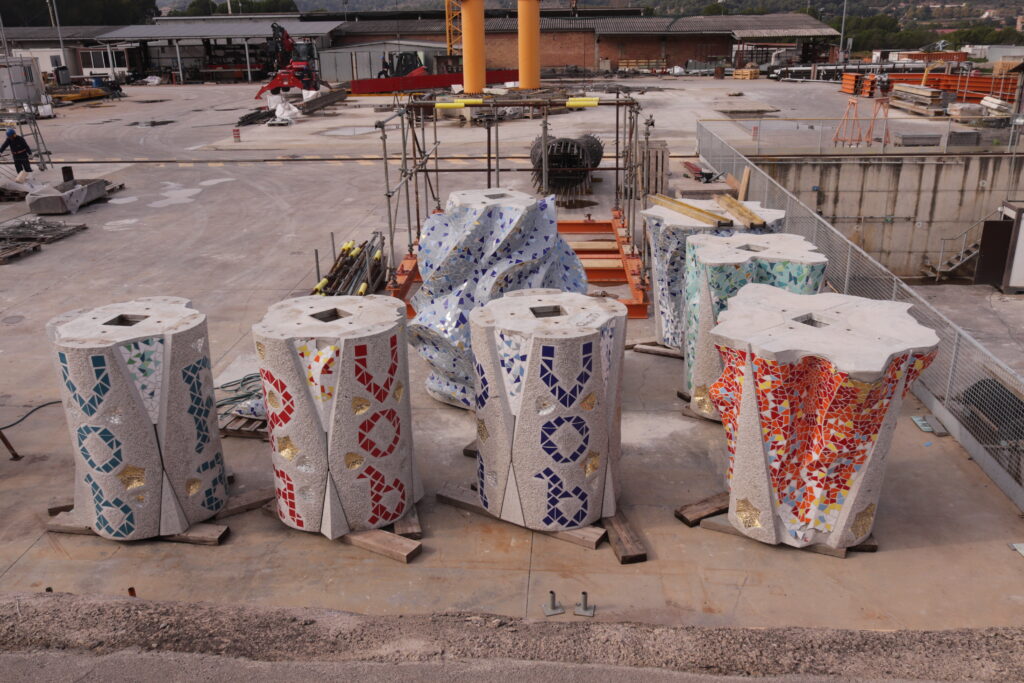
Finished pieces in Galera
Installing the fire spire
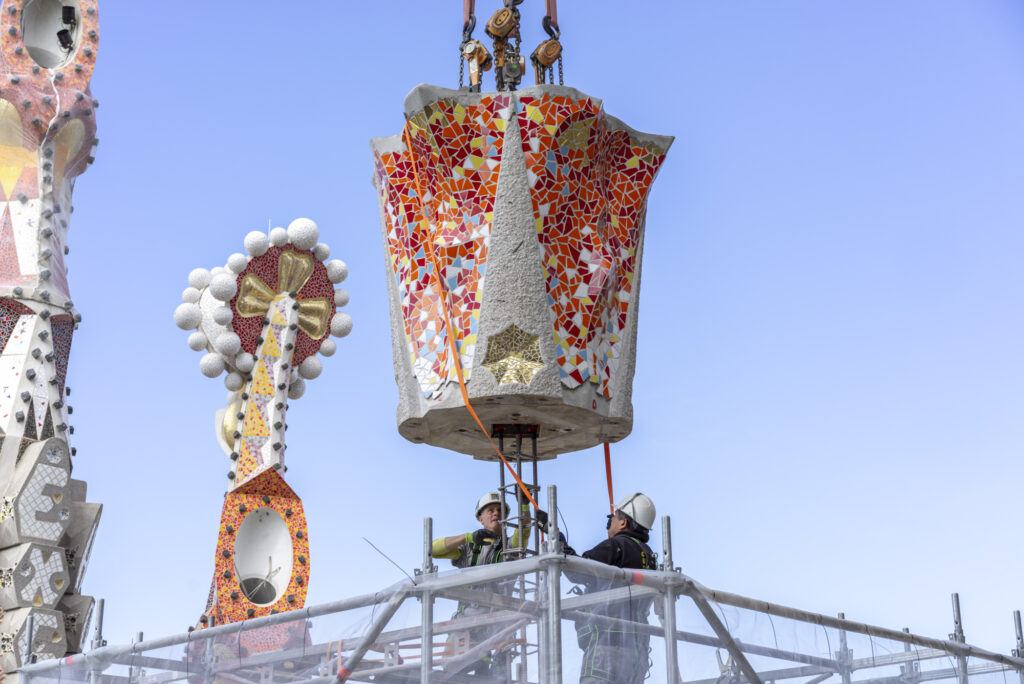
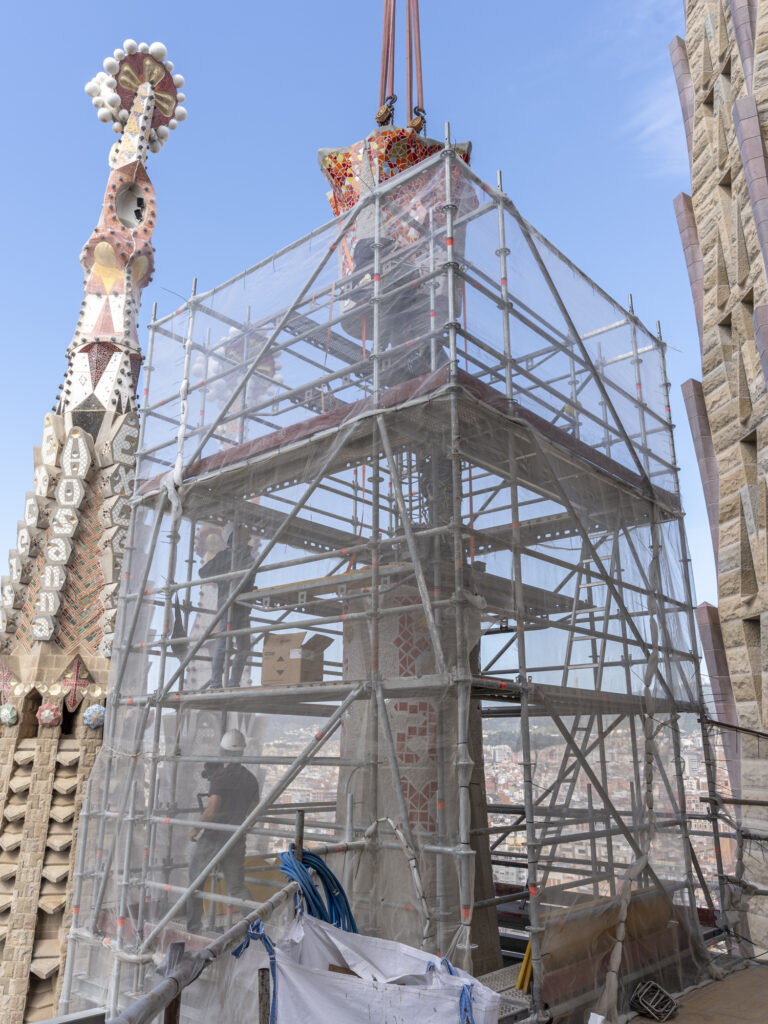
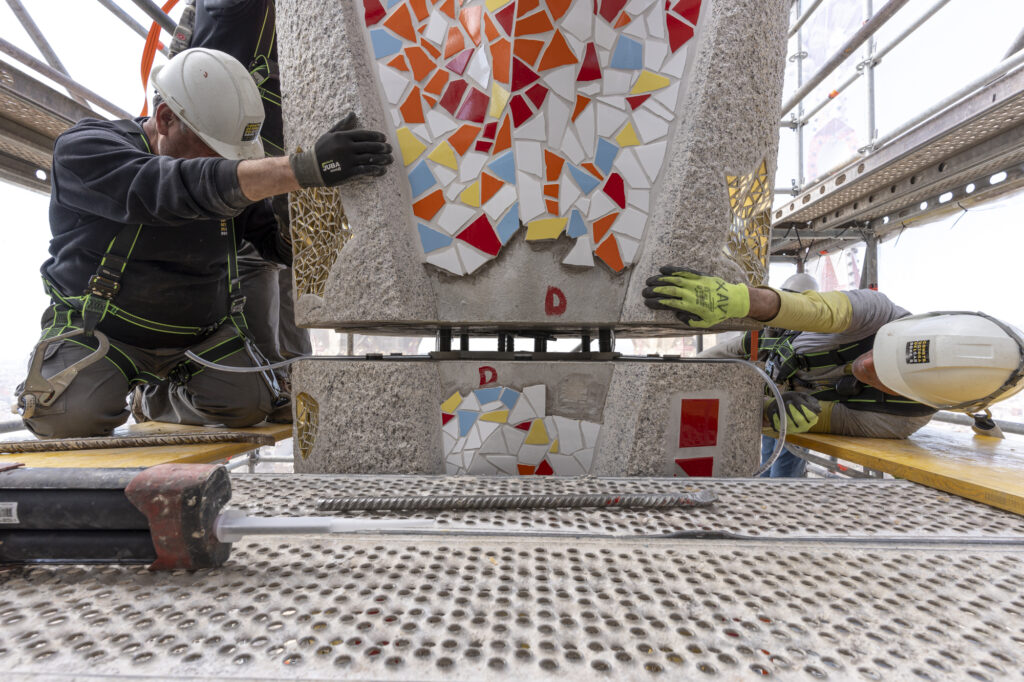
Joining the fire element to the paraboloids
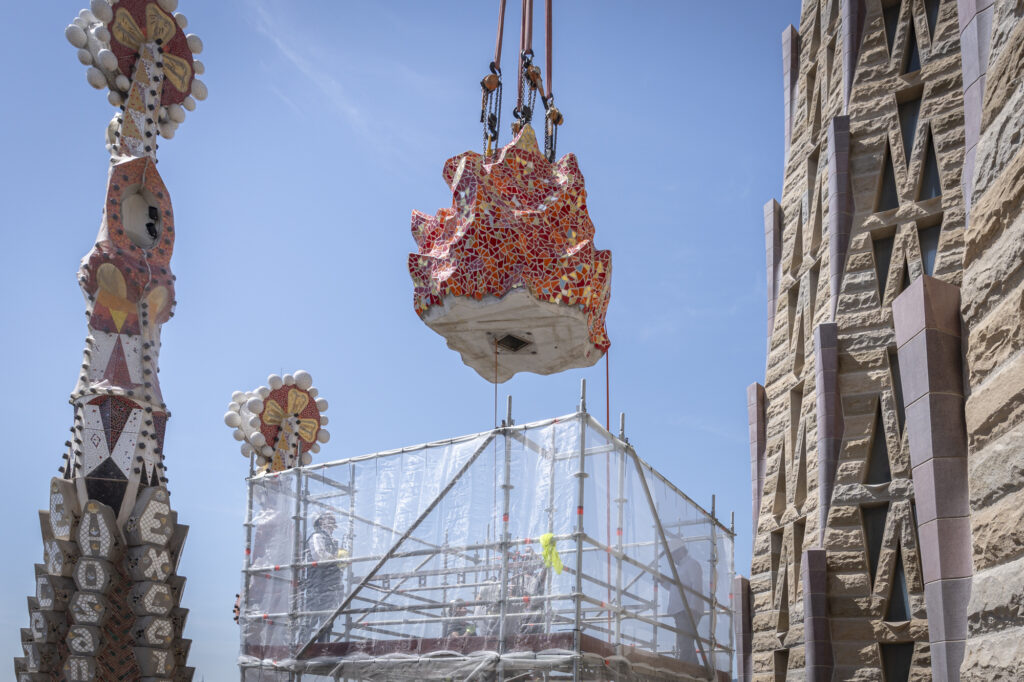
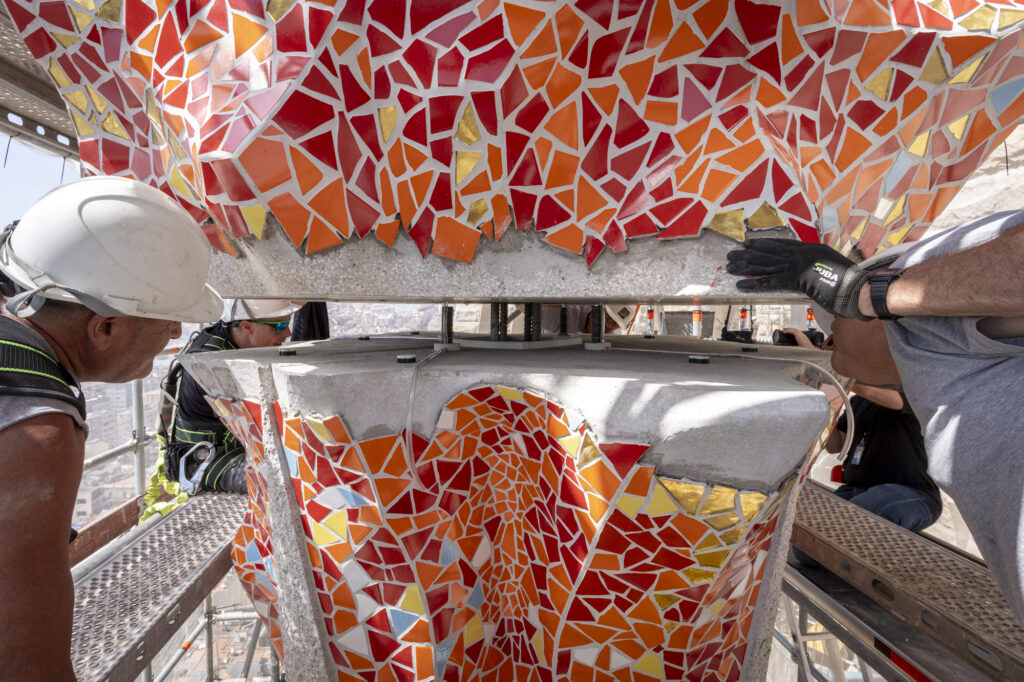
Joining two pieces of the fire element
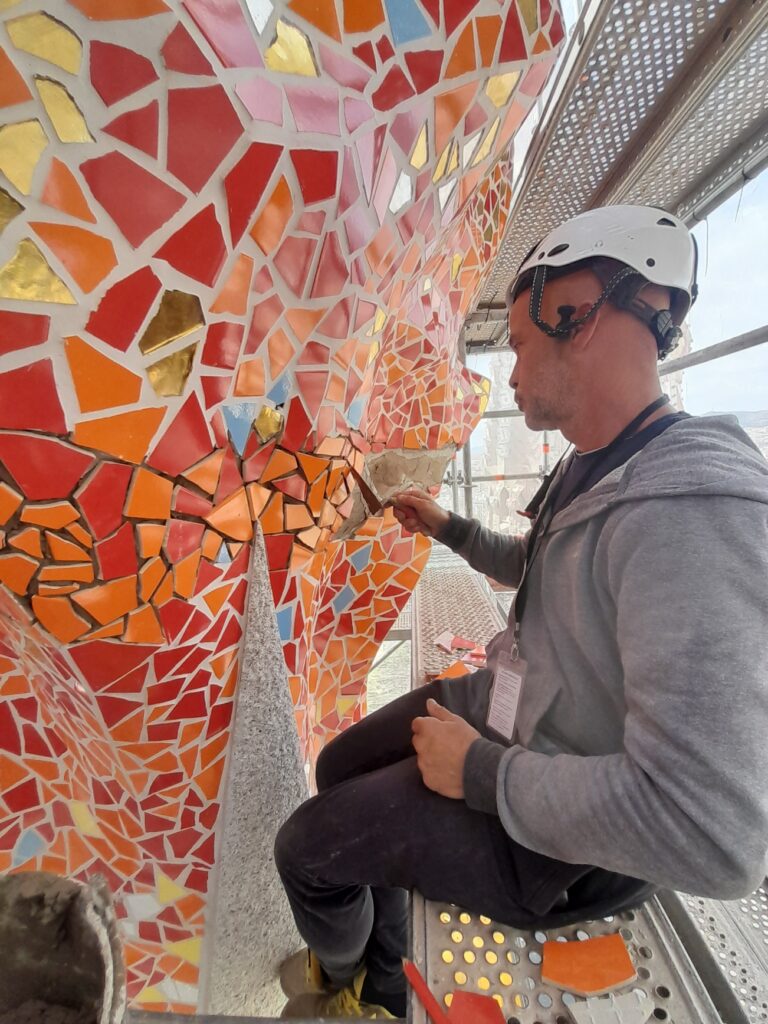
Finally, the joints of the pieces are covered with trencadís ceramics.
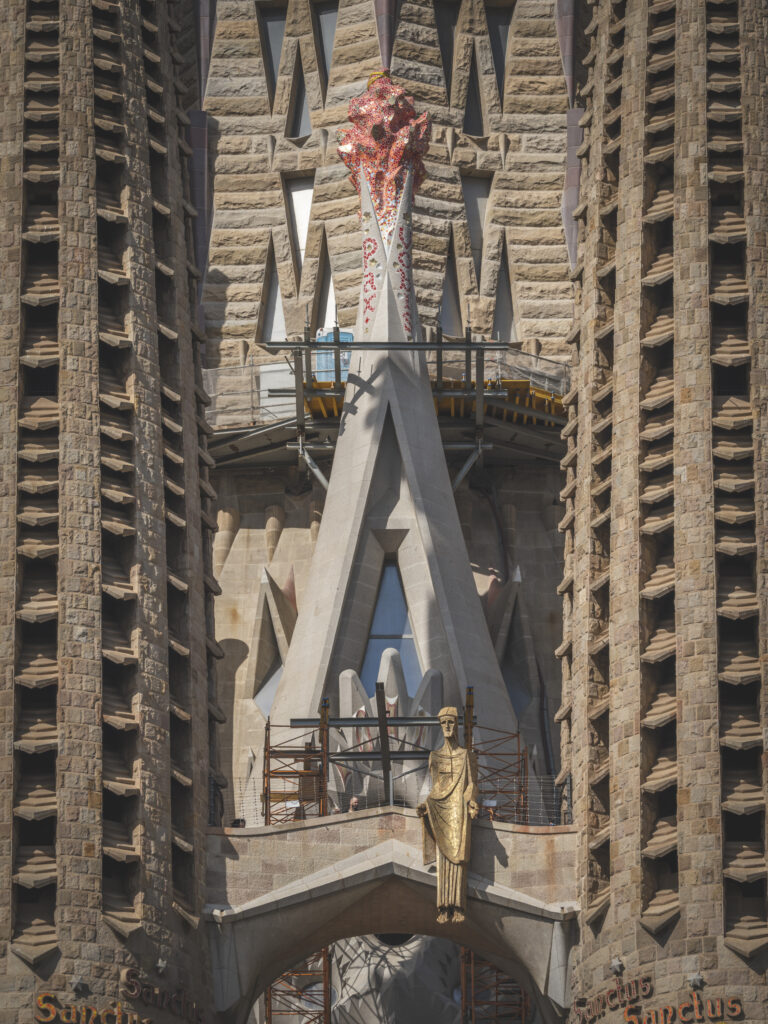
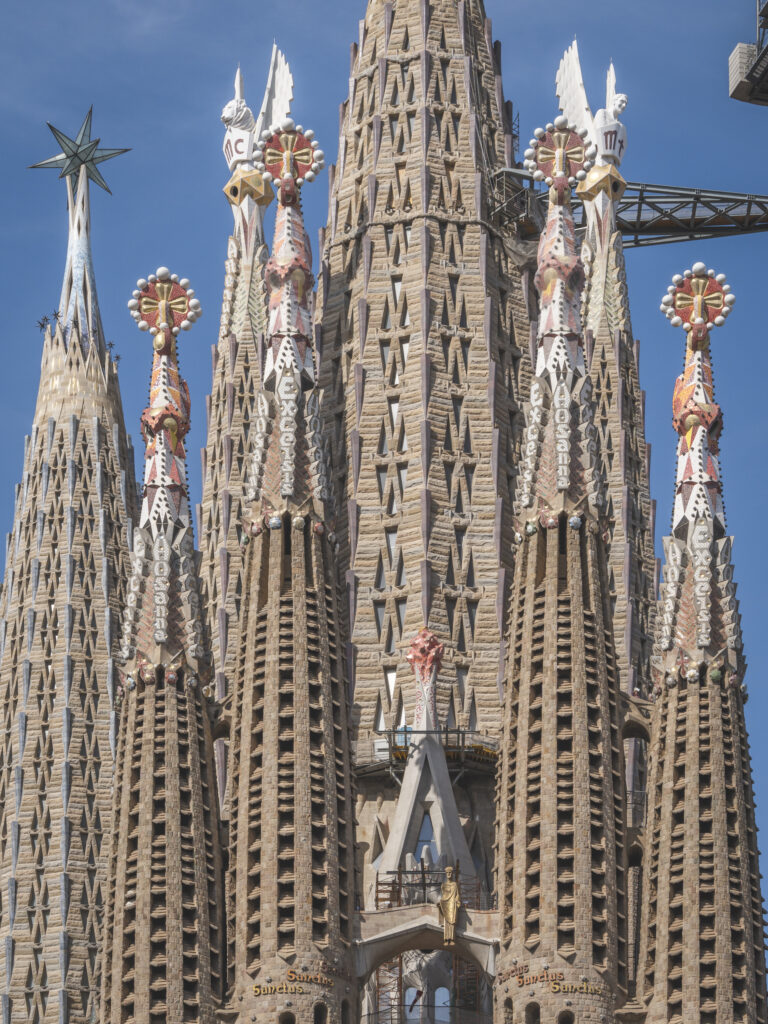
Fire terminal outside the Crossing Room installed on the Passion facade side
Over the coming weeks the other spires will be installed.
3 comments
Galaxyonknowledge
The intricate design of the spires on the Crossing Room pediments is a stunning representation of the Holy Spirit’s arrival! I love how each element symbolizes fire, water, and wind, reflecting such deep spiritual meanings. The craftsmanship is truly remarkable!
Diana Fernández
“Thank you very much for your comment. We’re delighted that you enjoyed this detail of the Basilica and its symbolic meaning. Thank you for sharing your thoughts with us.”
GalaxyonKnowledge | Free Online Course
Thank you for your thoughtful response. We are pleased to hear that our exploration of the Basilica’s intricate details and their profound symbolic significance resonated with you. Your engagement and insights are invaluable to us, and we appreciate the opportunity to share this remarkable experience together. Should you have any further reflections or questions, please do not hesitate to reach out.