
The information for this post is taken from the book Antoni Gaudí, vida i obra, by Armand Puig i Tàrrech, and other sources cited in the text.
In 1868, Antoni Gaudí moved to Barcelona, at the age of sixteen. He left behind his childhood in Camp de Tarragona, where he had absorbed local customs, traditions and methods, and where his identity was forged by nature, light and the sea.(See blog post: ‘Back to Antoni Gaudí’s roots’). His desire to become an architect took him to the Catalan capital, where he finished the secondary studies he had begun in Reus and enrolled in the Barcelona Provincial School of Architecture. In addition to his studies, he worked for artisans and other architects, such as Francisco de Paula del Villar. He graduated in 1878, the same year he received his first official commission: to design the street lights for Plaça Reial and Pla de Palau in Barcelona. It was the first project in his prolific career that began in a city that was changing and expanding as a result of the industrial revolution; a city that would become his home, although he never broke ties with the region where he was born.
As a young man, Gaudí frequented Barcelona’s intellectual and cultural circles. He often attended performances at the Liceu opera house and concerts at Palau de la Música, took part in debates at Ateneu Barcelonès, went horseback riding and was a member of the hiking association Associació Catalanista d’Excursions Científiques, now Centre Excursionista de Catalunya. “He smoked cigars, dressed sharply and rode in a horse-drawn carriage. You could call him a dandy,” explains Armand Puig.
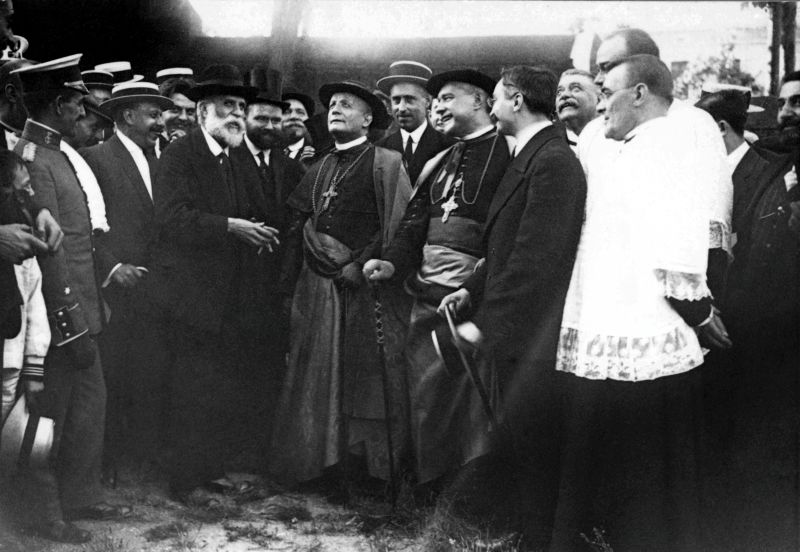
At the end of the 19th century, however, the architect fell into a deep personal crisis that led him to fast and reconsider his lifestyle. Guided by several people he trusted, including Bishops Joan Baptista Grau i Vallespinós and Josep Torras i Bages, he opted for a much more austere, solitary life. “Gaudí found himself through a life of sacrifice,” explains Dr Armand Puig.
This transformation gave rise to new habits, shaping the activities and routines Gaudí would continue until his death.
This post looks at his daily life and the path he walked from the model home in Park Güell, where he went to live in 1906.
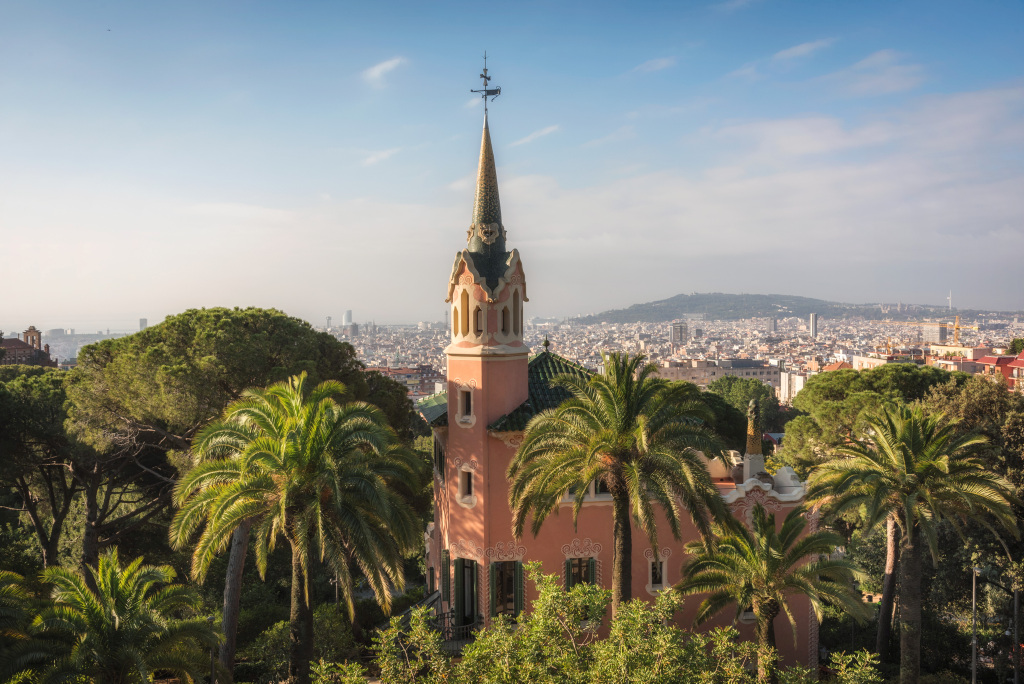
Model home at Park Güell, where Antoni Gaudí lived from 1906 to 1925
In the morning, he walked down to the Sant Joan de Gràcia parish church,where he normally worshipped in those years. Some historians believe Gaudí helped design a trencadís mosaic in the chapel of the Holy Sacrament there, attributed to his disciple Francesc Berenguer.
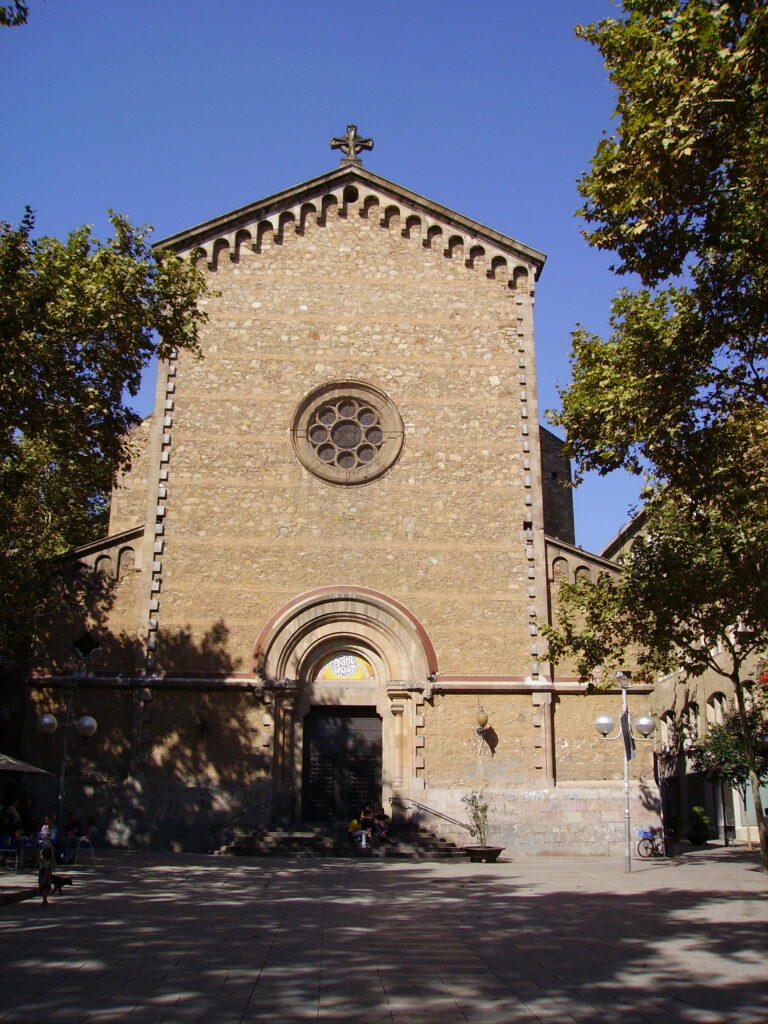
Sant Joan de Gràcia parish church, on Plaça de la Virreina
After mass, he would walk to the Sagrada Família, where he worked on the project he had been commissioned in 1883 and devoted himself to completely from 1914, when he completed La Pedrera. Adjoining the Temple, he built an atelier, where he prepared his models, and the provisional school building, for the children of the workers and those living in the neighbourhood around the Sagrada Família.
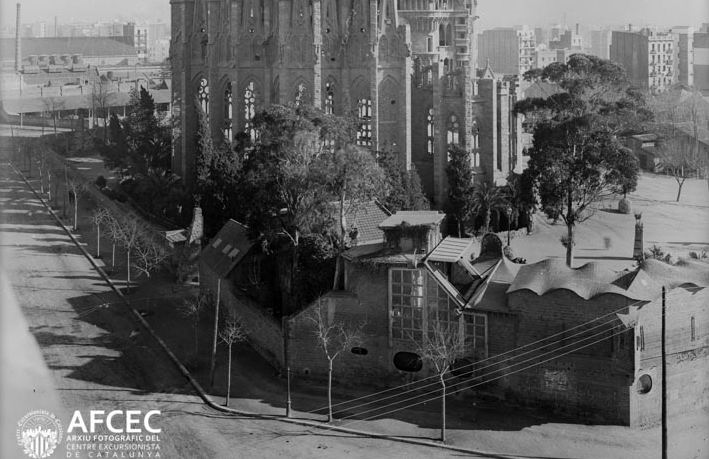
View of the exterior of Gaudí’s atelier in 1927. Source: Photographic Archive of the Centre Excursionista de Catalunya
Gaudí spent most of his day at the Temple, drawing, making models, overseeing the works, speaking with his collaborators and explaining the project or welcoming visitors interested in what they were doing. In November 1925, he even left the house in Park Güell, where he had been living alone for some years after the death of his father and niece, to move into the Sagrada Família. Until his death in June 1926, he lived in a small study, surrounded by plans and models, where he set up a simple bed to sleep on.
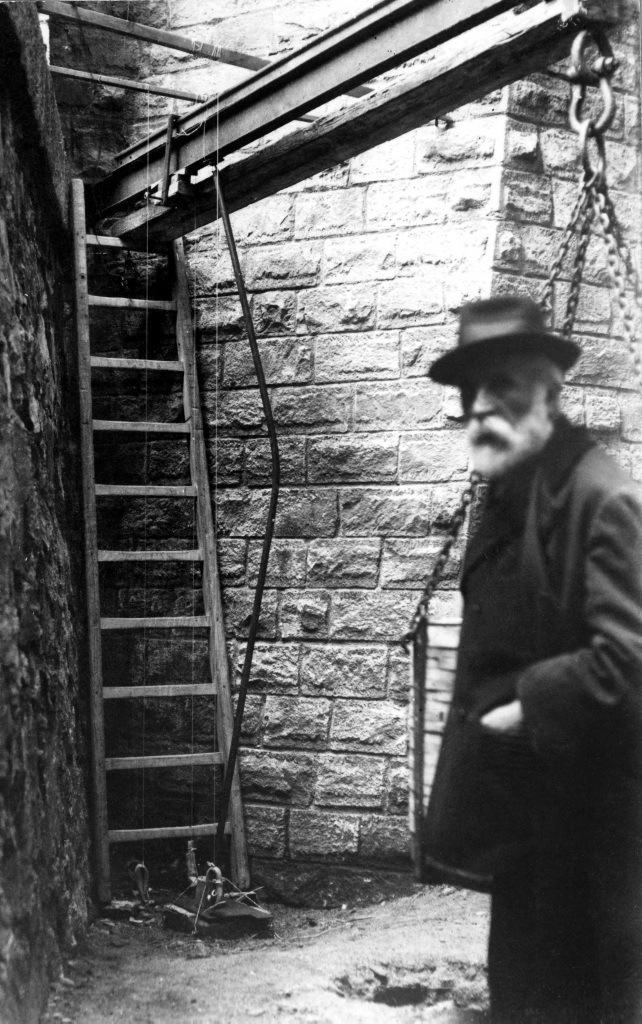
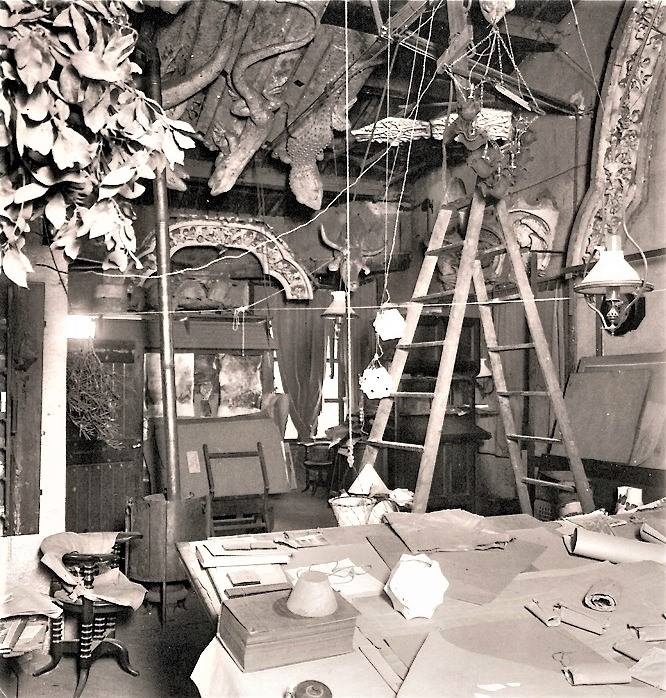
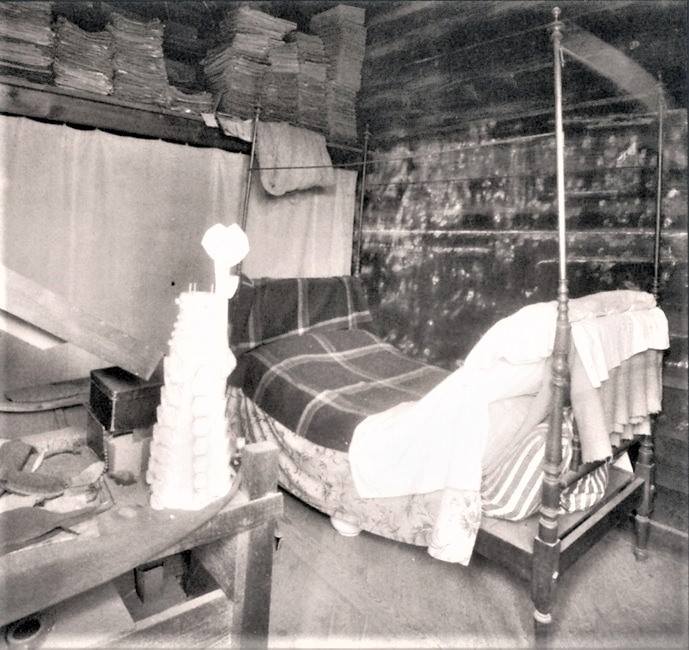
Antoni Gaudí on the Temple worksite. Gaudí’s study at the Sagrada Família and the bed where he slept
The architect often carried nuts in his pockets from the tenant on the family land in Riudoms, which tided him over until lunchtime. In the evening, after finishing work, he walked to Sant Felip Neri church, where he prayed and took part in vespers. This is where Gaudí was heading on the evening of 7 June 1926, when he was run over by a tram. That same afternoon, he had been working on some alabaster lights for the crypt and, when they finished, he said to the worker alongside him: “See you tomorrow. We’ll do some lovely things.” But he would never return, dying three days later at Hospital de la Santa Creu.
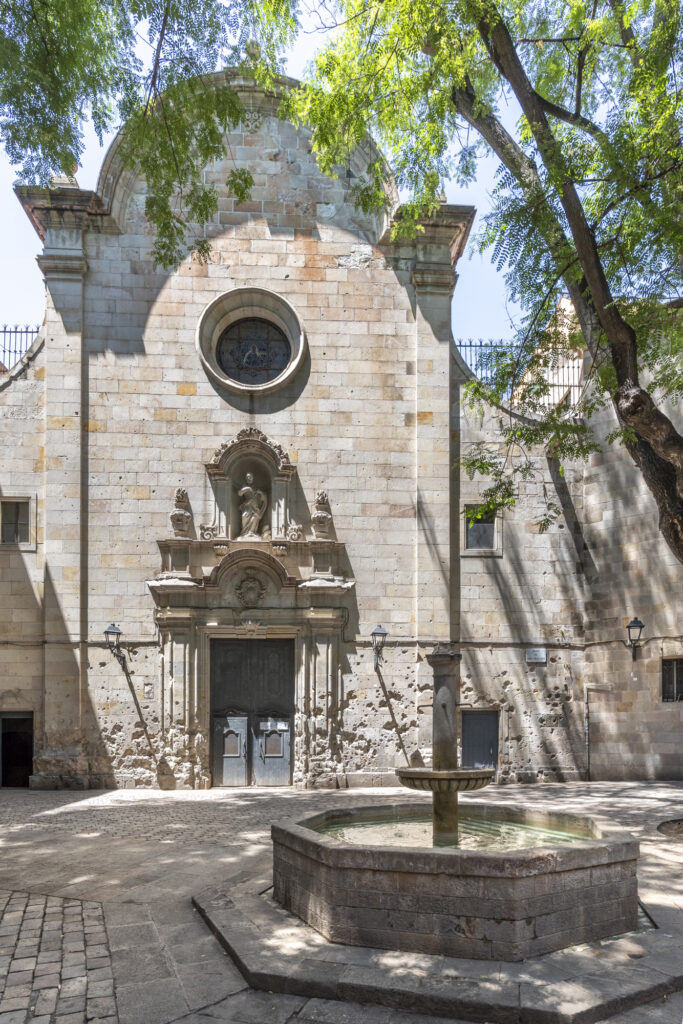
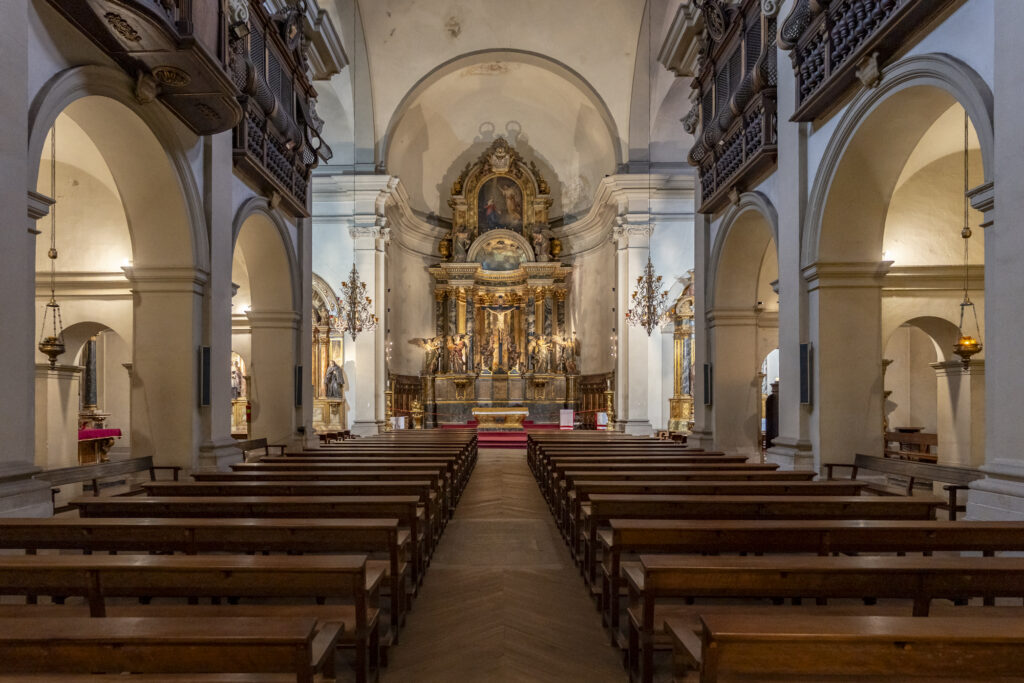
Exterior façade and inside of Sant Felip Neri church, which Antoni Gaudí frequented regularly
Sant Felip Neri was very important to Gaudí, both socially and artistically, and spiritually, as it was where he went to confession and followed the teachings of Lluís M. de Valls and Agustí Mas, both priests at that church. He often coincided there with members of Cercle Artístic de Sant Lluc,an association of artists who shared the ideals of Christian Catalan nationalism promoted by Bishop Josep Torras i Bages. These included painter Joan Llimona, architect Josep Puig i Cadafalch and Orfeó Català Director Lluís Millet, who was the chapel master and shared his interest in popular music and Gregorian chants, among others. The former, brother of sculptor Josep Llimona who worked on the Sagrada Família, paid tribute to Gaudí by having him sit as a model for Saint Philip Neri in the two paintings that hang inside the church.
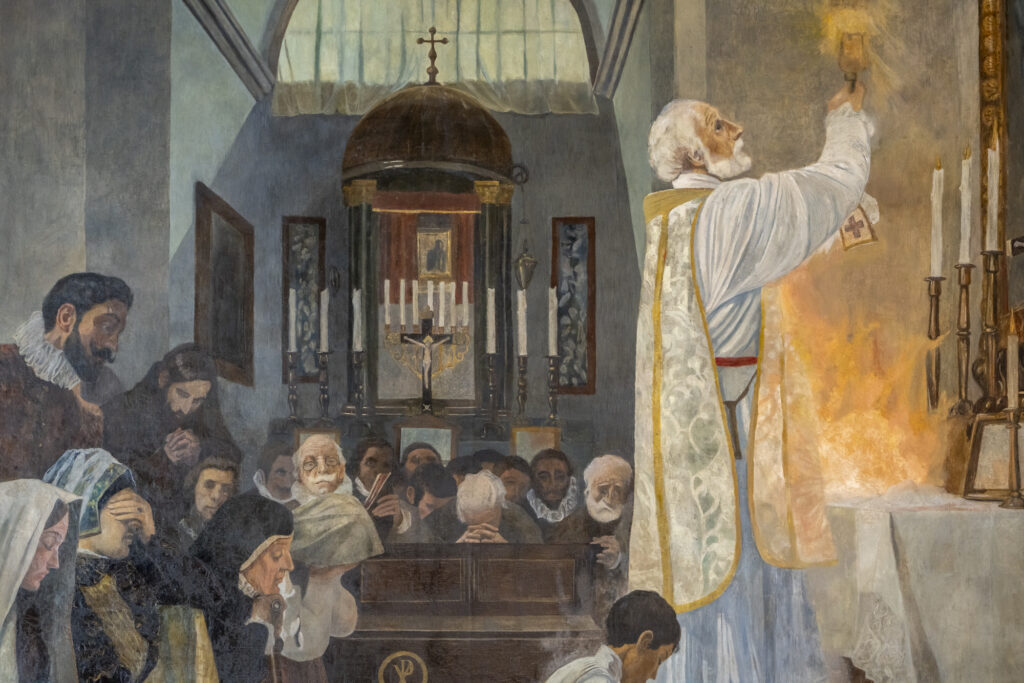
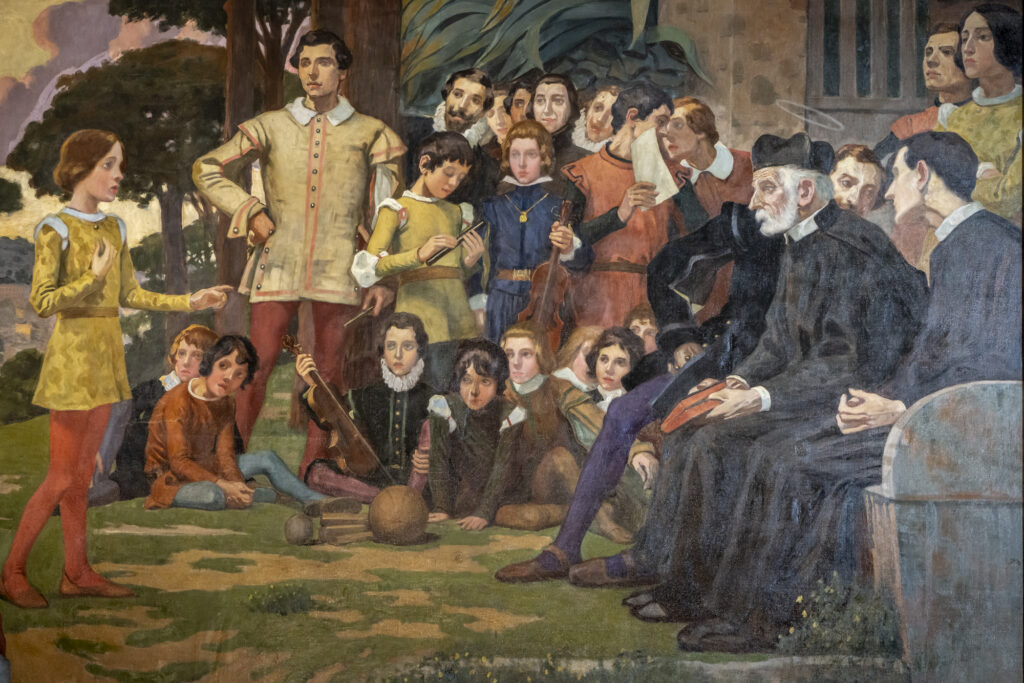
Paintings from Sant Felip Neri church with Antoni Gaudí portrayed as a saint. By Joan Llimona
At the end of the day, he returned to Park Güell, on foot or by tram, with the evening edition of the newspaper La Veu de Catalunya under his arm, which he purchased in Plaça d’Urquinaona. He was often accompanied by friends such as Dr Pere Santaló and head sculptor Llorenç Matamala, when their health allowed it. Sometimes, he stopped by the Sagrada Família model workshop for dinner and, when he arrived home, said a quick prayer to the image of Saint Anthony of Padua in his garden, as he did when leaving in the mornings.
Gaudí walked between eight and ten kilometres a day through the streets of Barcelona. Physical activity was an essential part of his daily routine, as he said:
“The feet hold up the head. Walking is essential to offset intellectual work and for deep, restorative sleep. It is important to occupy your mind and body all day, walking and exercising, according to each person’s energy level. That way, you sleep through the night and that is balance, compensation, life.
*Joan Bergós, Gaudí. The man and his work.Page 27.
These walks were even longer on Sunday mornings. After attending mass at the cathedral, Gaudí headed down to the breakwater at the port to watch the sea. He had done this ever since he was a boy in Tarragona, because he believed the sea allowed him to perceive volume and three-dimensionality. He was often accompanied by Domènec Sugrañes, his first collaborator at the Sagrada Família and the architect who would take over the works there after his death. On these walks, Gaudí, a pleasant man to listen to and accustomed to reflection, had long conversations with his companions on a wide variety of topics. “You have to alternate between reflection and action, as they correct each other,” the architect explained to Joan Bergós, one of his young collaborators.
2 comments
xavier carreté
voldria coneixer mes dels bombardejos a la sagrada familia durant la guerra civil i no sabria on buscar. si em poden ajudar els hi ho agrairia molt
Diana Fernández
Hola Xavier, moltes gràcies pel teu comentari. La Sagrada Família no va ser destruïda pels bombardejos de la Guerra Civil, però sí que va patir greus danys arran dels incidents del juliol de 1936