Coinciding with the feast day of Our Lady of Montserrat, patron saint of Catalonia, we are focusing this post on Antoni Gaudí’s connections to this mountain and the references to this symbol of Catalan identity, spirituality and culture that he planned for the Sagrada Família.
References to the mountain and the Virgin at the Basilica
A crag as a pinnacle
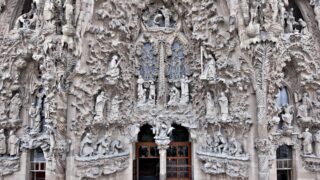
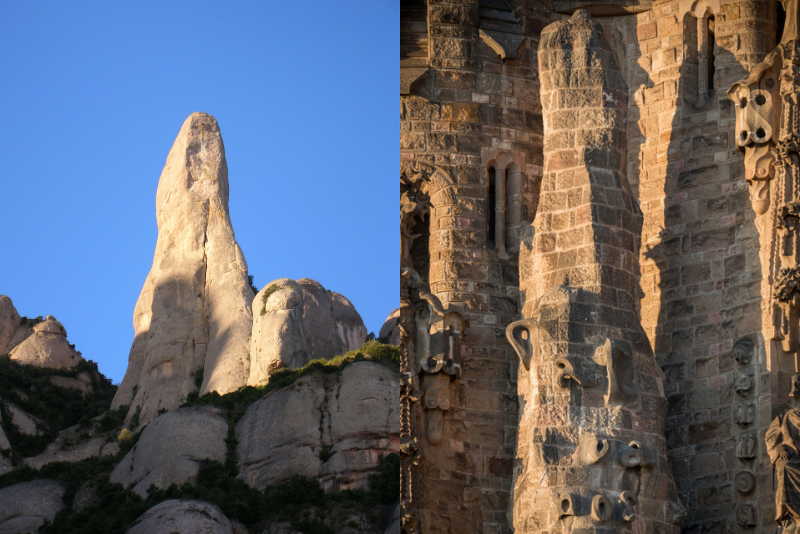
The portal of Hope on the Nativity façade, above the sculpture group of Saint Joseph’s boat, is topped with a crag from Montserrat. The rock features the Latin inscription “Salva-nos” (Save us) as a symbol of hope and the Virgin Mary’s protection
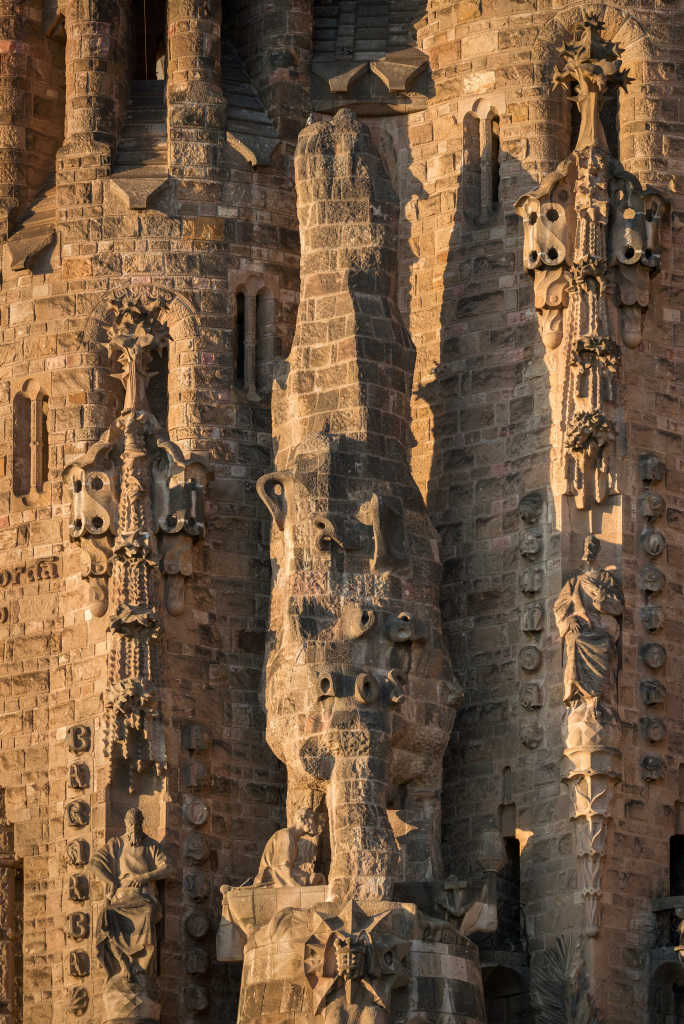
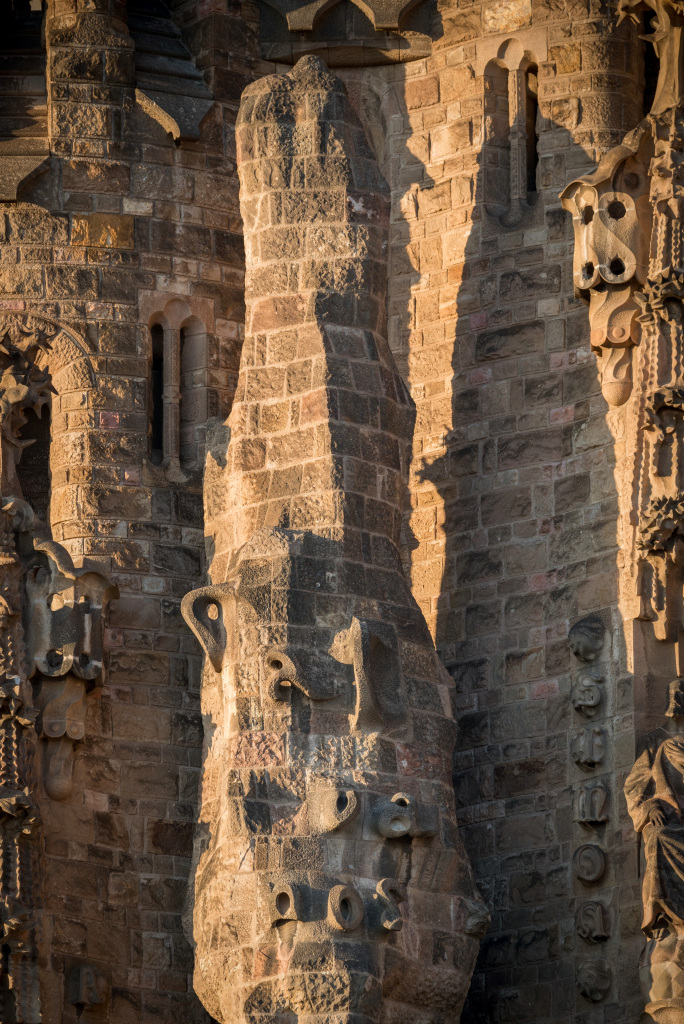
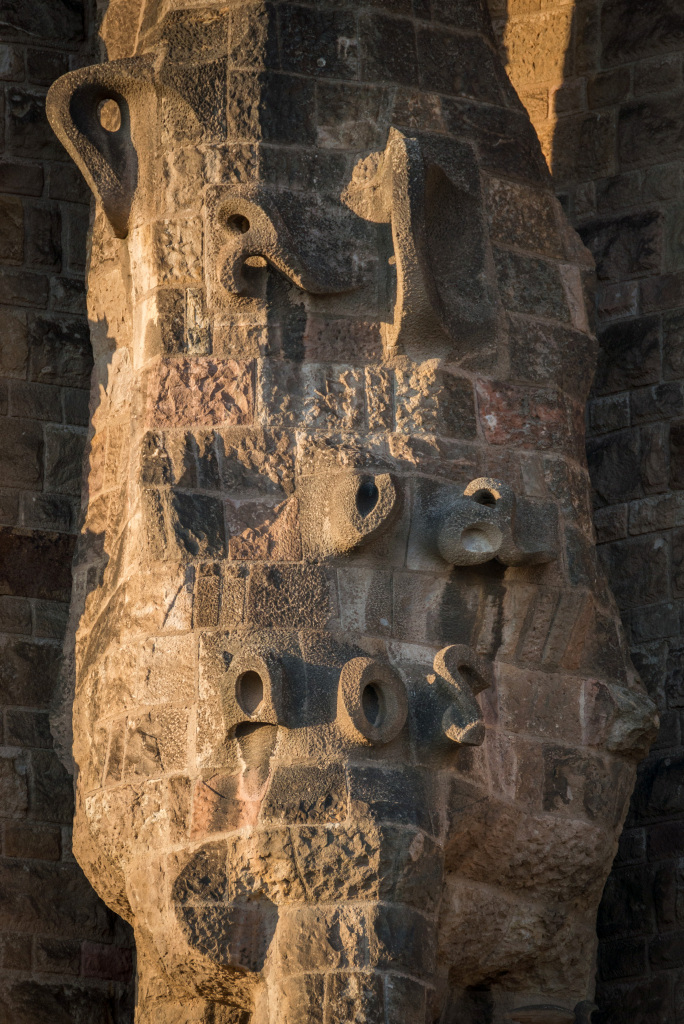
Montserrat crag on the pinnacle of the portal of Hope, on the Nativity façade, with the inscription “Salva-nos”
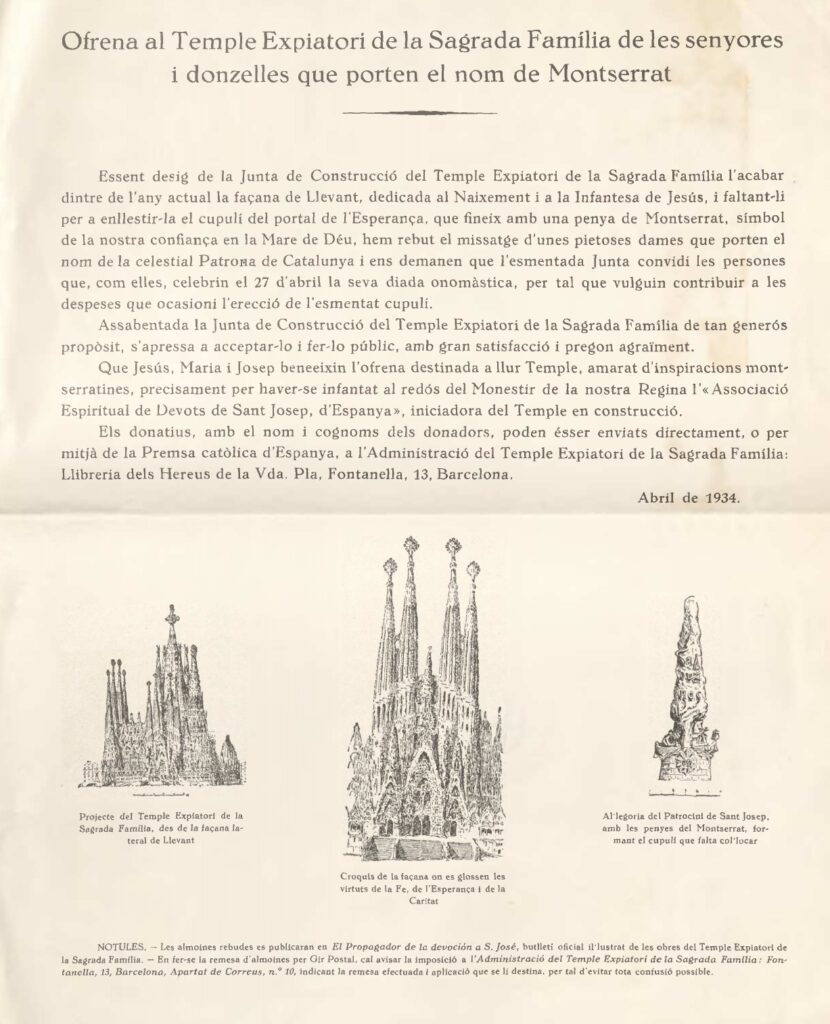
One fun fact is that a group of women named Montserrat helped fund, at their own request, the construction of this crag, as reported in El Propagador de la Devoción a San José in 1934 and in the document below and it is also explained in this document by Joan Martí Matlleu, secretary of the Junta Constructora from 1915 to 1935 and publicist of the work of the Temple:
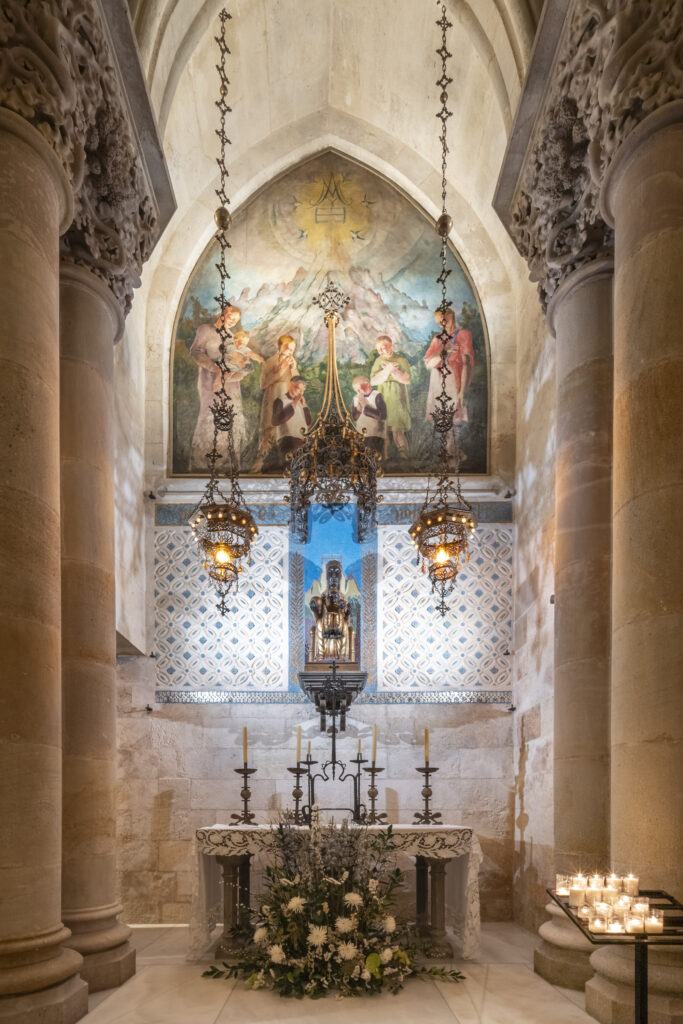
Chapel of Our Lady of Montserrat
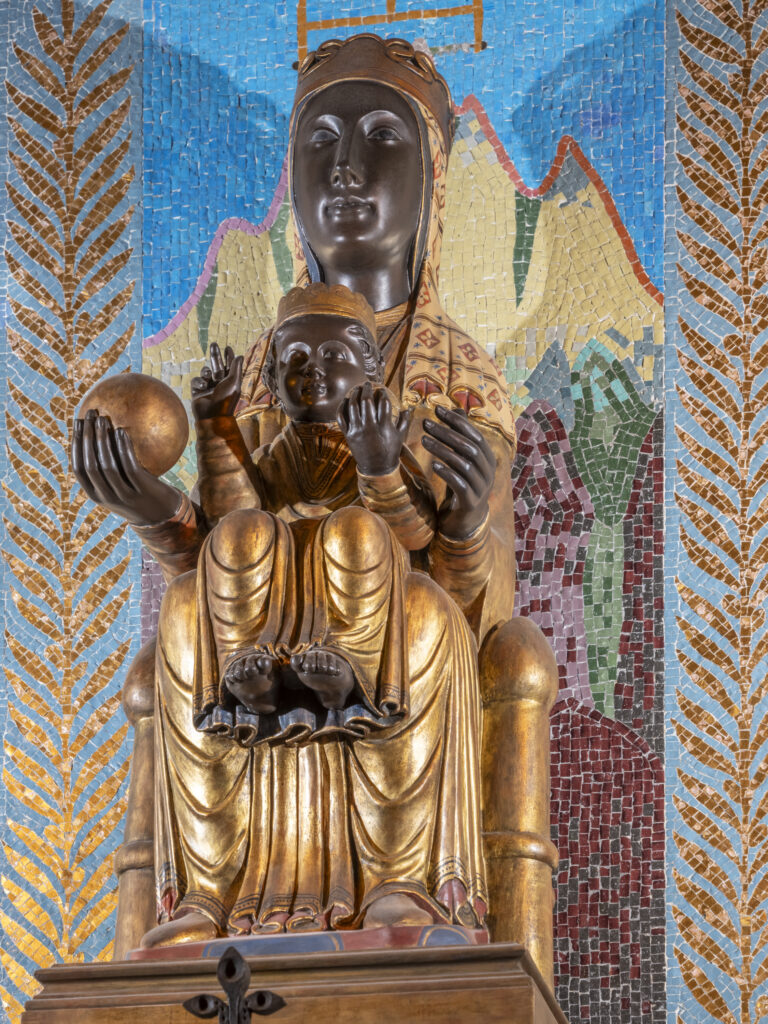
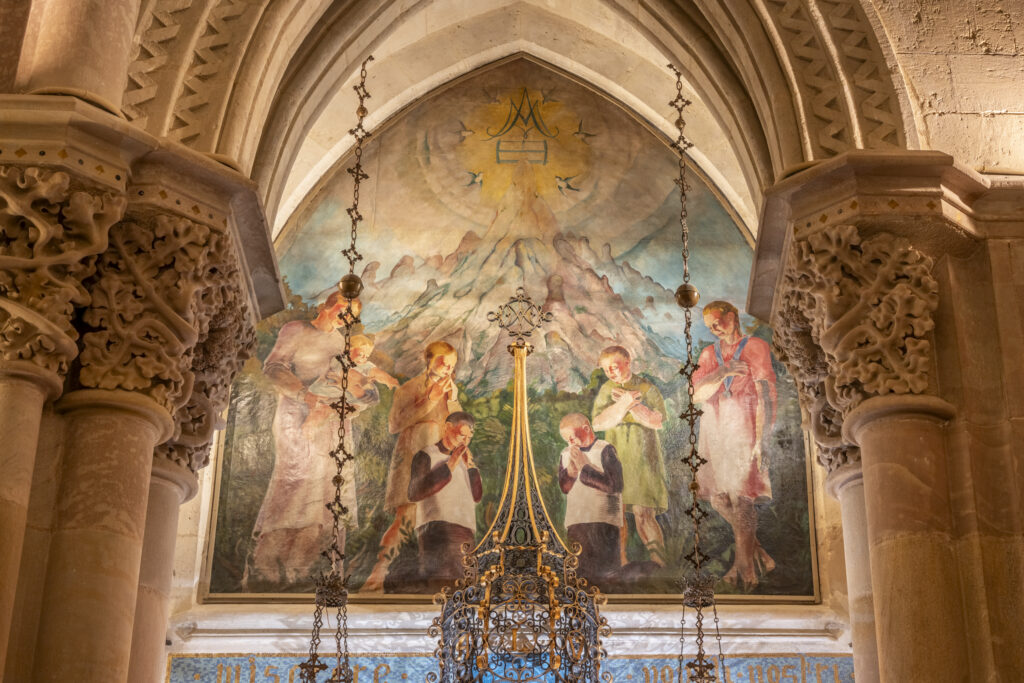
The architect also dedicated one of the twelve chapels in the crypt to Our Lady of Montserrat, choosing the one to the right of the main altar. A lamp hangs on either side of a replica of the Virgin, popularly known as La Moreneta, under a bronze baldachin with a painting of Montserrat mountain in the background. A mosaic of blues and golds decorates the wall behind the figure. The whole chapel has recently been restored, bringing back the original polychroming from Gaudí’s time on exhaustive studies and analysis of historical photographs.
Cloister of Our Lady of Montserrat
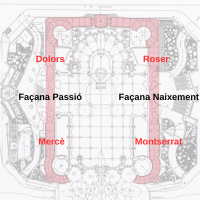
Gaudí also dedicated the cloisters on the façades to different Marian advocations that are popular in Catalonia. He placed the one dedicated to Our Lady of Montserrat on the Nativity side, by the portal of Hope, where the crag is located. This space is currently used for ecclesiastical, catechistic, educational and popular events.
By the portal of Faith, we have the cloister dedicated to Our Lady of the Rosary, the only one Gaudí saw finished inside. On the Passion side, the cloisters of Our Lady of Dolours and Our Lady of Mercy round out the ones that have been built.
Gaudí and Montserrat
While at the helm of the works on the Sagrada Família, Gaudí received a visit from the abbot of the monastery, Antoni Marcet1, who admired the architect’s religious knowledge and eagerly followed the project’s progress. But where did the connection between the Catalan genius and Montserrat come from? And why was it a reference for him throughout his life?
Project to restore the monastery
It all started when he was a student. Between 1875 and 1877, he worked for architect Francisco de Paula del Villar on the project to restore the monastery, which had been seriously damaged during the Franco-Spanish Wars. Gaudí drew up four plans for the project, which are still in the abbey’s archives, and as he himself explains in the diary of the Manuscript of Reus. They planned to restore the roofs of the basilica and build a lantern to illuminate the interior, although there was only funding for the apse and the niche for the Virgin Mary, which would be finished years later.
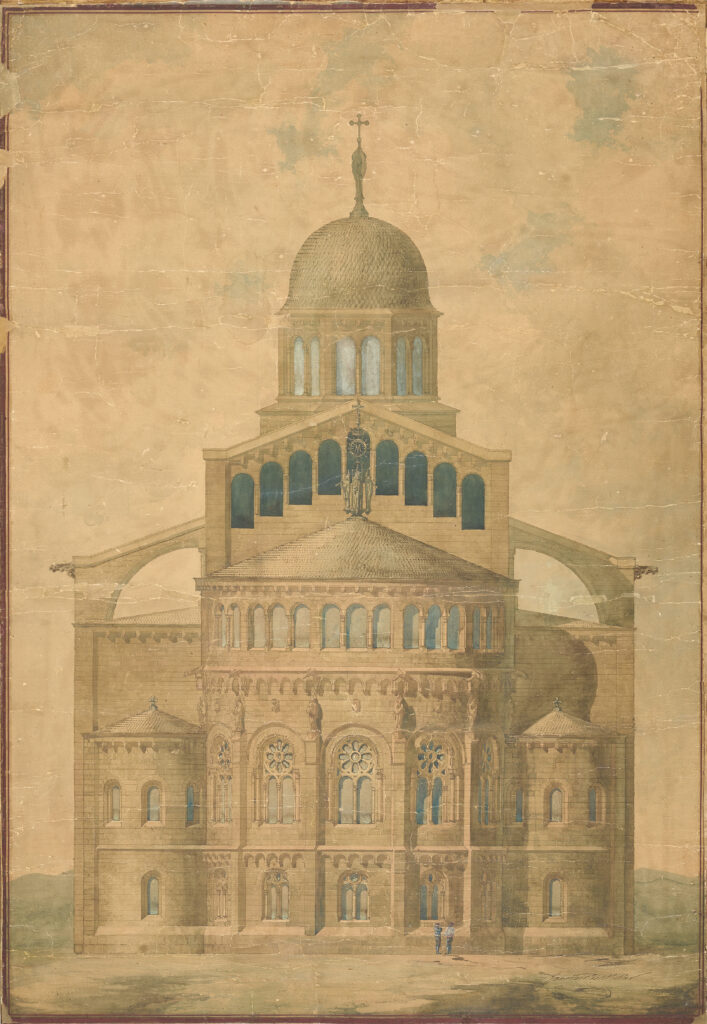
Longitudinal color section of the restoration project of the Apse of the church of Montserrat. Author: Antoni Gaudí i Cornet. Signed by the architect Francesc de Paula Villar Lozano. Drawing provided by the Museum of Montserrat.
First Glorious Mystery
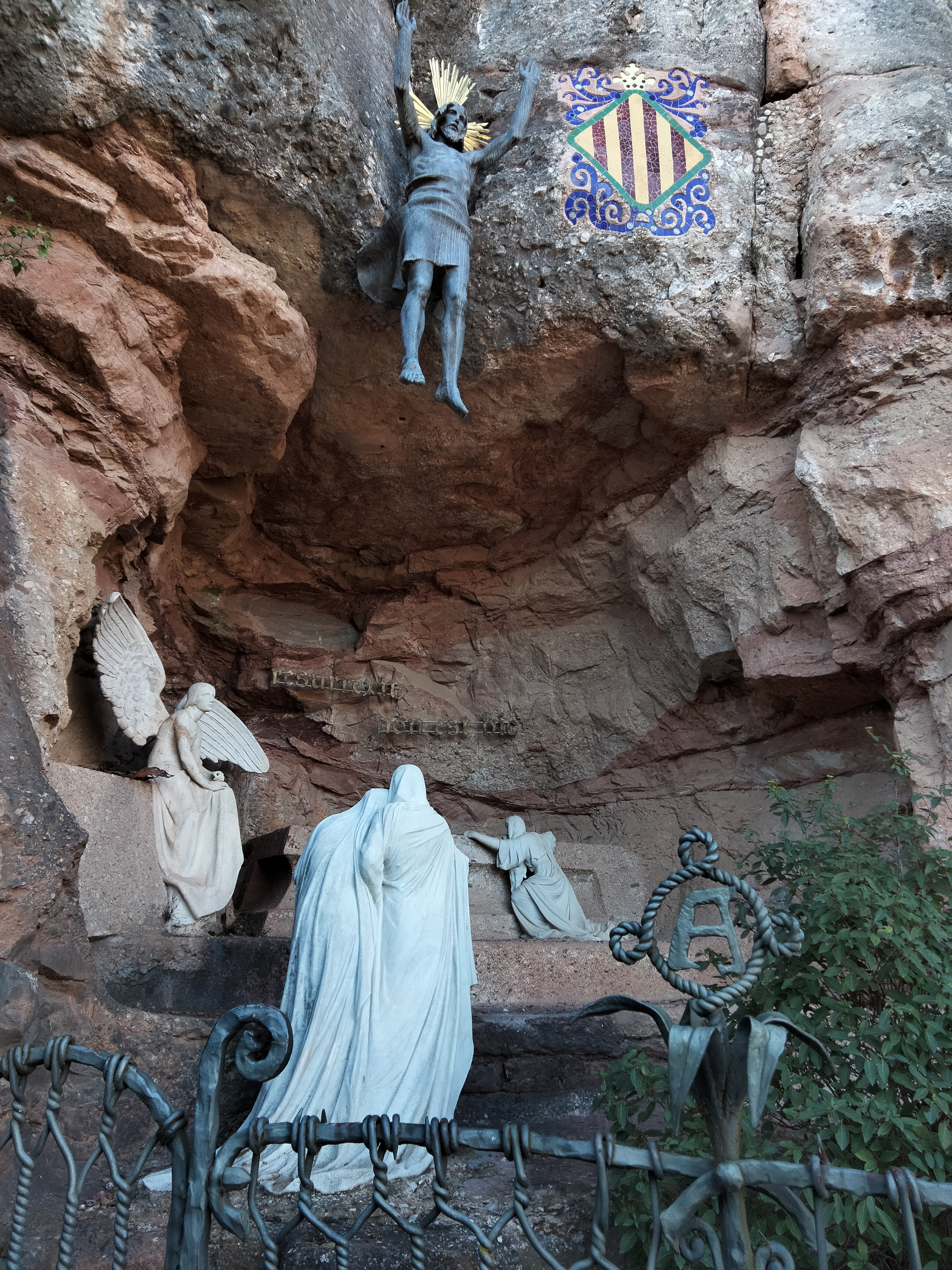
He would work on the project again in 1900, already a well-established architect in Barcelona. The Spiritual League of Our Lady of Montserrat, recently founded by Gaudí’s mentor Bishop Josep Torras i Bages, commissioned him to create a sculpture group representing the First Glorious Mystery. It is one of the fifteen mysteries in the Monumental Rosary, each entrusted to a different noteworthy Modernisme artist, that were to accompany pilgrims on their path from the sanctuary to the Holy Cave, where legend has it the image of Our Lady of Montserrat was found. The architect studied the spot assigned for his work and decided to expand an existing cavity to make a cave for the sequences: the empty tomb watched over by an angel announcing the Resurrection, the figures of the three holy women witnessing the Empty Tomb, and Christ rising up into Heaven with a polychrome mosaic of the Catalan coat of arms next to him.
The project dragged on and Gaudí, who was in high demand at the time, began delegating the work to other architects and artists over time. Finally, the monument was finished in 1916 under the leadership of Jeroni Martorell.
Excursions and other imagined projects
During his stays on Montserrat, Gaudí imagined other projects he would have liked to implement on the mountain , although they never came to fruition. One was to turn the well-known Cavall Bernat crag into a monumental tribute to the Virgin Mary by putting an iron crown with a star on top of it, and to Catalonia, with a 25-metre mosaic of the Catalan flag.
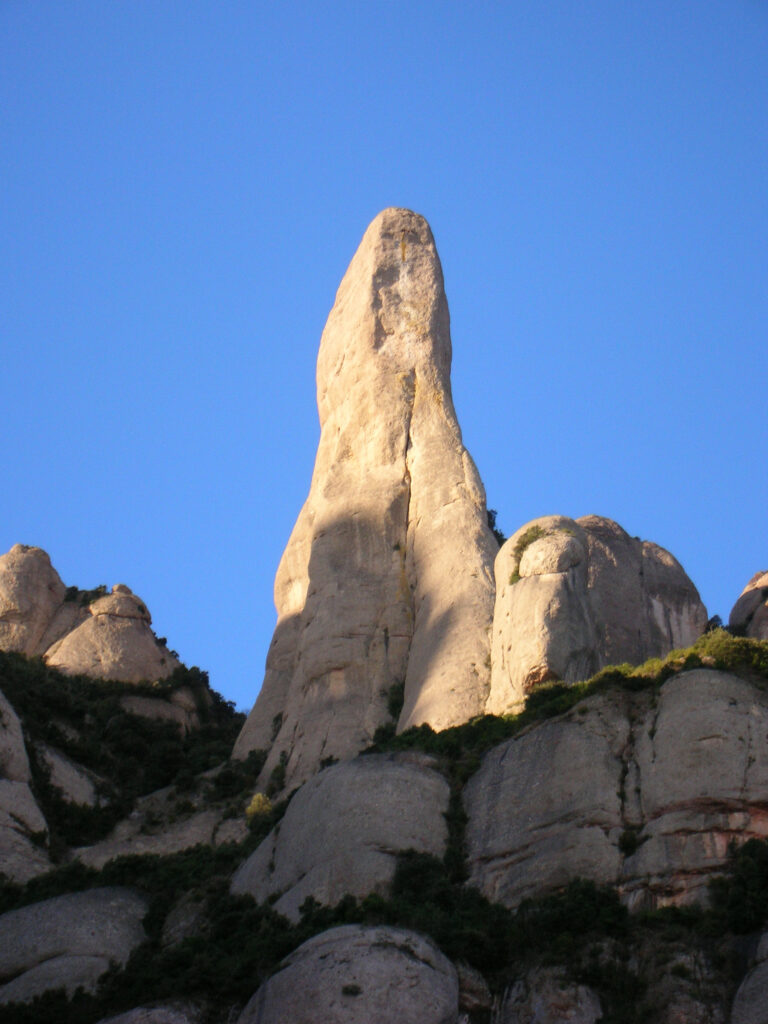
“On top of the thin spire of Cavall Bernat, I would have put a huge wrought-iron and glass crown, topped with a star and holding an enormous bell that would ring the Angelus for all the lands nearby. The crown, which would be reached via a staircase wrapped around the rock, would also be a great viewpoint for hikers. The expanse of rock underneath it would have a 25-metre mosaic of the Catalan coat of arms, visible from up to 10 kilometres away.”
Joan Bergós. The man and his work (translation). Pages 151-152
For Gaudí, Montserrat was the only place that united his religious and patriotic ideals, a feeling he shared with the Spiritual League, of which he was a member. The architect also often went on excursions to Montserrat to visit Dr Pere Santaló, as his friend spent the summers there. We have a picture from one of these visits:
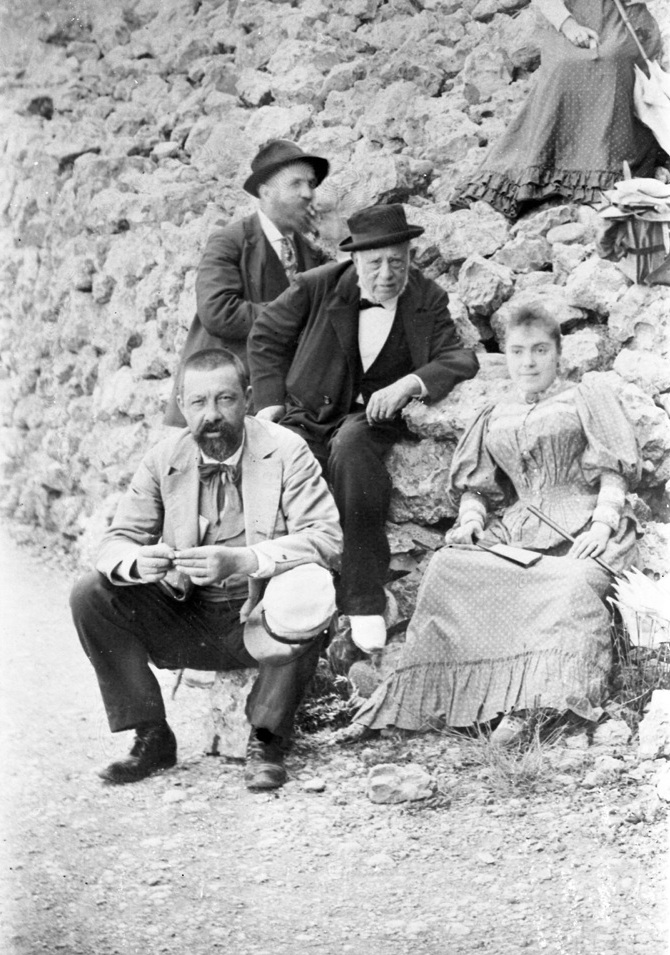
From top to bottom: Antoni Gaudí, his father, Francesc Gaudí, and Dr Pere Santaló i Castellví. Next to them, the architect’s niece Rosa Egea Gaudí. Photo taken on a visit to Montserrat, likely in 1904. Photograph from the Gaudí Chair.
- Joan Matamala i Flotats. Mi itinerario con el arquitecto. Pages 283 and 284 ↩︎