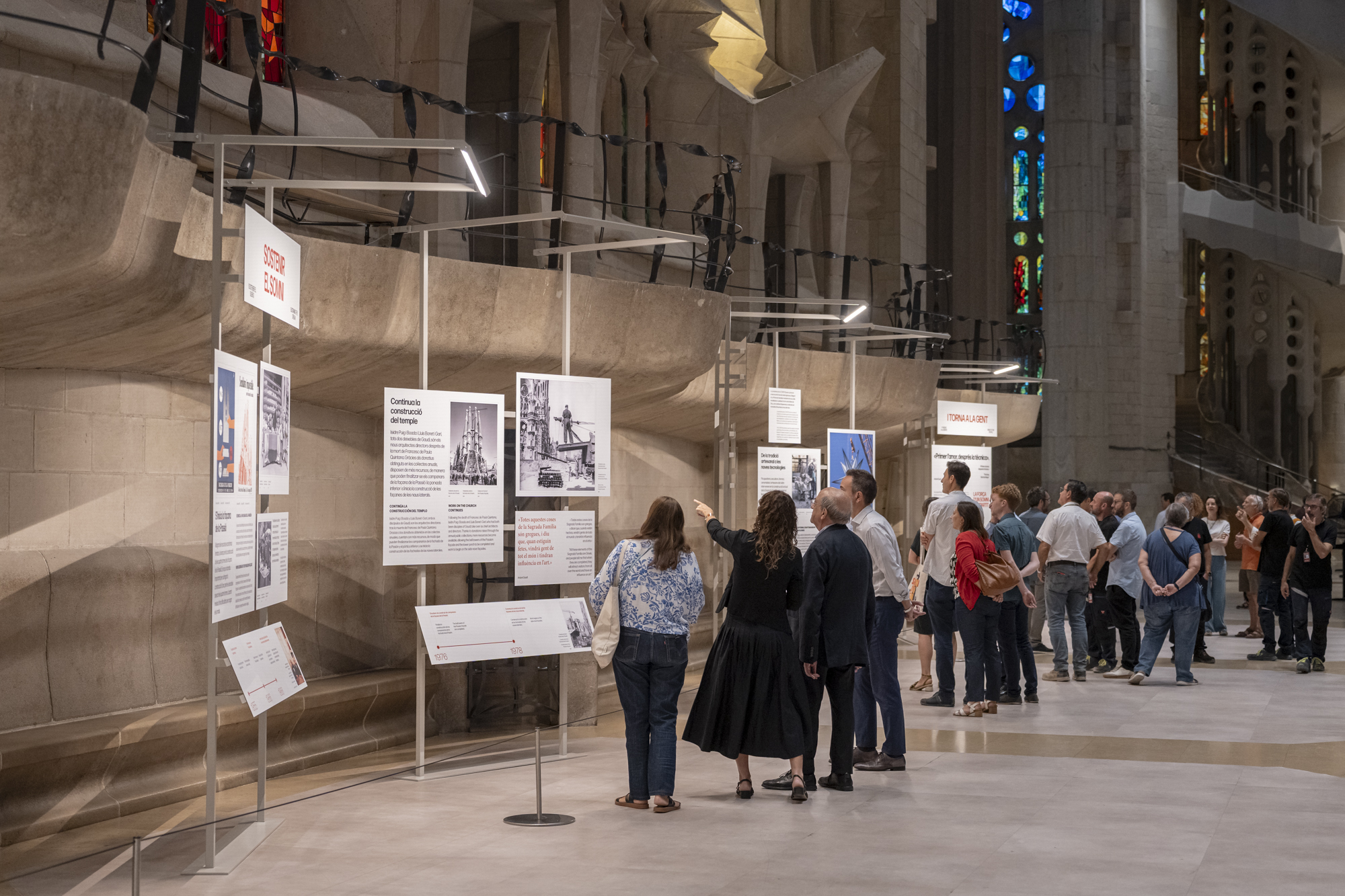
As part of the commemoration of the hundredth anniversary of Antoni Gaudí’s death, the Sagrada Família is hosting ‘The power of a shared dream’. This exhibition takes visitors on a journey through the history of a project that kicked off more than 140 years ago and continues today thanks to the hard work and dedication of several generations.
The exhibition also features people, documents, decisions and anecdotes to help understand what is behind this project and how one dream has been passed down from generation to generation.
In this post, we’re looking at some of the details, stories and moments from the path this challenge has taken to become what it is today.
A dream that began even before Gaudí
The history of the Sagrada Família began with Josep Maria Bocabella, founder of «Asociación Espiritual de Devotos de San José» (Spiritual Association of the Devotees of Saint Joseph) and promoter of the project to build a temple dedicated to the Holy Family.
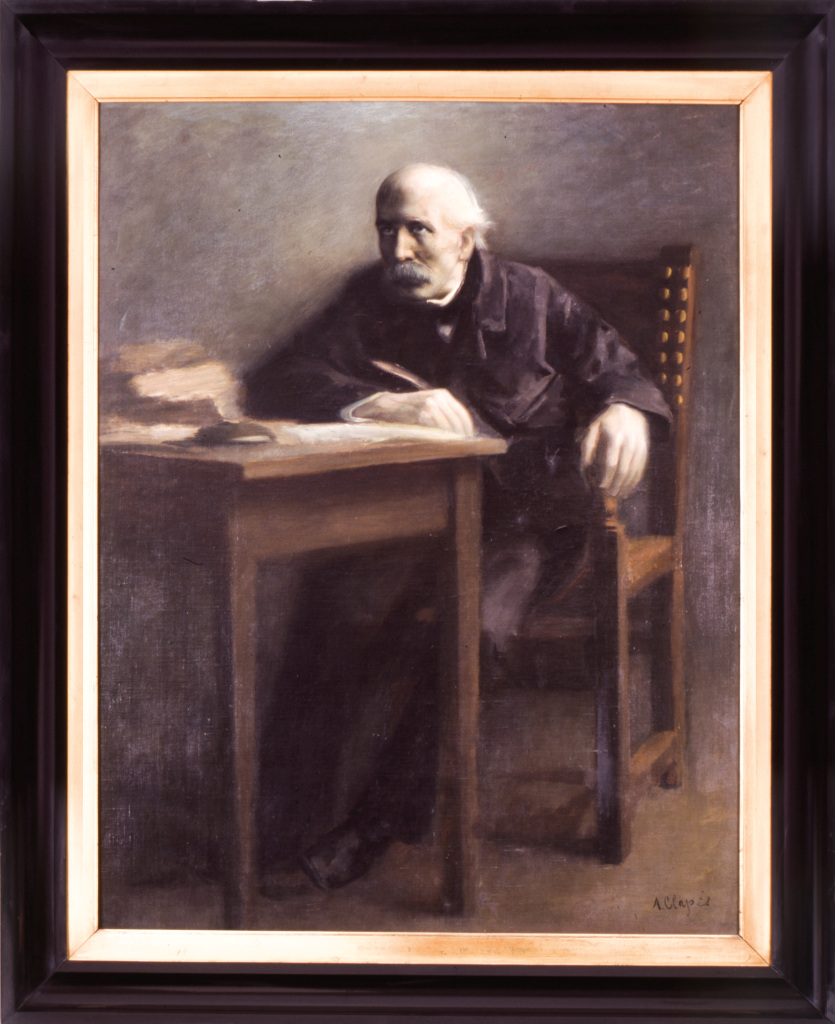
Portrait of Josep M. Bocabella. Credit: Aleix Clapés
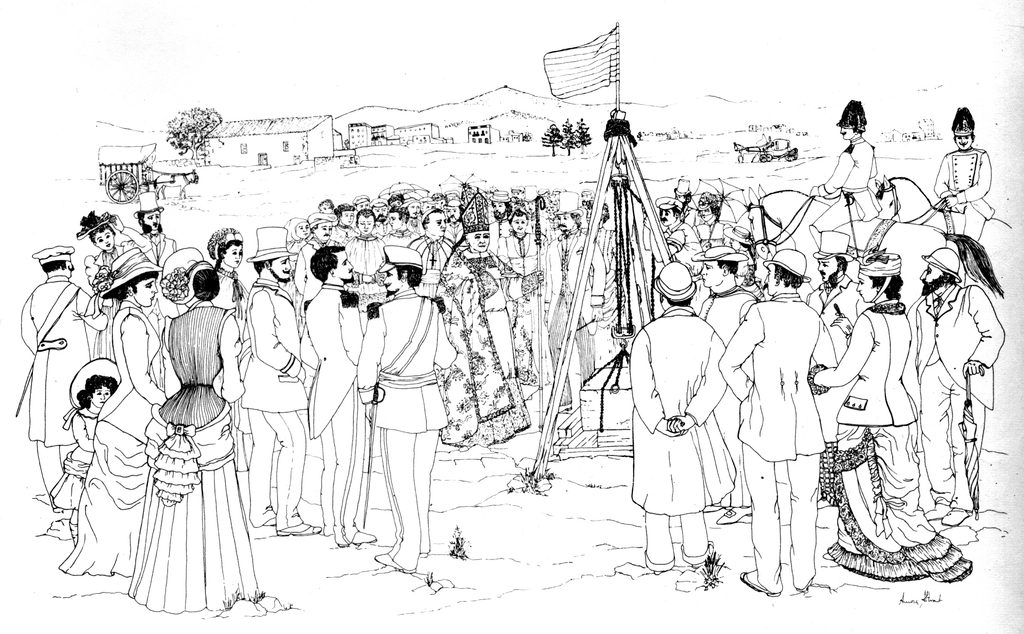
On 19 March 1882, the feast day of Saint Joseph, the cornerstone was laid. Works began with the crypt, according to the designs of the Temple’s first architect Francisco de Paula del Villar.
Where is the cornerstone of the Sagrada Família?
Construction began with the crypt, under the apse
Drawing showing the laying of the cornerstone. Credit: Aurora Altisent
A Temple by and for the people
The project took on a new shape when Antoni Gaudí took over the works in 1883, at just 31 years of age. From that time, the architect completely transformed the initial proposal and imagined a monumental Temple. He saw it as a work that would grow over time: a great stone catechism.
But one concept remained unchanged: the Sagrada Família is a team project.
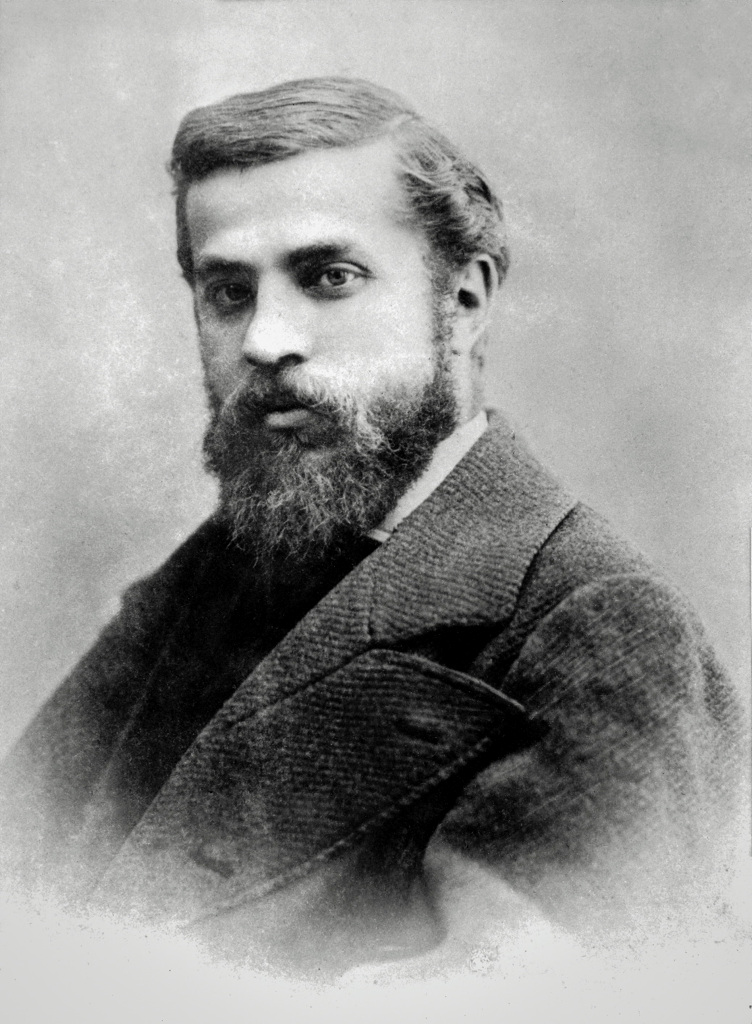
Photo of Antoni Gaudí. Credit: Pablo Audouard, 1878
Gaudí expanded the dream
Under Gaudí, the Sagrada Família was no longer just a project for a temple. It became a highly complex architectural, sculptural and symbolic work.
To build it, Gaudí needed a whole team. Architects, craftspeople, stonemasons and construction workers have taken part in this building project that also draws on its immediate surroundings. The exhibition shows, for example, how people close to the works were used as models for some of the sculptures.
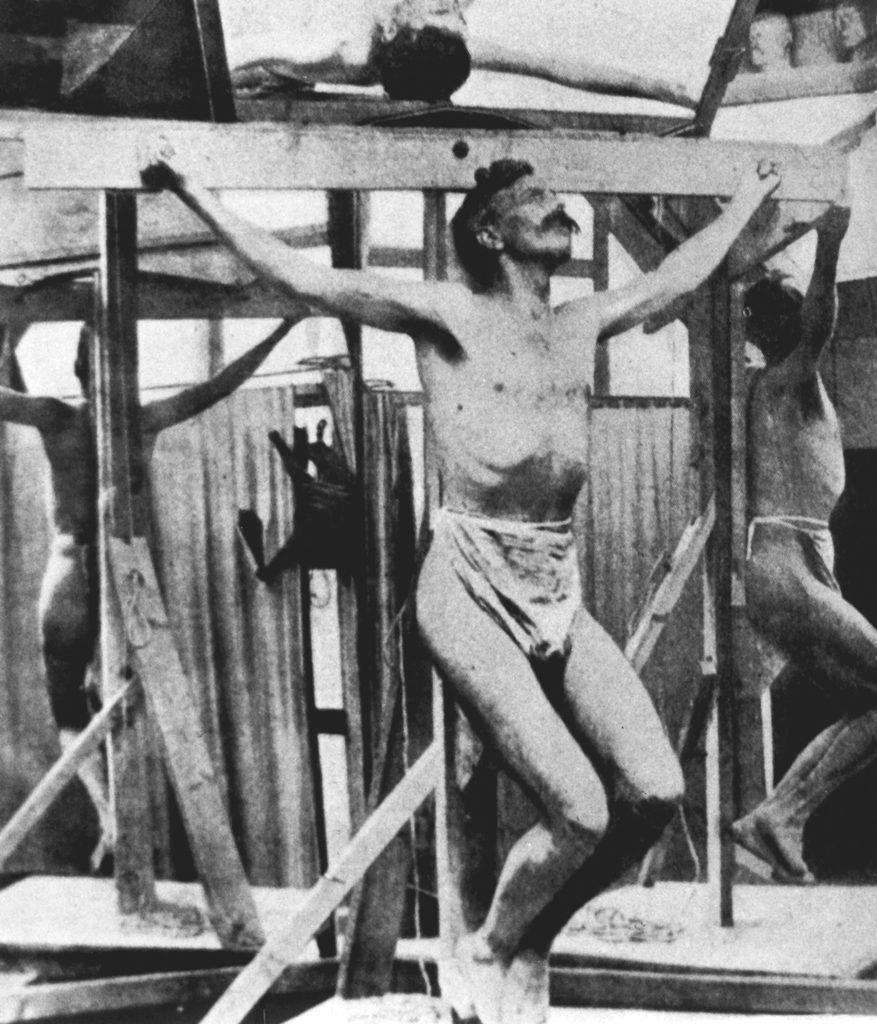
Gaudí built schools for the children of the workers and those living in the neighbourhood, and used locals as models. These two decisions reveal the master’s humane and community-minded approach.
Mariano Barceló, the head stonemason, modelling for sculptures at the Sagrada Família
A life devoted to the Temple
Over the years, the Sagrada Família became more central to Gaudí’s life. The architect knew he would never see such a massive project completed, and he planned out how it would carry on after his death.
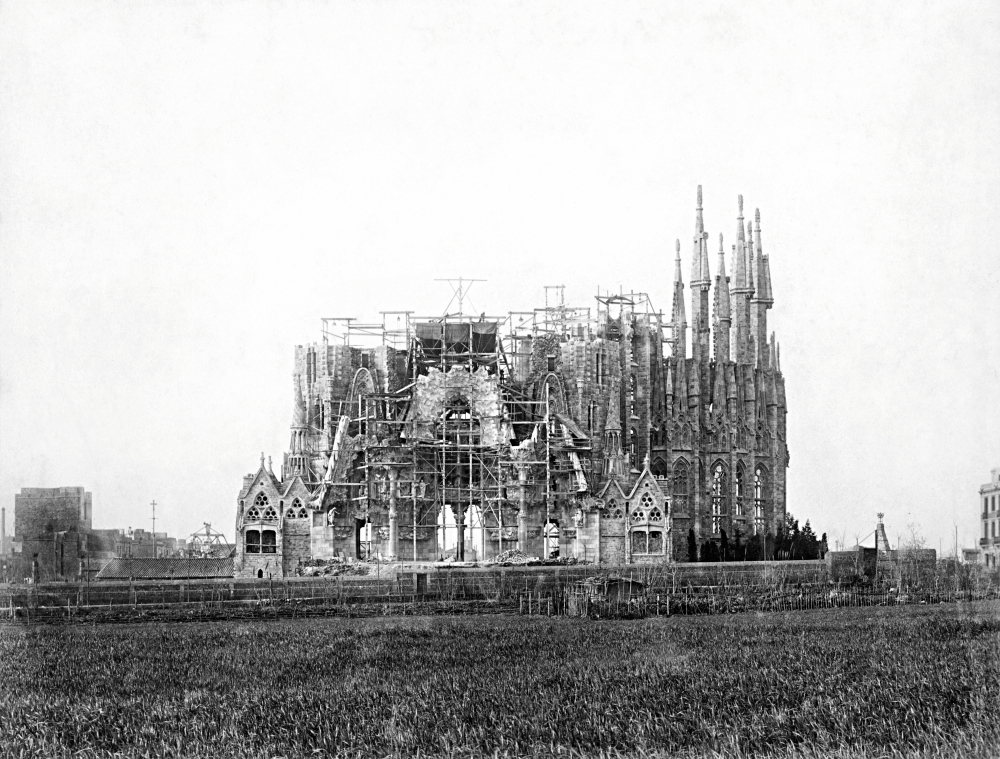
Gaudí designed the Sagrada Família vertically, so each generation could focus on one part.
“I wouldn’t want to finish the work myself, because it wouldn’t be right. A work like this should be the offspring of a long era. Its life will depend on the generations that transmit it.” A. Gaudí
For the last twelve years of his life, Gaudí worked exclusively on the Sagrada Família. He even helped to get donations so the works could continue. He got to see the completed Nativity façade, with one of the four bell towers fully constructed. The sculptural works wouldn’t be finished until after his death.
“We have built an entire façade of the Temple, the importance of which makes it impossible to halt the work.” A. Gaudí
The dream outlived Gaudí
Gaudí died in 1926, but the project lives on.
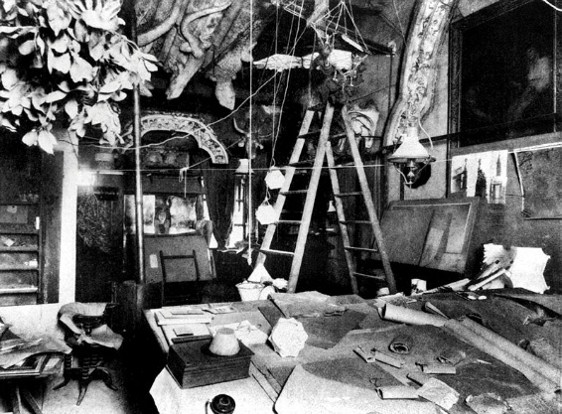
Gaudí left behind plans, models and drawings to make sure the works could continue. These conveyed the meaning, not just the architecture.
Plans and drawings in Gaudí’s atelier
Domènec Sugranyes, as head architect, Francesc de Paula Quintana, Isidre Puig i Boada and Lluís Bonet i Garí took over, staying true to Gaudí’s vision.
1936: when all could have been lost
The Spanish Civil War was a turning point. Gaudí’s atelier was seriously damaged and a lot of the documents and models the architect had used were destroyed.
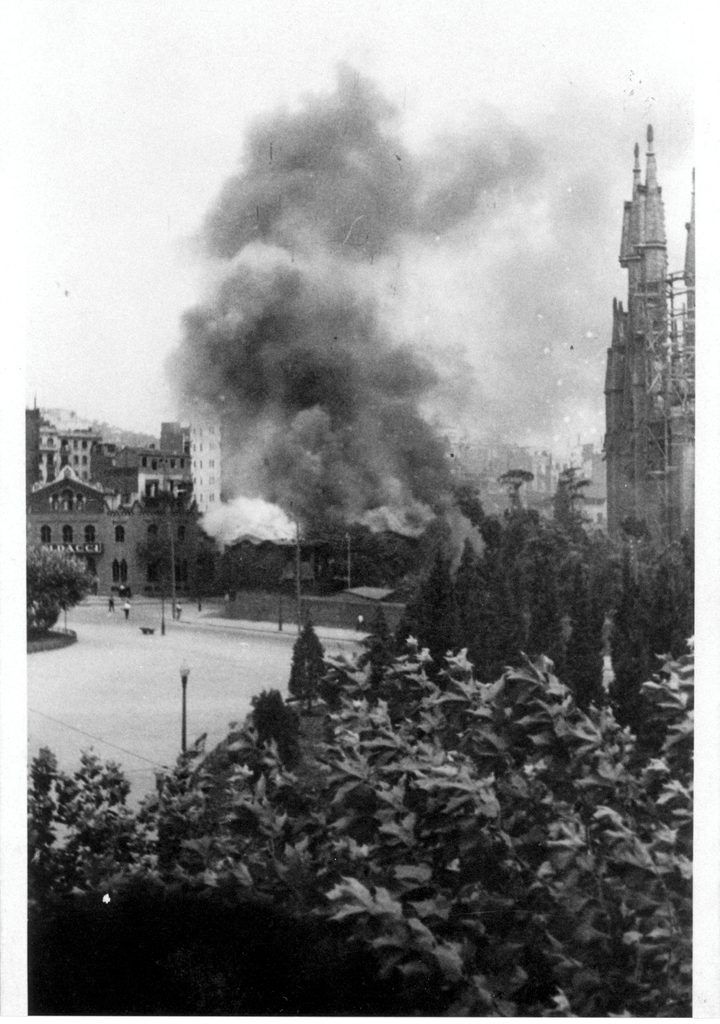
Fire in the early days of the Spanish Civil War. 1936
But the project managed to carry on. The materials that were able to be salvaged and the work of the architects and collaborators made it possible to start construction again.
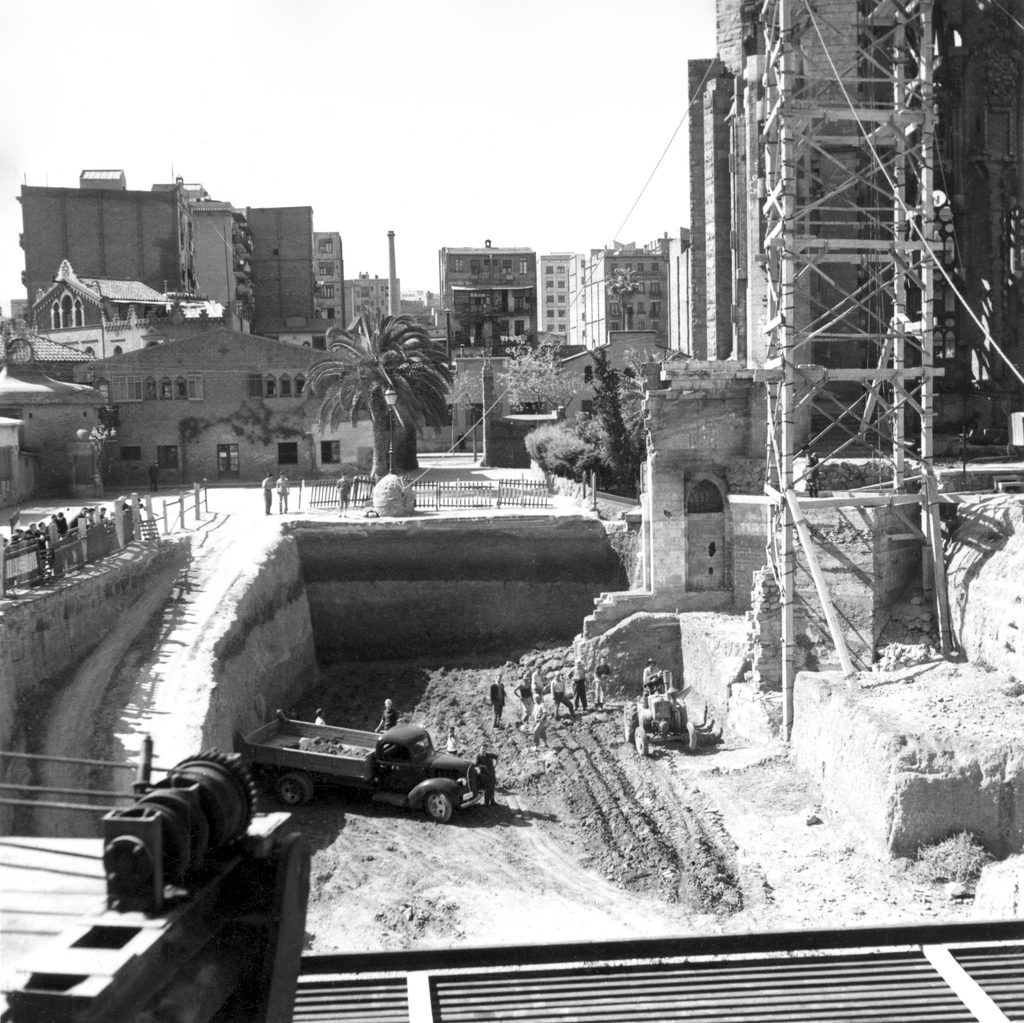
Francesc de Paula Quintana took over the project at a very precarious time. Despite the financial difficulties, construction continued on the four towers on the Passion façade.
Foundations for the Passion façade. 1954
From generation to generation
After Gaudí, several architects and teams have been charged with the challenge of continuing the works. Collections were taken to supplement the modest income from ticket sales, as the only way to fund this shared dream.
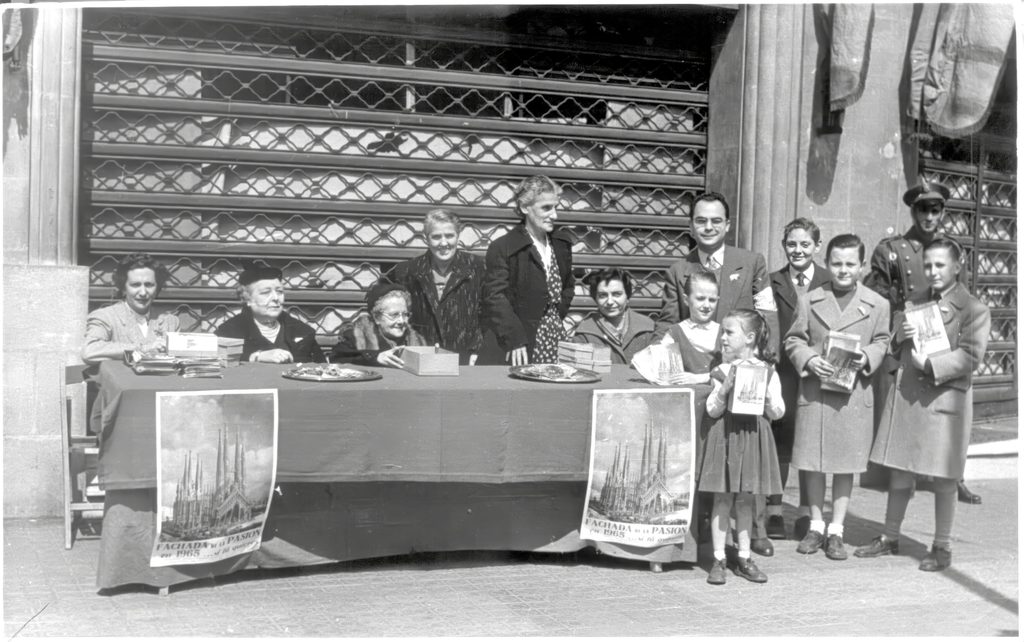
Fundraising in the city of Barcelona. 1955
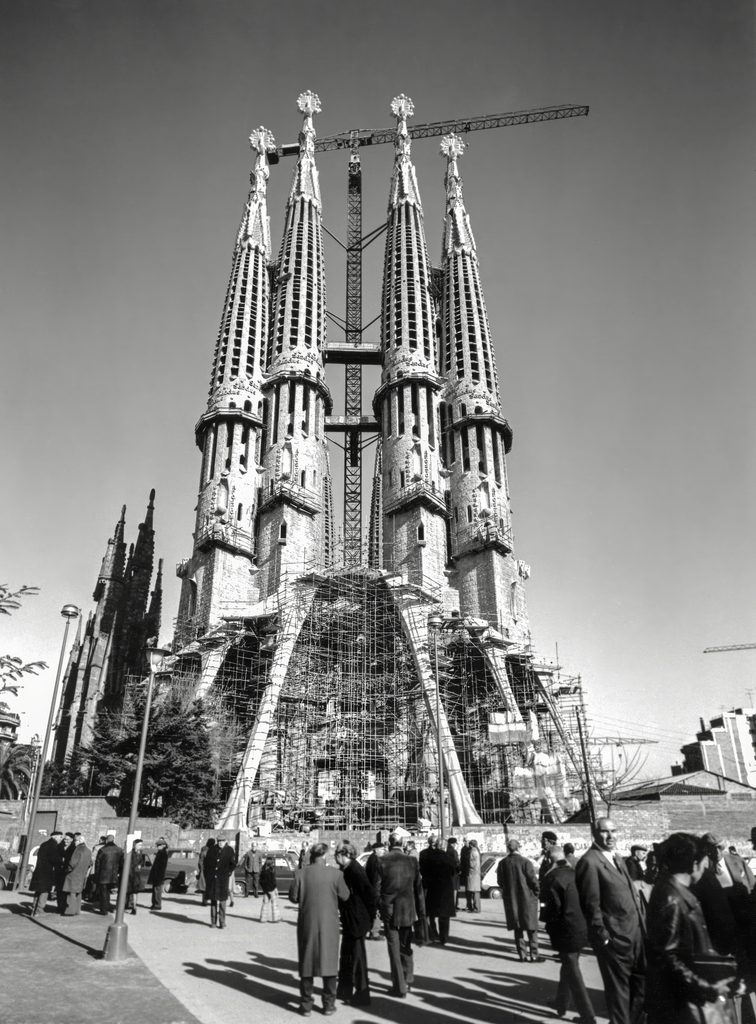
Isidre Puig i Boada and Lluís Bonet i Garí became head architects after Francesc de Paula Quintana died. Annual fundraisers brought in new resources that make it possible to finish the bell towers on the Passion façade and start the façades for the side naves.
The architects who have carried on the project
1882 · Villar → 1883 · Gaudí → 1926 · Sugranyes → 1939 · Quintana → 1966 · Puig i Boada & Bonet i Garí → 1983 · Cardoner → 1985 · Jordi Bonet → 2012 · Jordi Faulí
Visitors in front of the Passion façade. 1976
A project that continues to innovate
The 1992 Olympic Games brought a huge influx of new visitors and funds to the Sagrada Família. In 2010, Benedict XVI consecrated the Temple and granted it the status of a Minor Basilica. During the pandemic, despite the loss of income, the Board of Trustees decided to finish the tower of the Virgin Mary as a symbol of hope and continuity.
The Temple is always evolving and using new techniques, while still respecting the original project.
This shared dream continues to advance today. The final section of the exhibition takes us up to the present day: from artisan craftsmanship to new technologies, construction of the Sagrada Família continues to incorporate new tools and work methods.
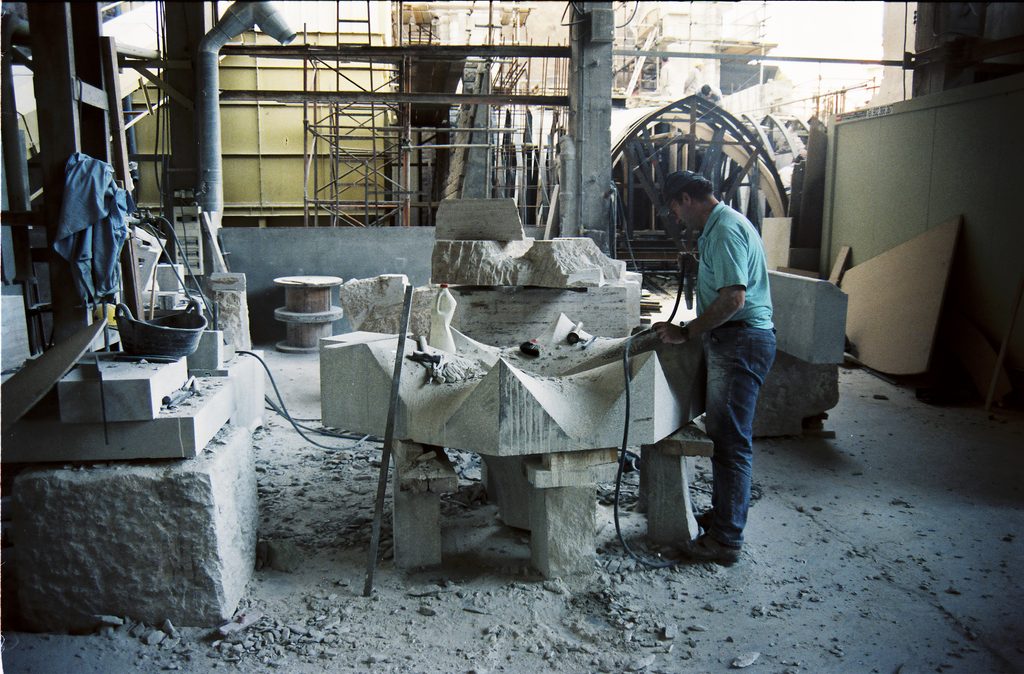
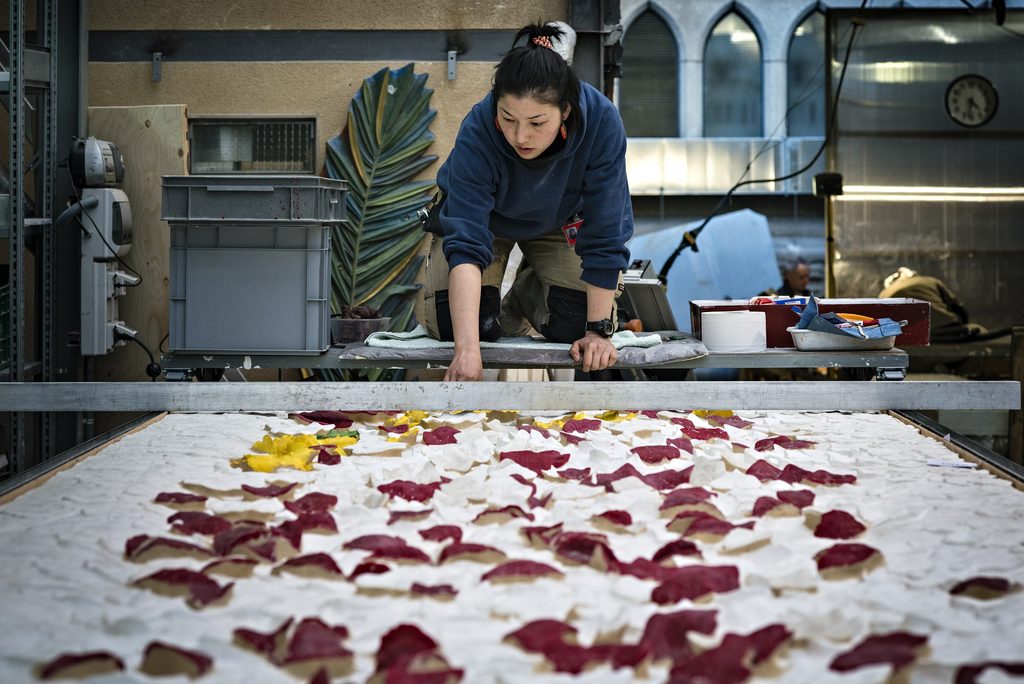
Stonemasons and works on the doors for the Nativity façade
A dream that carries on
More than 140 years after the laying of that first stone, construction of the Sagrada Família continues. It is a dream that has been passed down from generation to generation, taking shape thanks to the hands and vision of the people who make it possible.
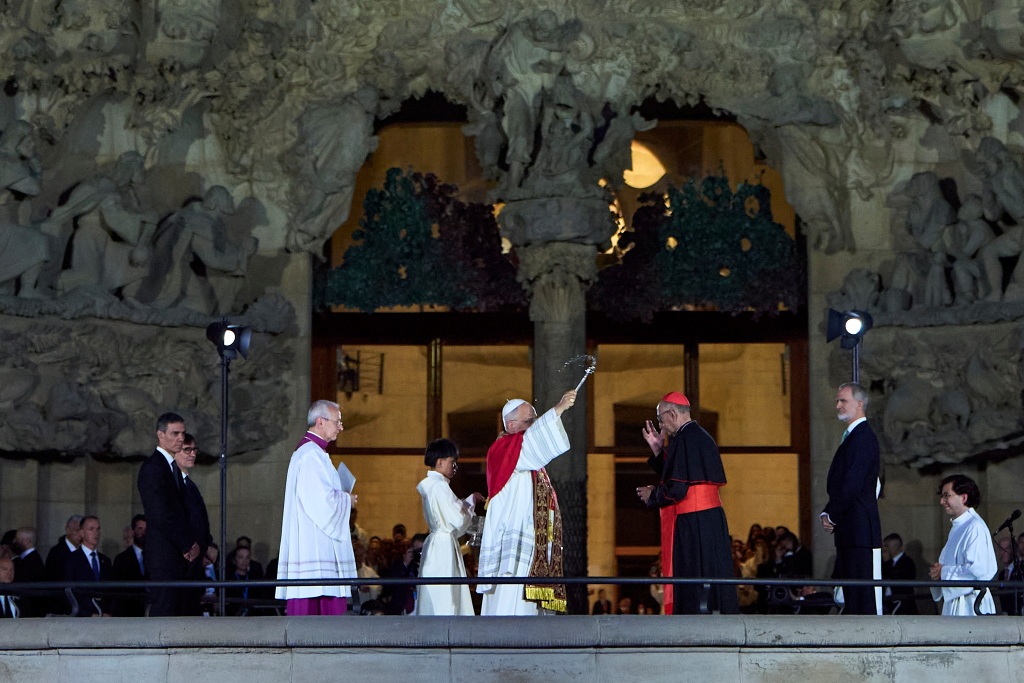
When Pope Leo XIV blessed the tower of Jesus Christ, it was a tribute to everyone who has helped make this dream come true.
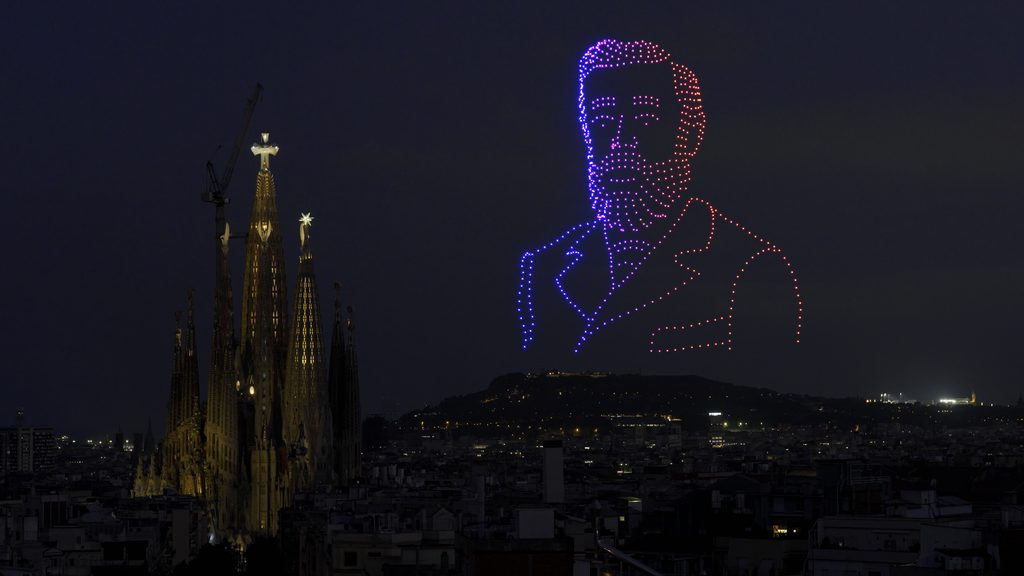
“The Sagrada Família is born of the people and returns to the people.” A. Gaudí