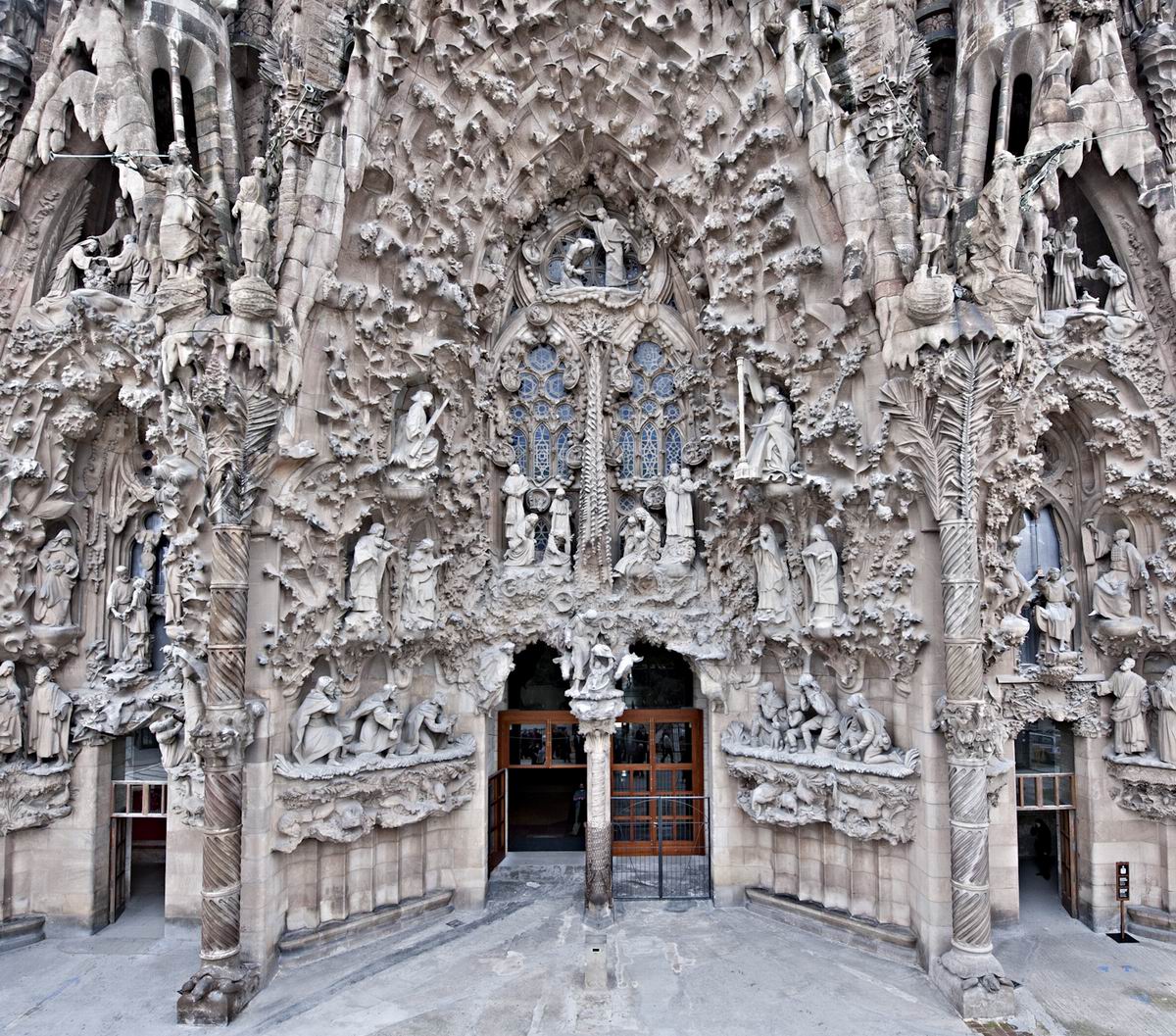
Antoni Gaudí wanted the Nativity façade at the Sagrada Família to be a celebration of the joy of life and divine creation. This is why it is full of animals (hens, ducks, insects, amphibians, various birds, etc.) and plants (roses, lilies, ferns, fruit trees, palm trees, etc.) praising the birth of the Messiah and reinforcing the symbolic meaning of the scenes on this façade. The architect associated the arrival of Jesus with nature’s splendour and daybreak. This is why this façade faces east and the rising sun, which illuminates all its sculptures first thing in the morning. We’ll look at them in this post.
Structure and sculpture groups
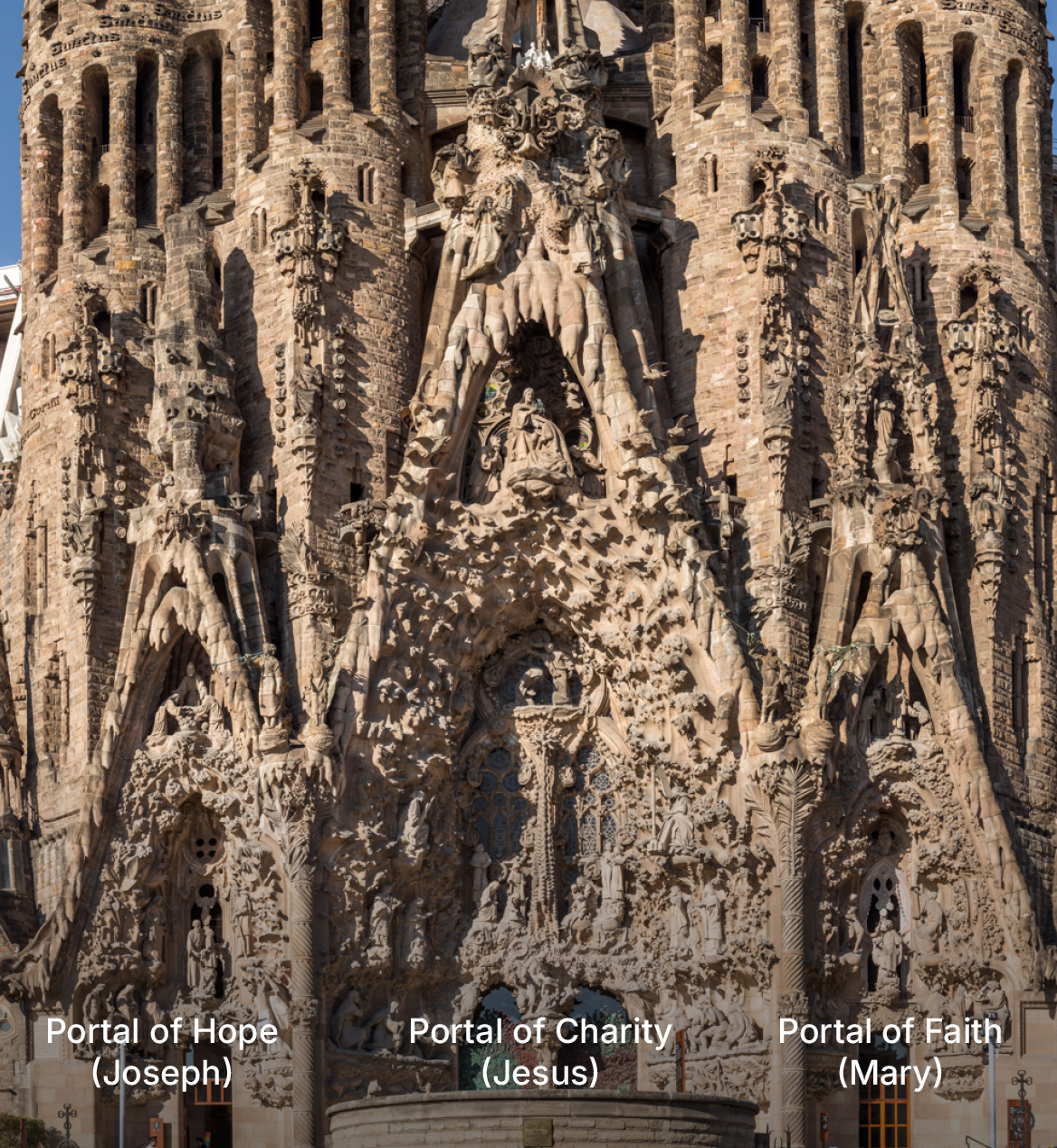
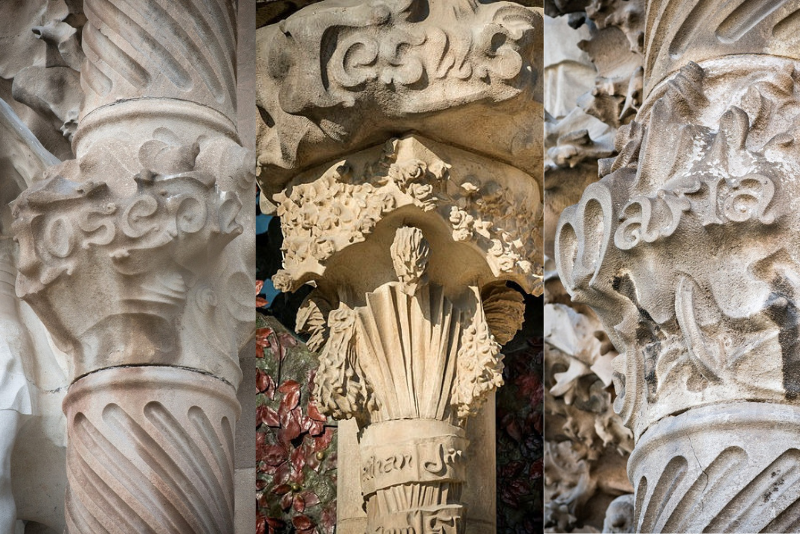
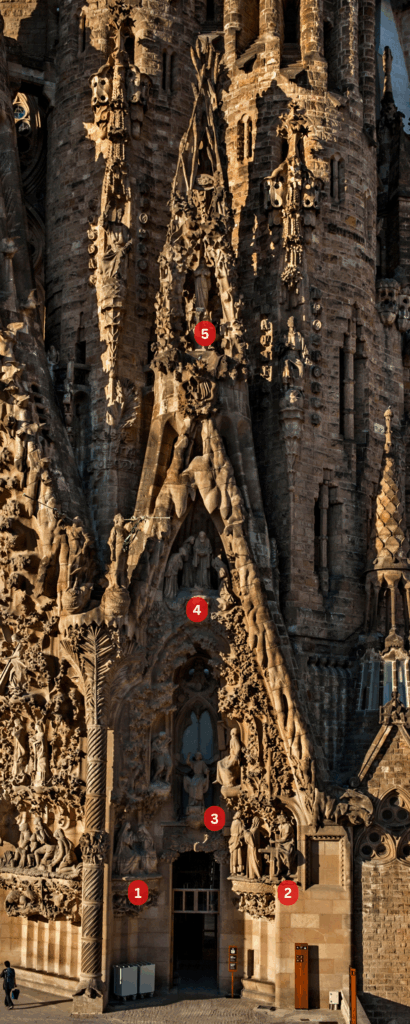
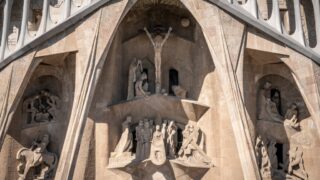
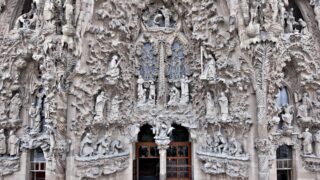
The façade, which began construction in 1891, is divided into three large portals. From left to right, they are dedicated to the Christian virtues of Hope, Charity and Faith, as well as to Joseph, Jesus and Mary, whose names are on the three columns separating the portals. The whole group is framed with stalactites.
To make the figures as life-like as possible, Antoni Gaudí used real human and animal models for the moulds. Once the plaster model had been made, the architect put it on the façade to see how it looked and if he was happy with the results, the final stone version was made. Some of the sculptors who made these sculptures following Gaudí’s instructions included Llorenç Matamala, Jaume Busquets o Carles Mani. More recently, sculptor Etsuro Sotoo, who has been working with the Sagrada Família since 1978, has completed the sculptural and decorative elements of this façade and restored damage from the Spanish Civil War.
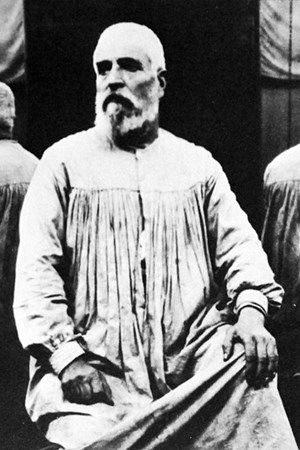
Llorenç Matamala i Piñol (Barcelona, 1856-1927): childhood friend and collaborator of Antoni Gaudí, he was one of the architect’s main assistants on the Sagrada Família, where he led the team of sculptors and model makers. His son Joan Matamala was also a sculptor for the Basilica.
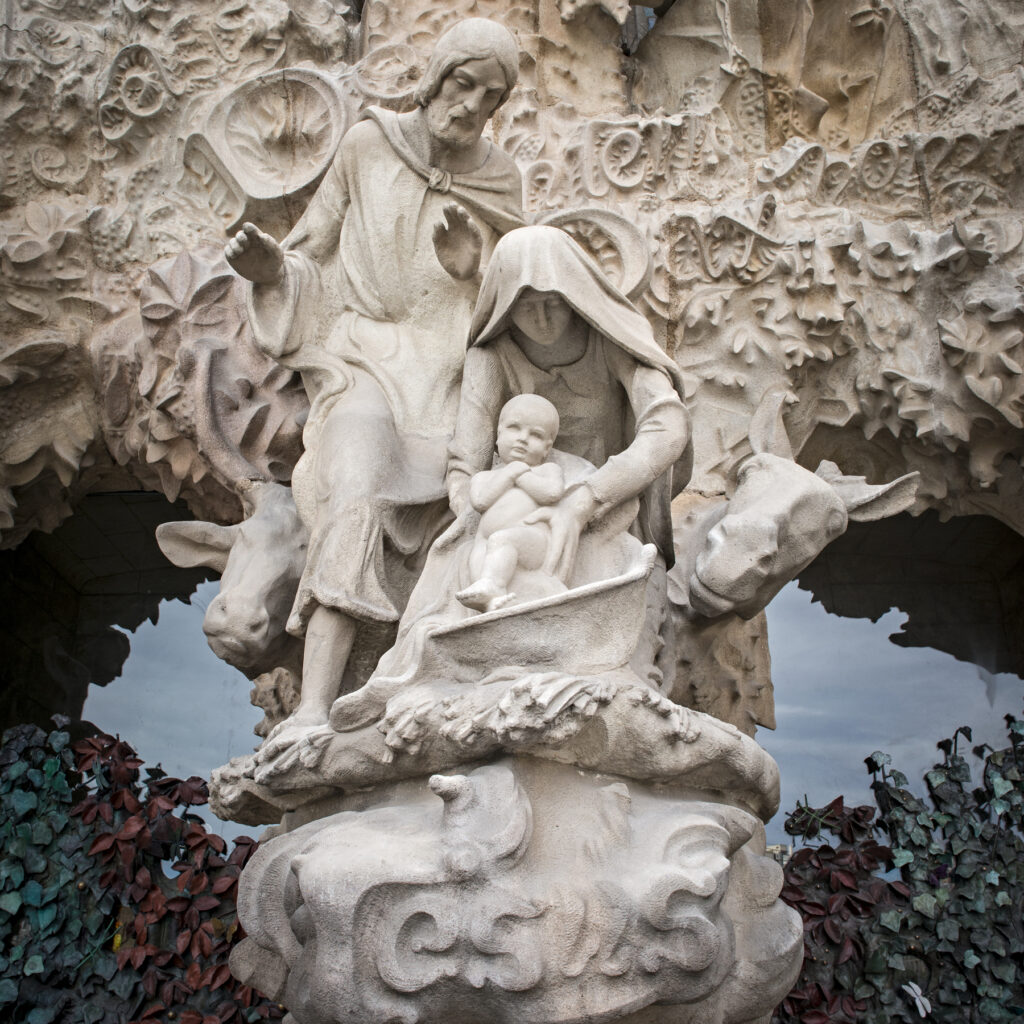
Jaume Busquets (Girona, 1904–Barcelona, 1968): Catalan illustrator, painter and sculptor who opted for religious art. He worked on the Nativity and Annunciation sculptural groups at the Sagrada Família.
Portal of Hope (Joseph)
As we’ve said, this portal is dedicated to Joseph, as the patron of the universal Church, so he is very present here. From top to bottom, we have the following scenes.
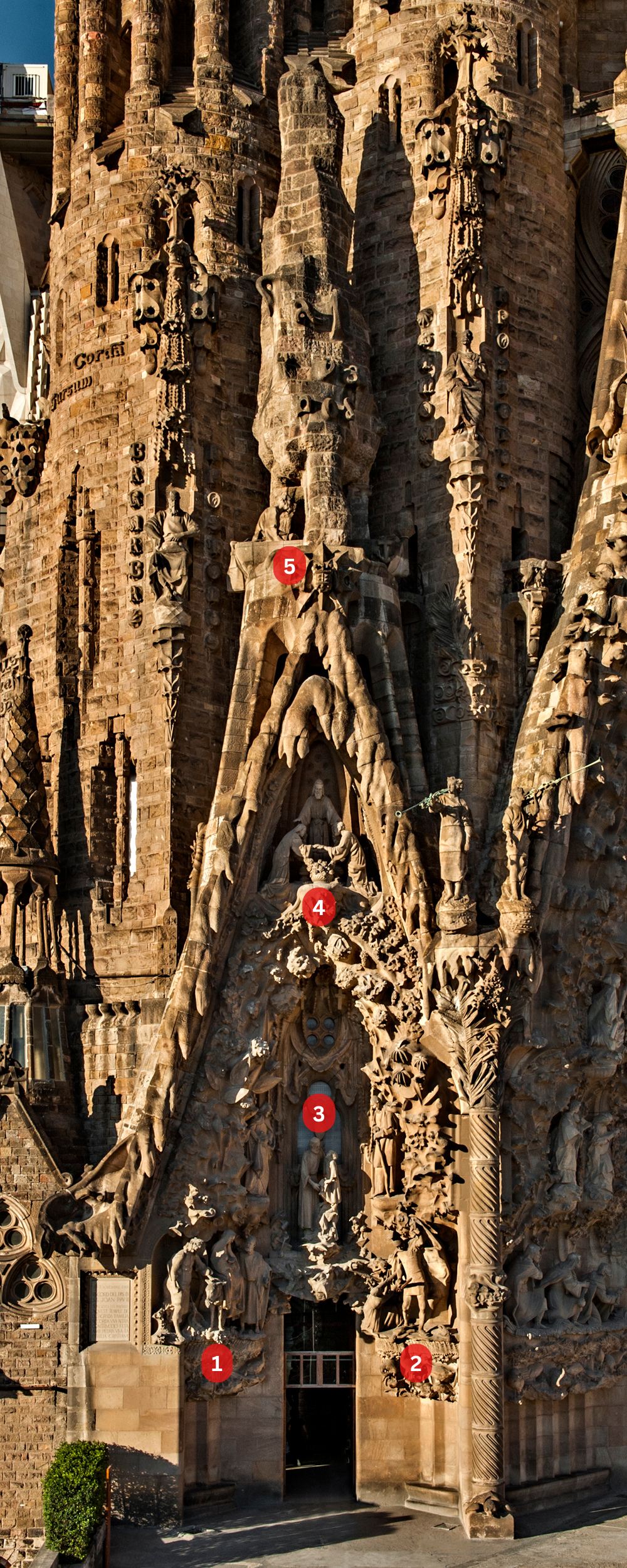
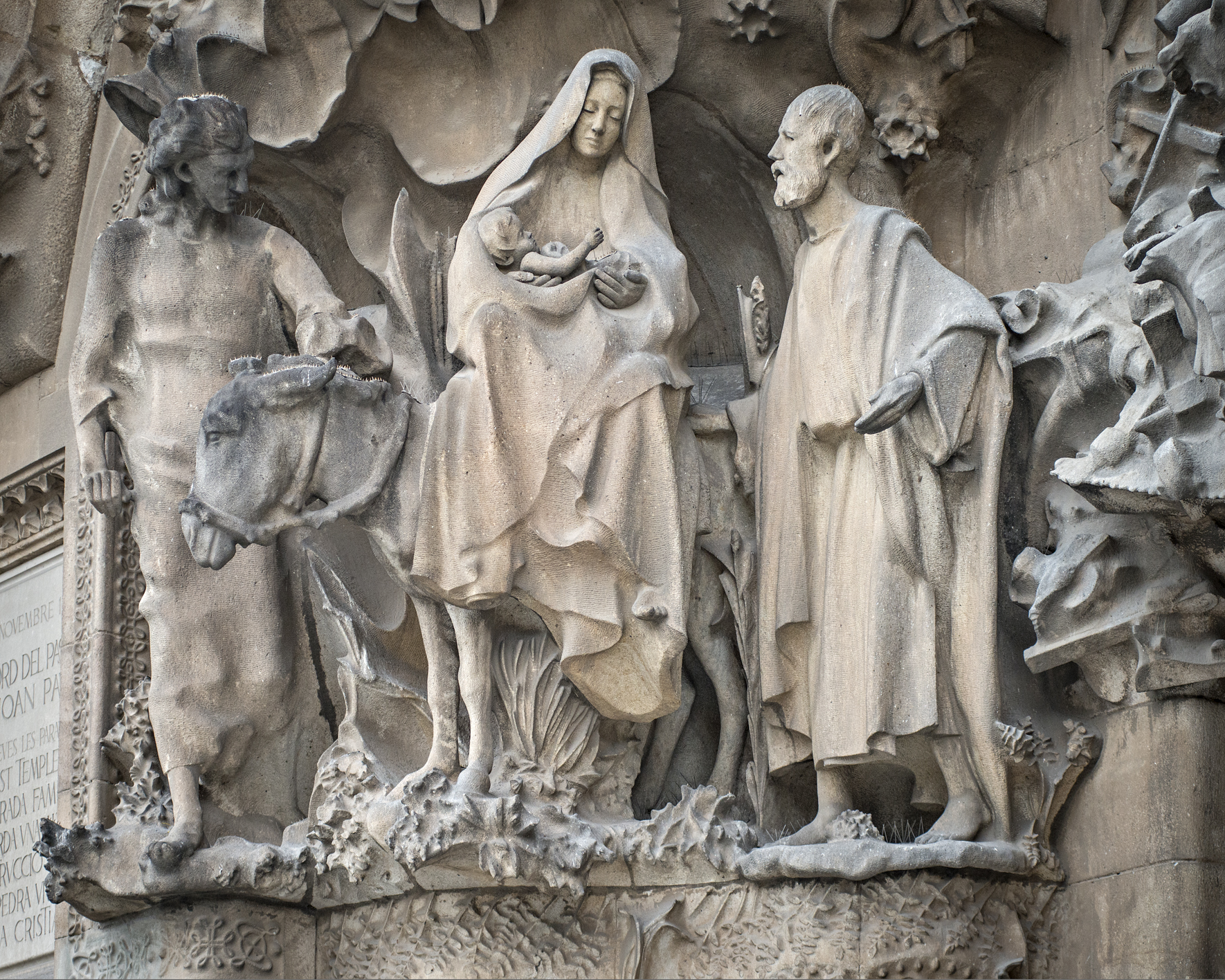
1. Flight into Egypt
This sculpture group shows an angel guiding the Holy Family as they flee to Egypt to save Jesus Christ from death.
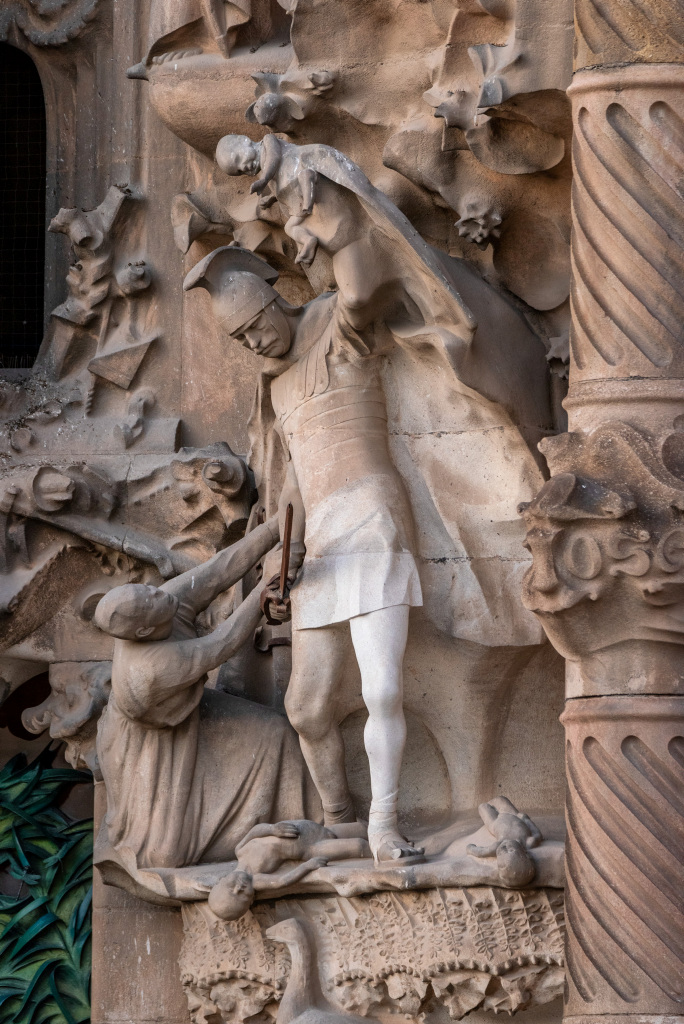
2. Massacre of Innocents
As the Gospel tells, in learning of the Messiah’s birth, King Herod called for all newborns in Bethlehem under the age of two to be killed. In this group, a Roman soldier represents this persecution and killing.
3. Jesus showing a wounded dove to Joseph
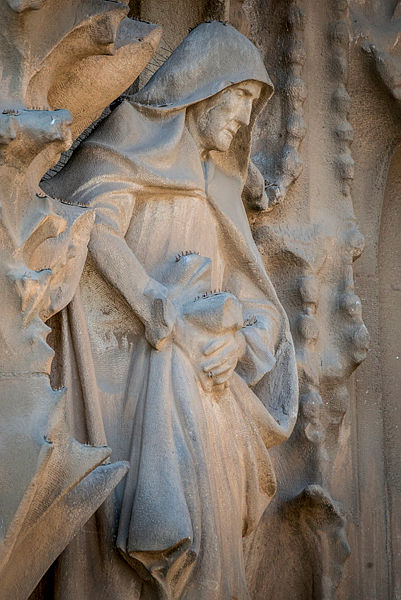
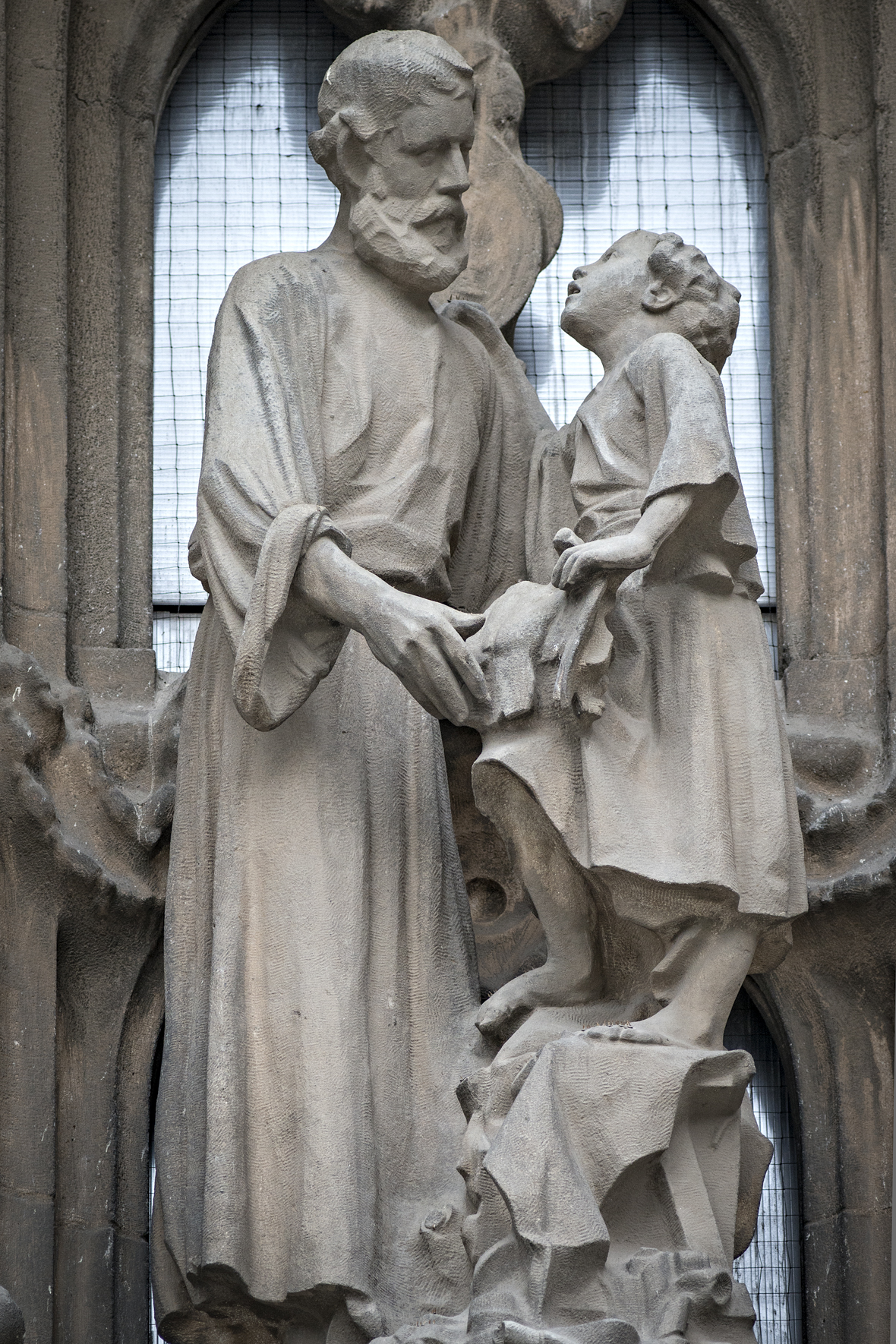
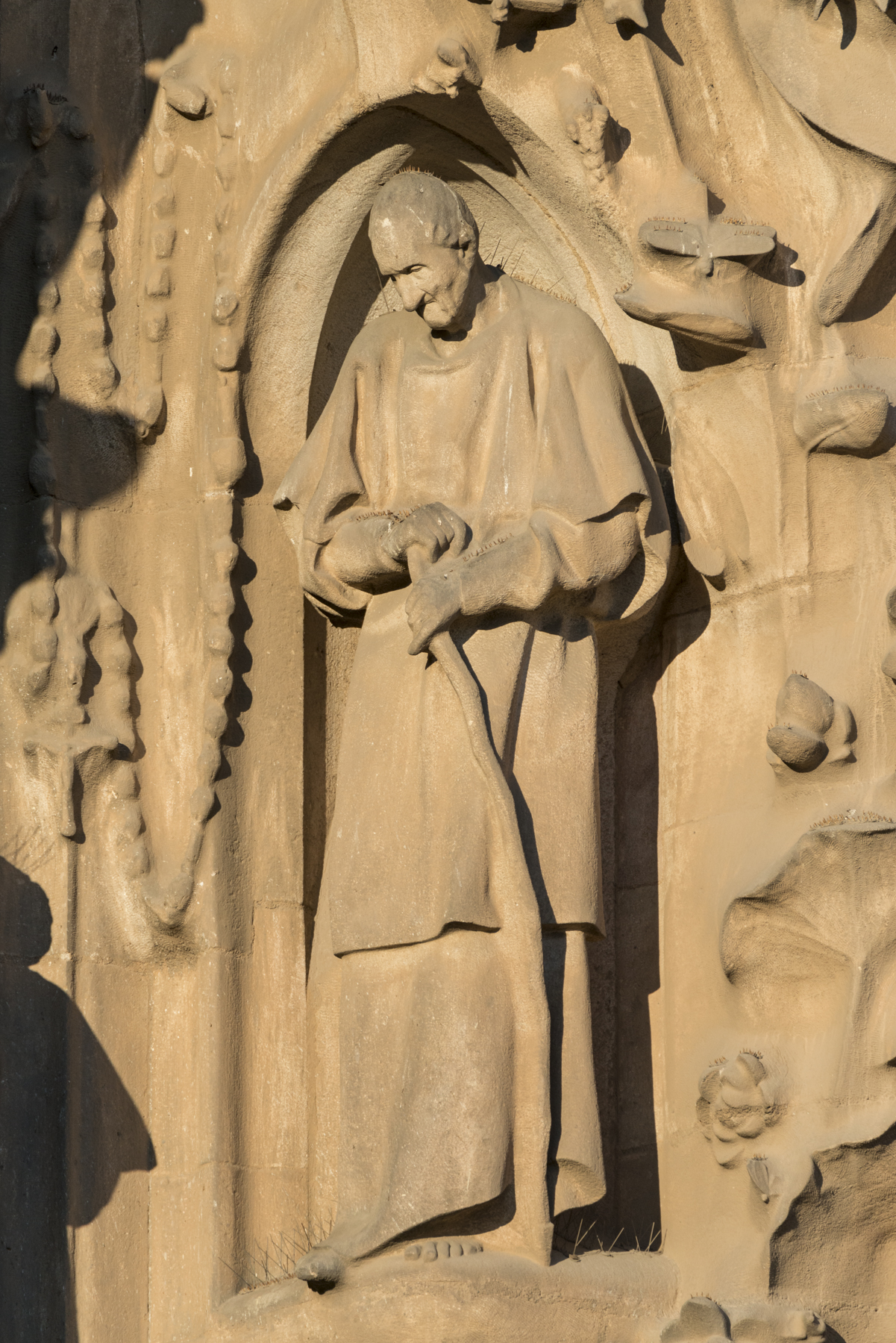
In this family scene, Jesus is showing his father an injured dove, the symbol of the Holy Spirit, while Saint Joachim and Saint Anne, his grandparents, look on.
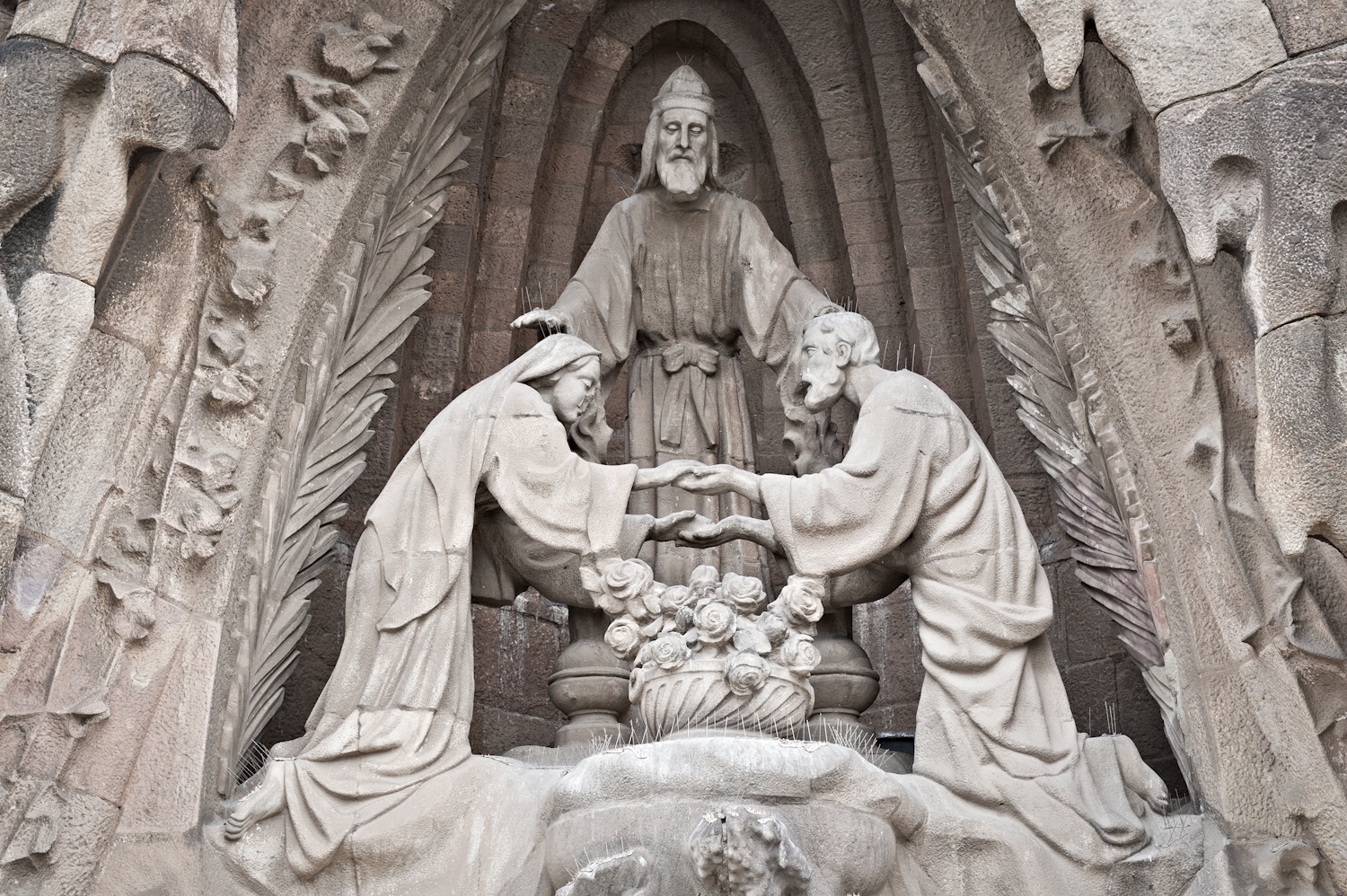
4. Mary and Joseph's wedding
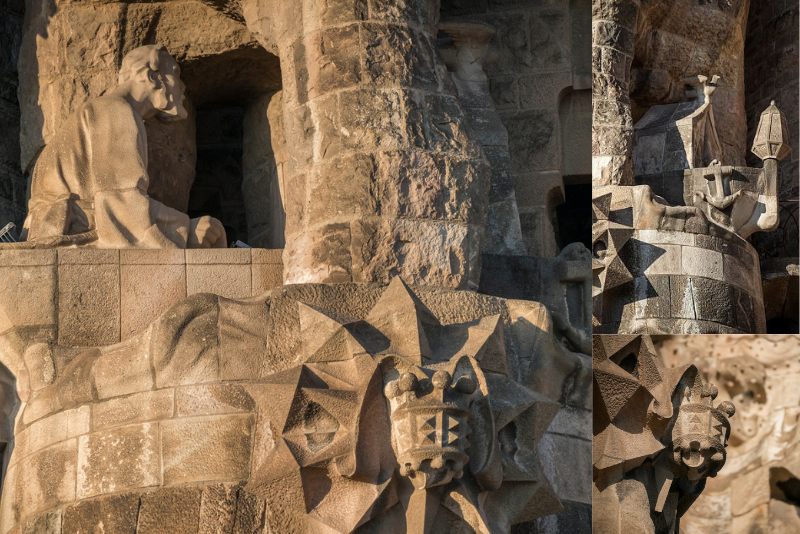
5. Saint Joseph's boat
Below the pinnacle crowning the portal of Hope, inspired by the rocky peaks of Montserrat, Antoni Gaudí asked Matamala’s workshop to sculpt an image of Saint Joseph sailing a boat. The patriarch of the Holy Family guides the Catholic Church, symbolised by the vessel. Four symbolic items decorate the boat: the rudder to steer the ship safely to port despite the difficulties, the dove symbolising the Holy Spirit on top of the dais representing Noah’s Ark, the anchor of the Church’s solidity, and the lamp as a symbol of the Word of Jesus Christ.
Portal of Charity (Jesus)
Dedicated to Jesus and the third Christian virtue, this portal is the largest on the façade and is in the centre. A total of 33 human figures in stone, in addition to many plants and animals, bring to life the Nativity of Christ.
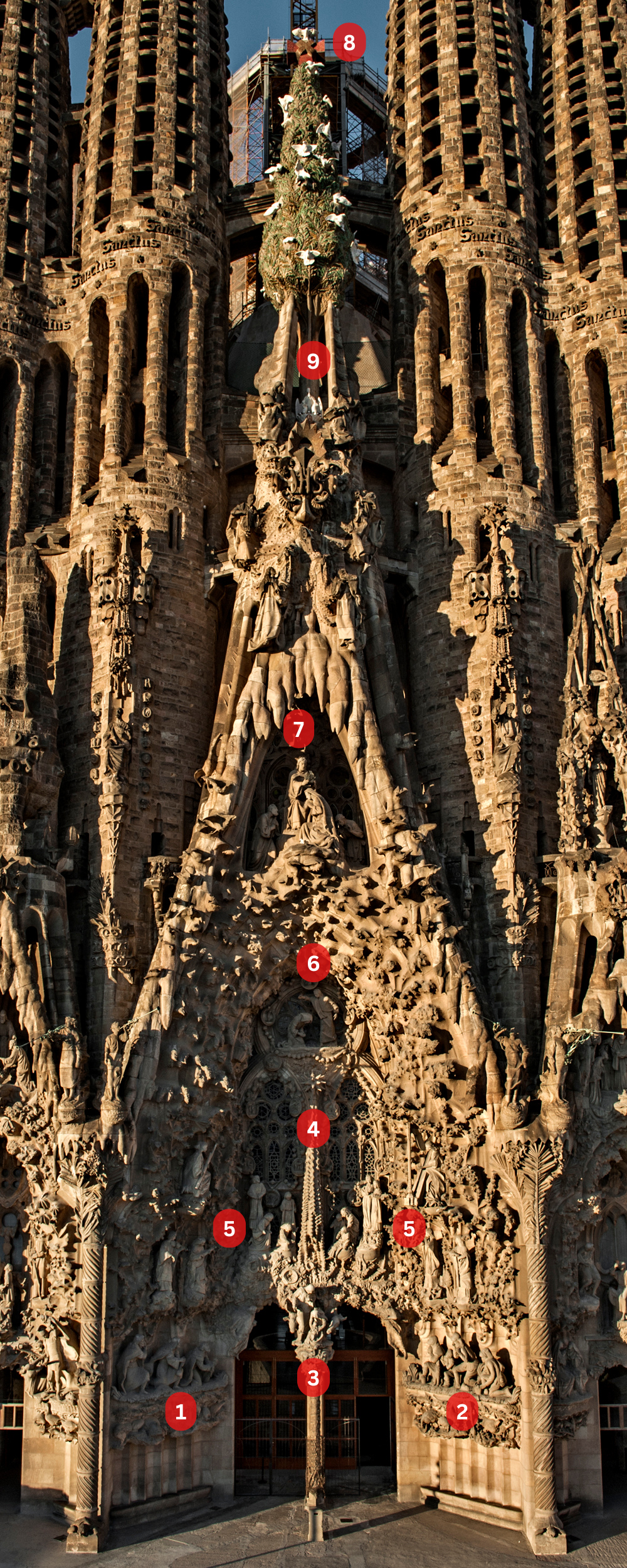
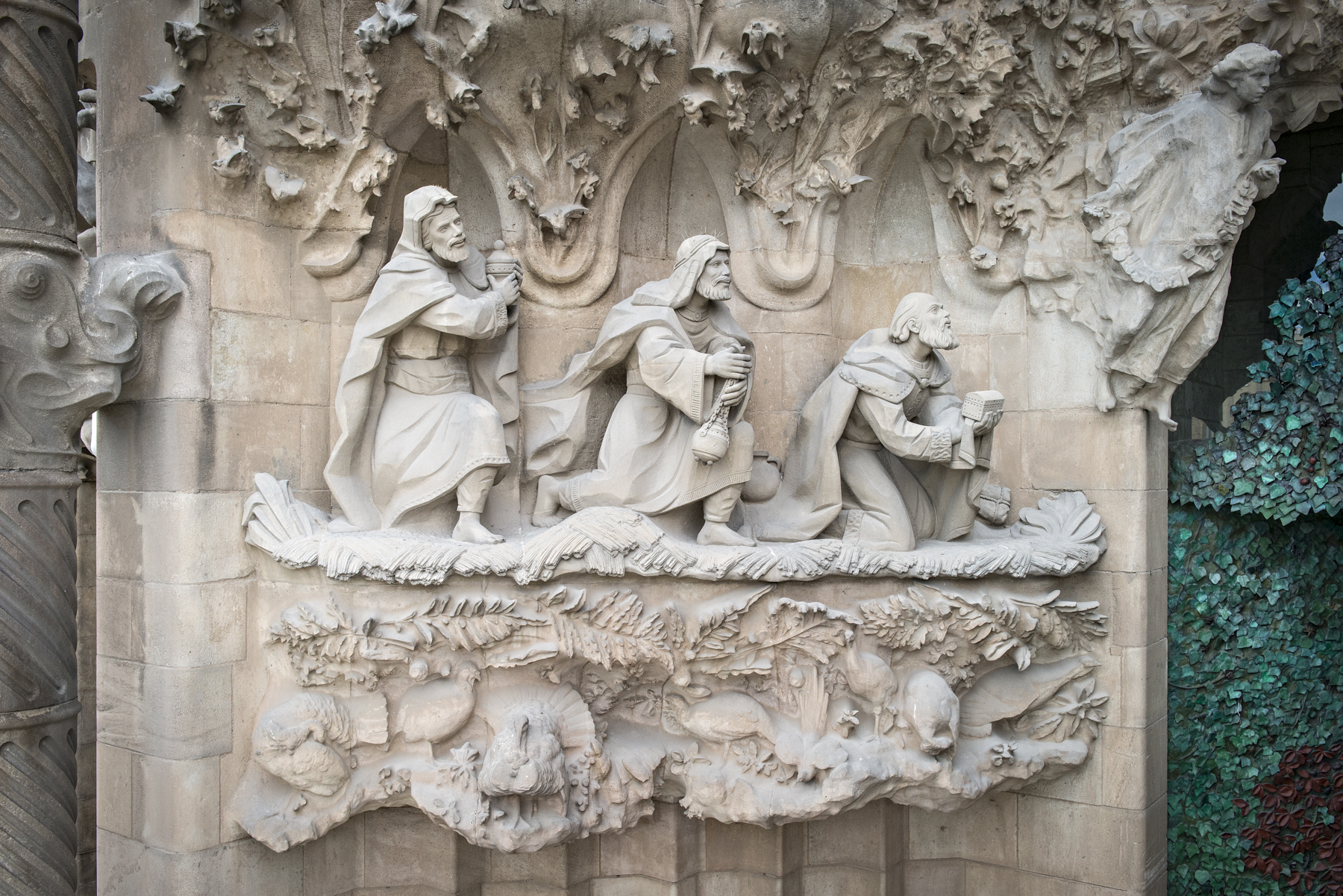
1. Adoration of the Magi
They bring gold, frankincense and myrrh to Jesus’s birth.
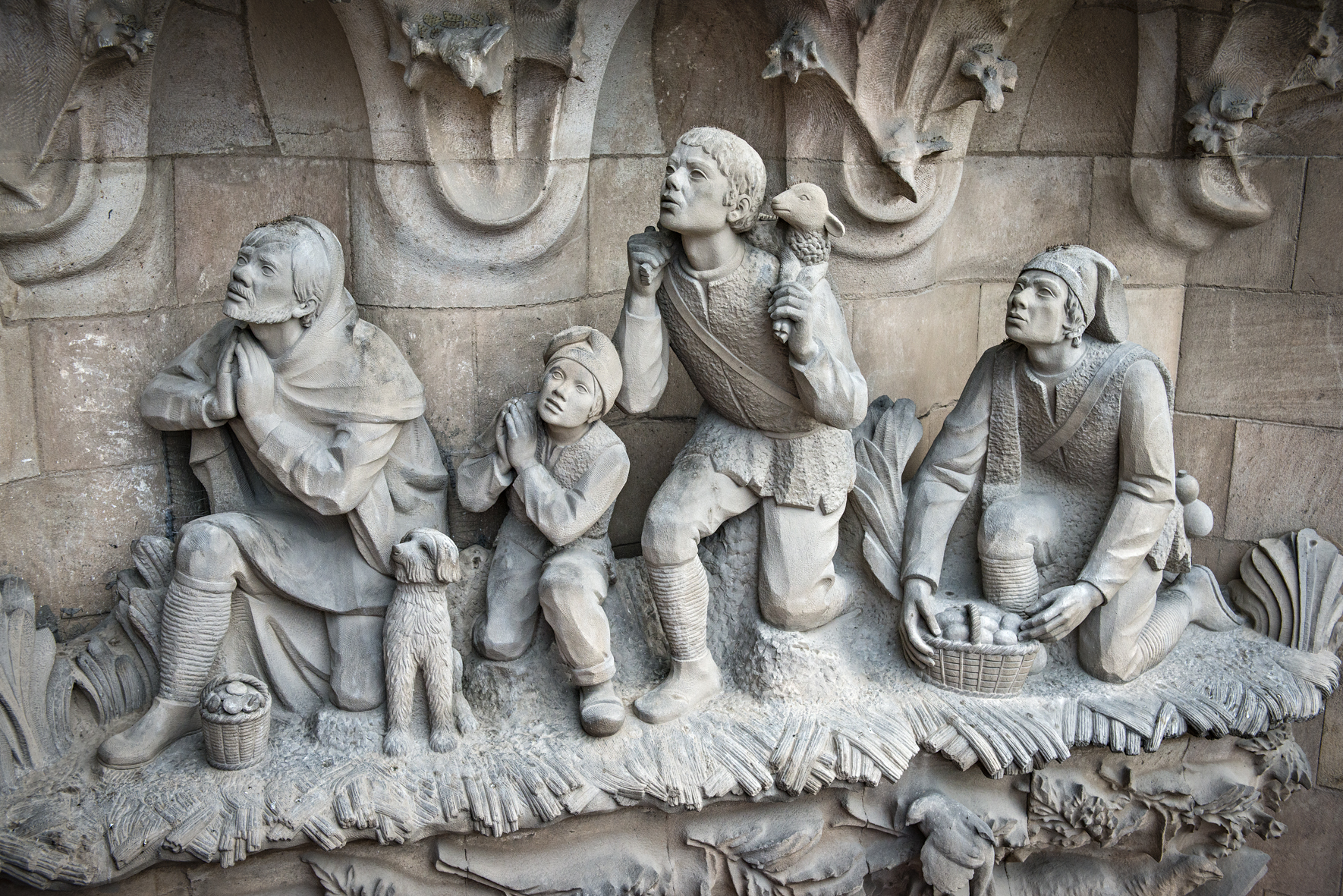
2. Adoration of the Shepherds
Symbol of the people, they bring gifts to adore the child, accompanied by a dog and a lamb.
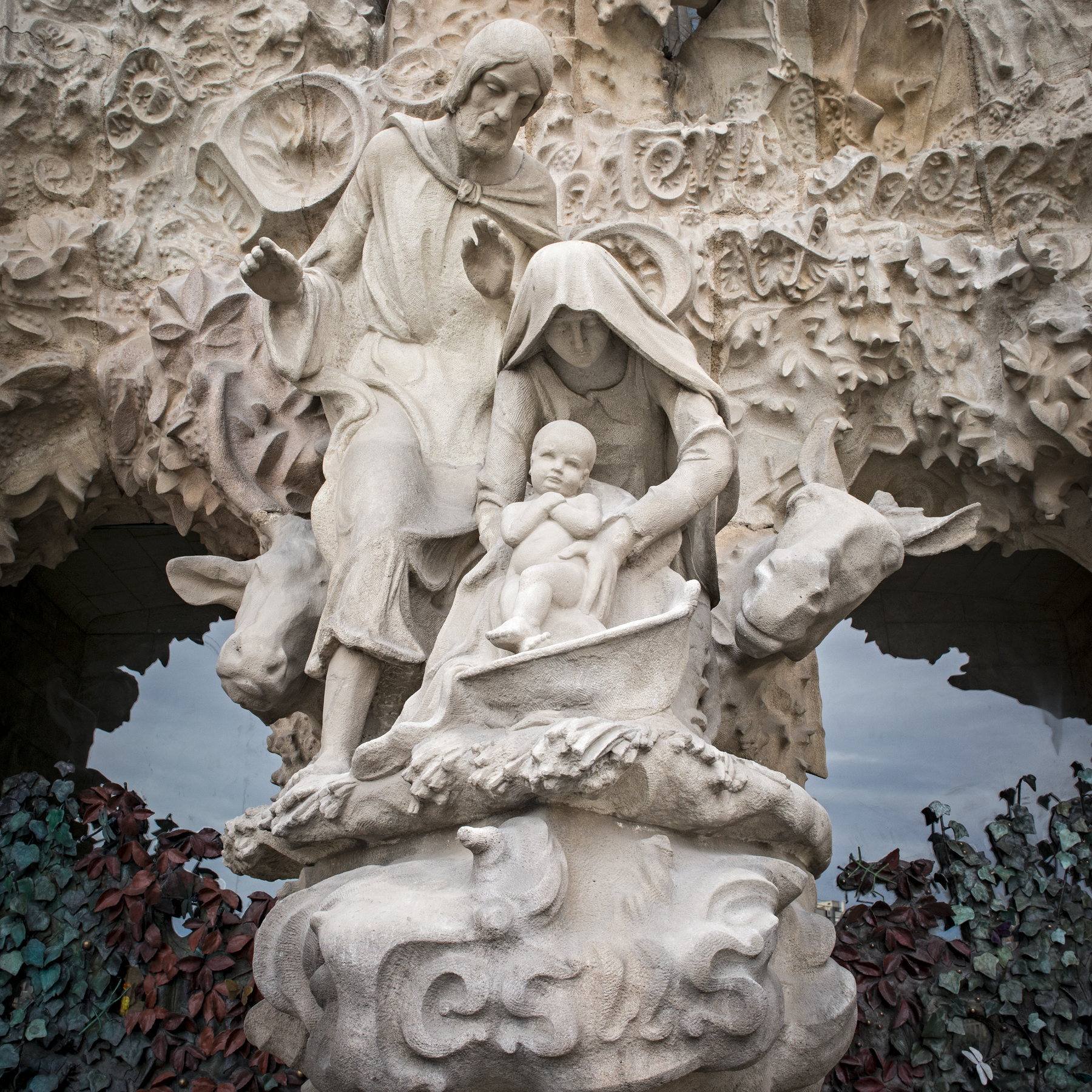
3. Nativity
Above the capital on the portal’s column, Jesus rests between Joseph and Mary, surrounded by the ox and the mule.
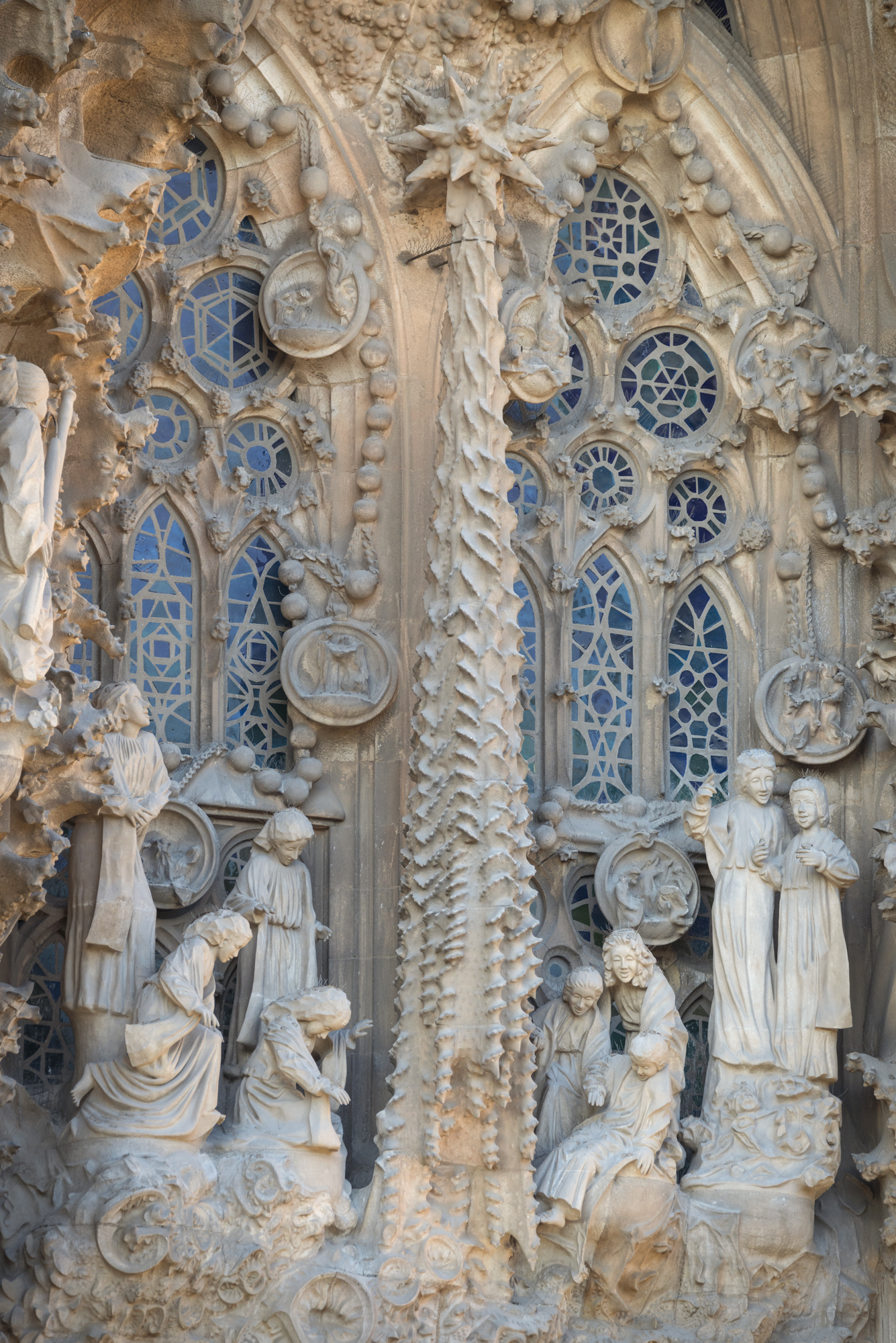
4. The Star of Bethlehem
From the sculpture group of the Nativity emerges the Star of Bethlehem, which according to the Gospels announced the birth of the Messiah, leaving a trail behind it.
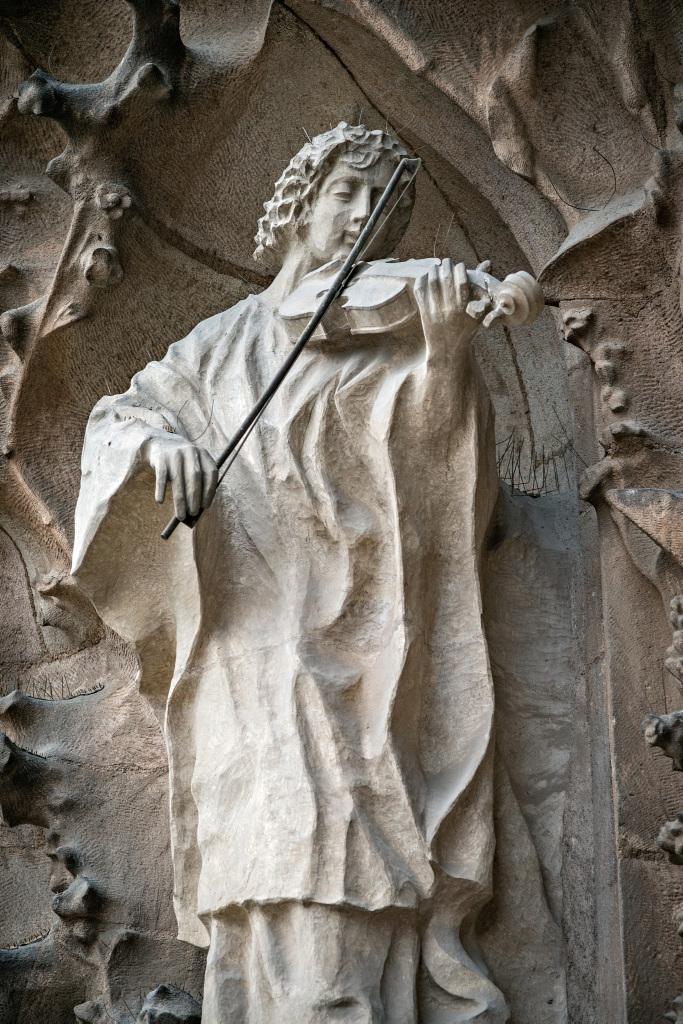
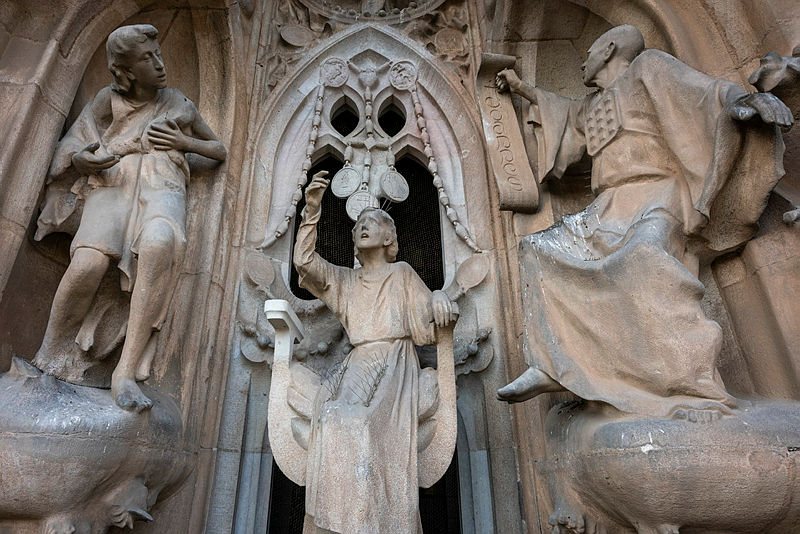
5. Angel singers and musicians
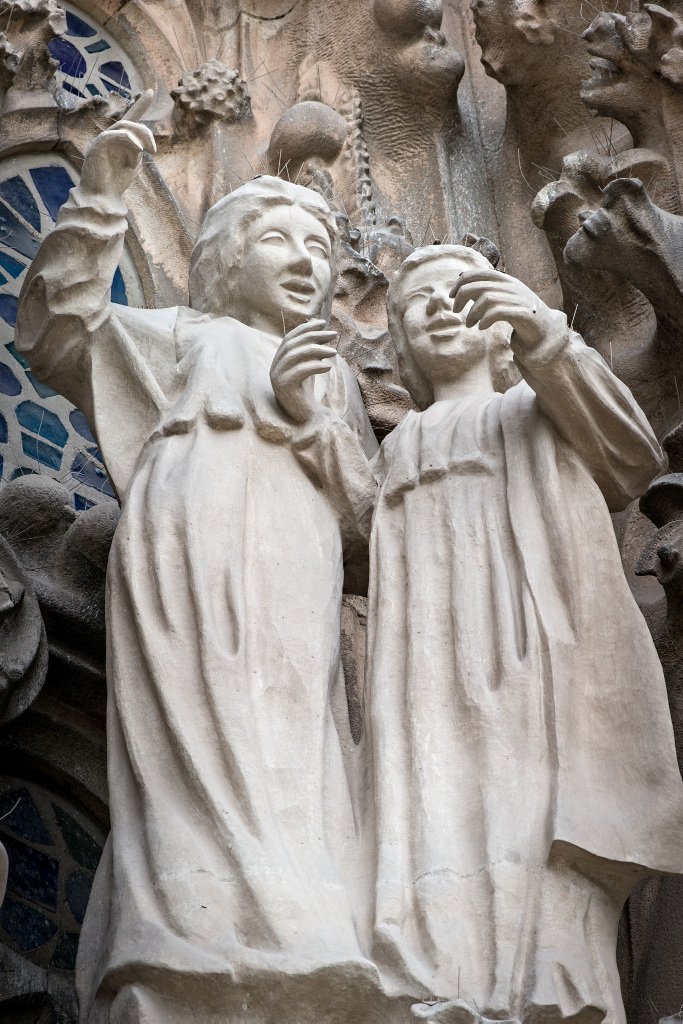
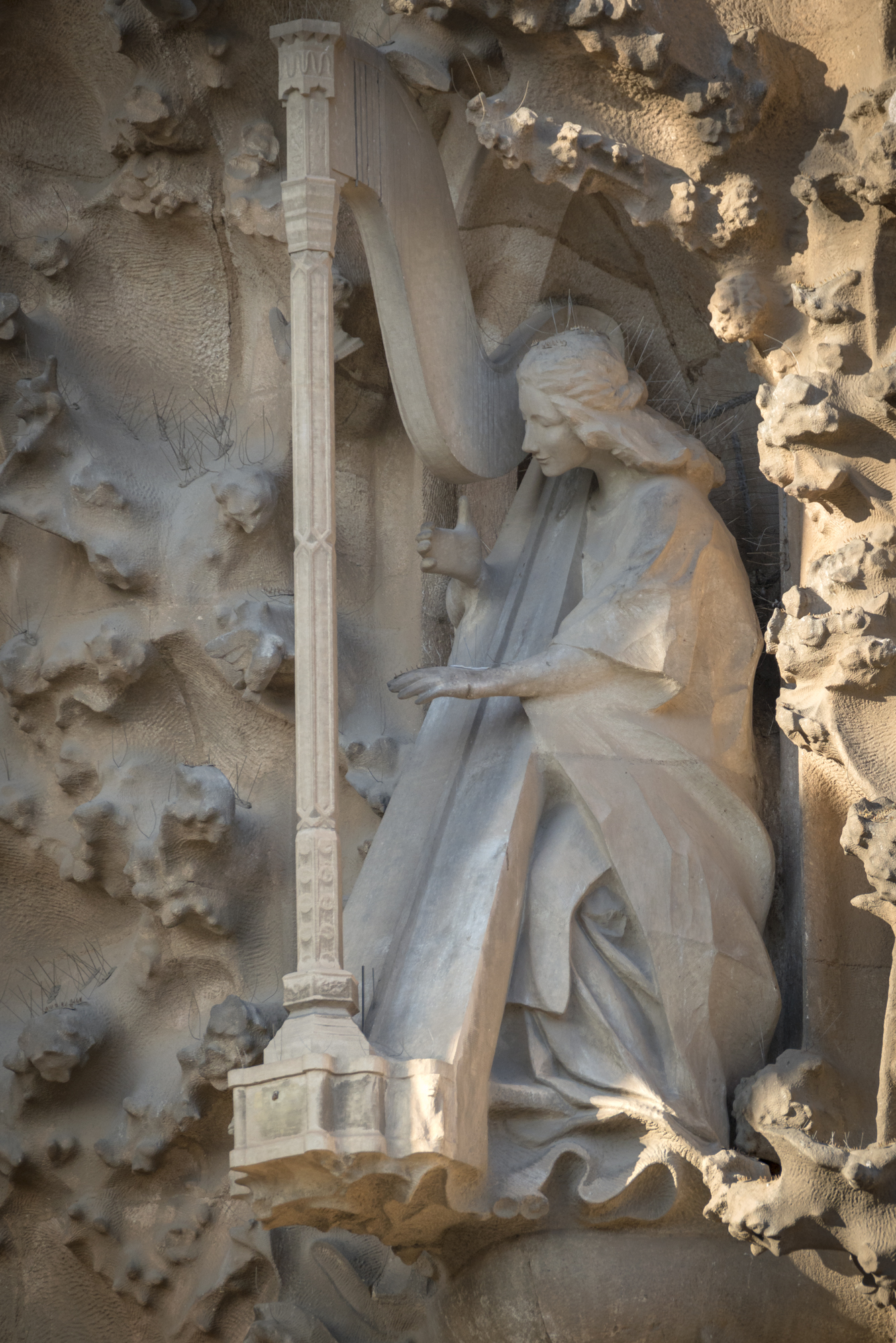
A choir of child angels celebrates the good news, accompanied by six musicians playing popular woodwind, percussion and string instruments.
6. Annunciation of the Virgin Mary
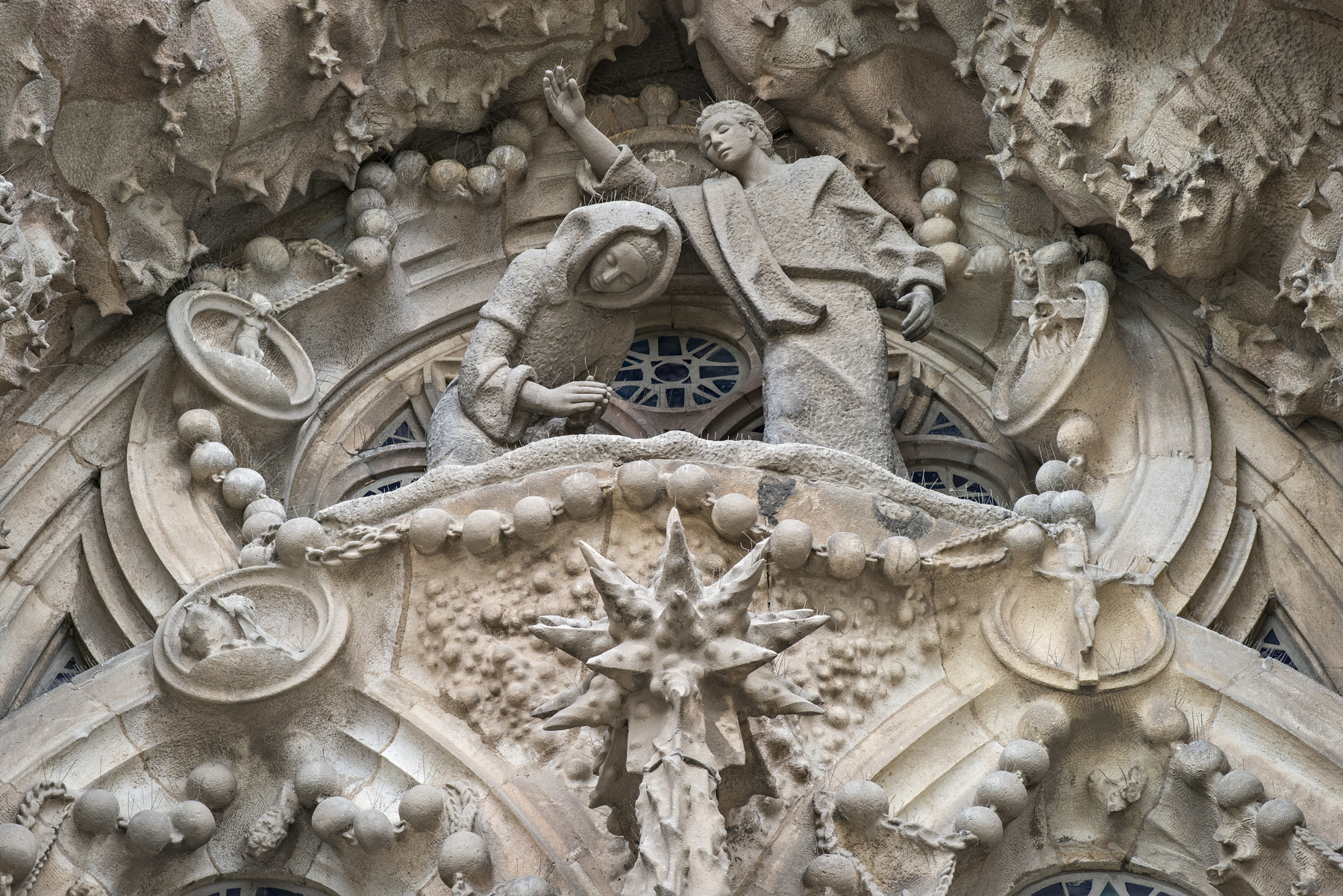
Shows when the Archangel Gabriel announced that Mary had been chosen to bring the Son of God into the world.
7. Coronation of Mary
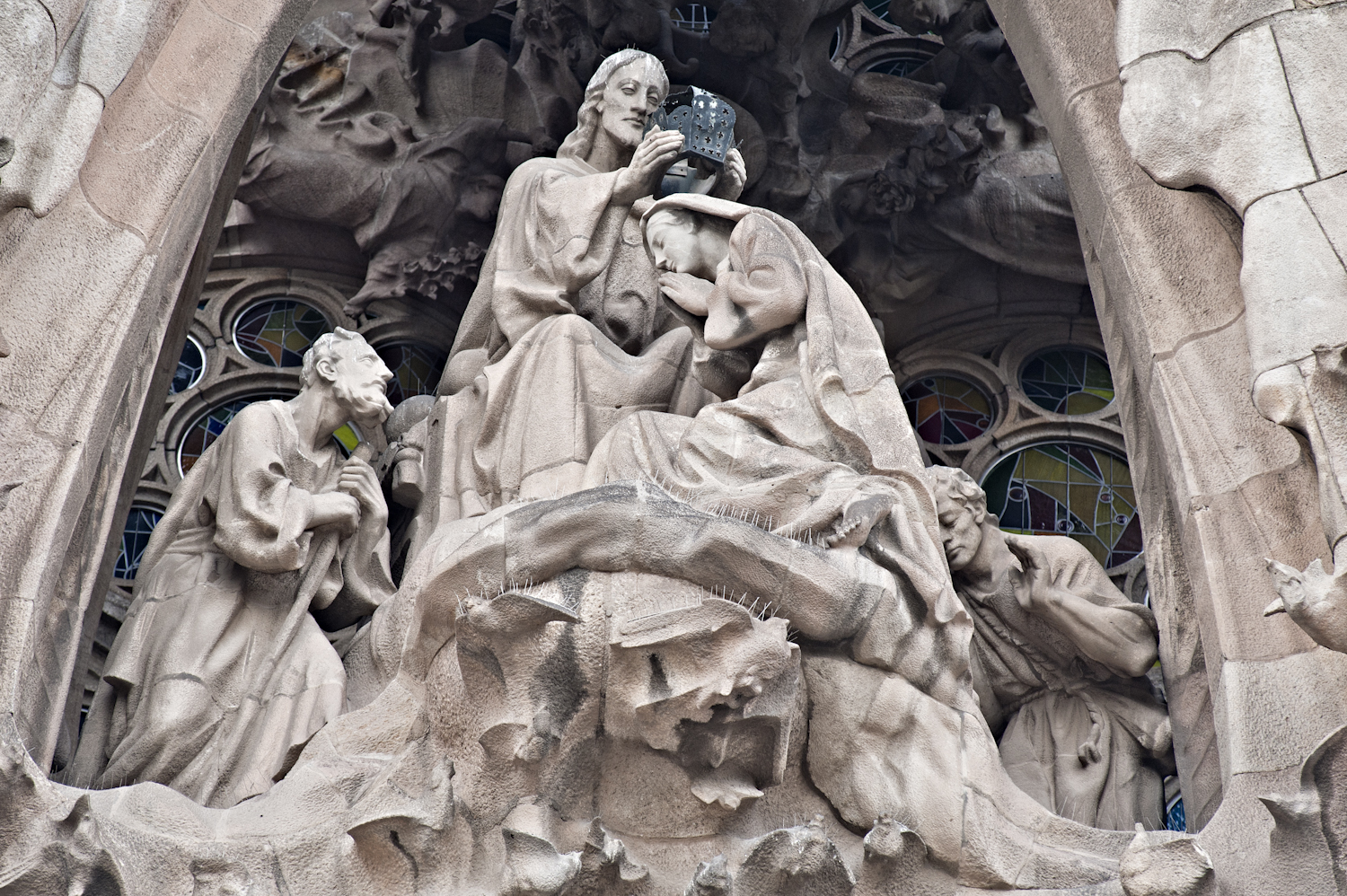
The Virgin is crowned Queen of Heaven and Earth by her son. Saint Joseph, on the left, and a shepherd from the crèche, on the right, witness the scene.
8. Cypress, Tree of Life
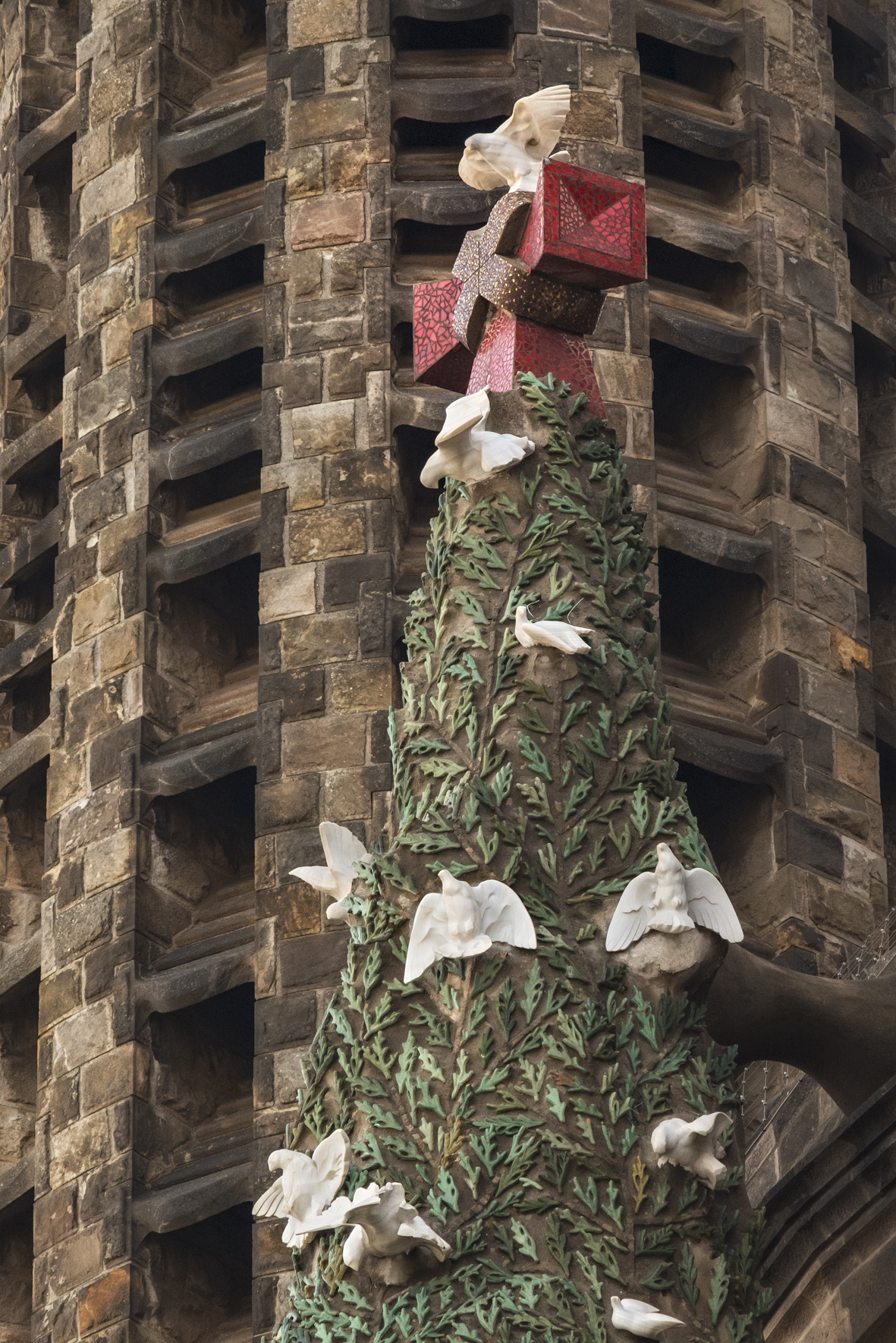
The portal of Charity is crowned with a huge cypress, representing the Tree of Life and a symbol of welcome. It is topped with a cross in the shape of a tau; an X, representing the Father embracing the Son; and on top of the tau, a dove with its wings open, alluding to the Holy Spirit. On the branches of the cypress sit white doves that have found shelter in the tree, as symbols of the men and women who have been saved by Christ’s redemption and welcomed with the love of God. Below the cypress tree, and hanging from its trunk, there are two staircases, one of virtue and one of holiness, which symbolise the paths humans must take to divinity.
9. Pelican
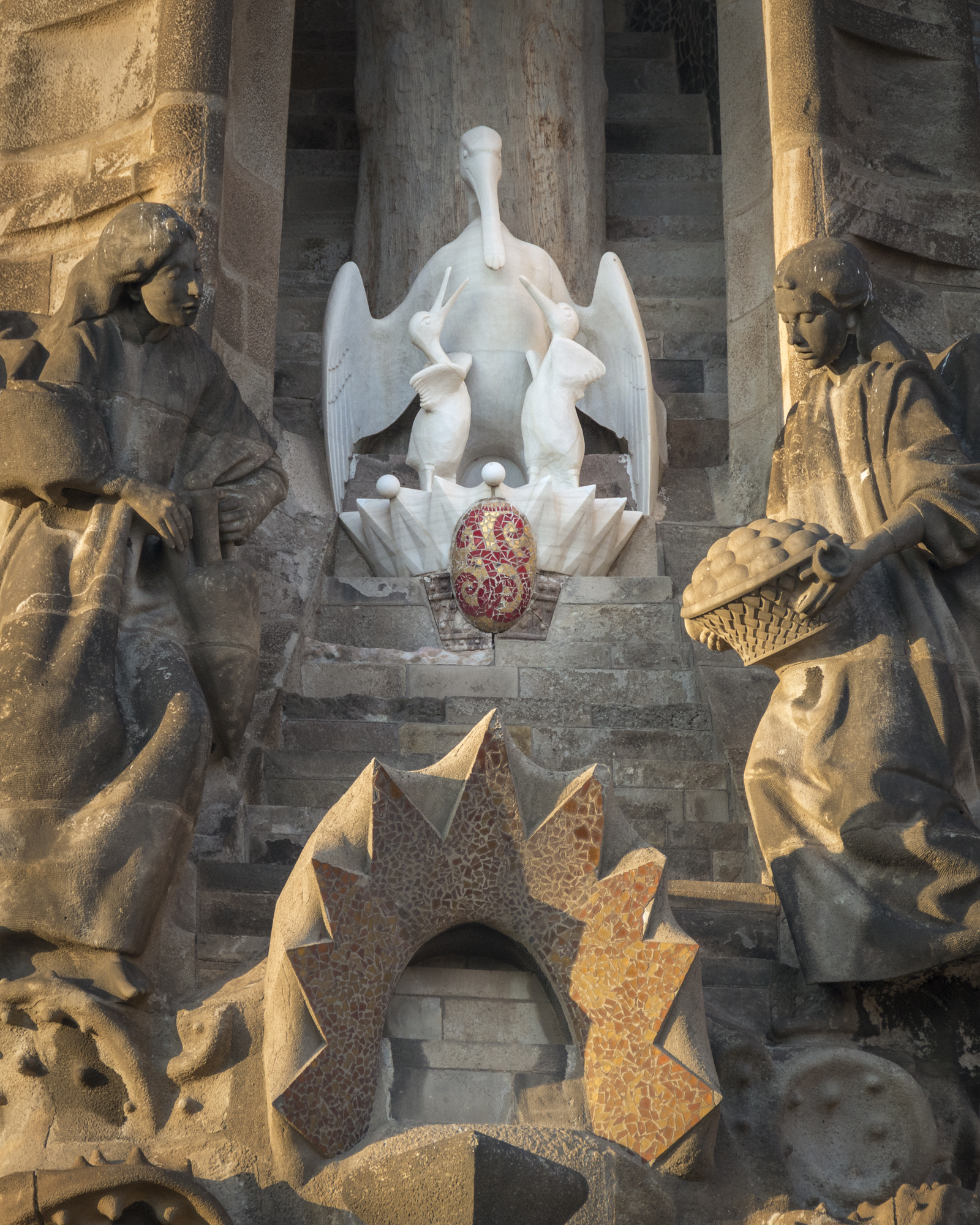
A bit below the cypress, we find an egg, the symbol of Easter, and therefore the Resurrection of Jesus, with a crown, showing the power of the Son of God. There is also a pelican feeding its chicks, which represents Jesus giving himself as sustenance in the sacrament of the Eucharist.
Portal of Faith (Mary)
Located on the far right side of the façade, this portal is dedicated to Mary, who we find represented in several groups, from top to bottom.
1. Mary’s visit to Elizabeth
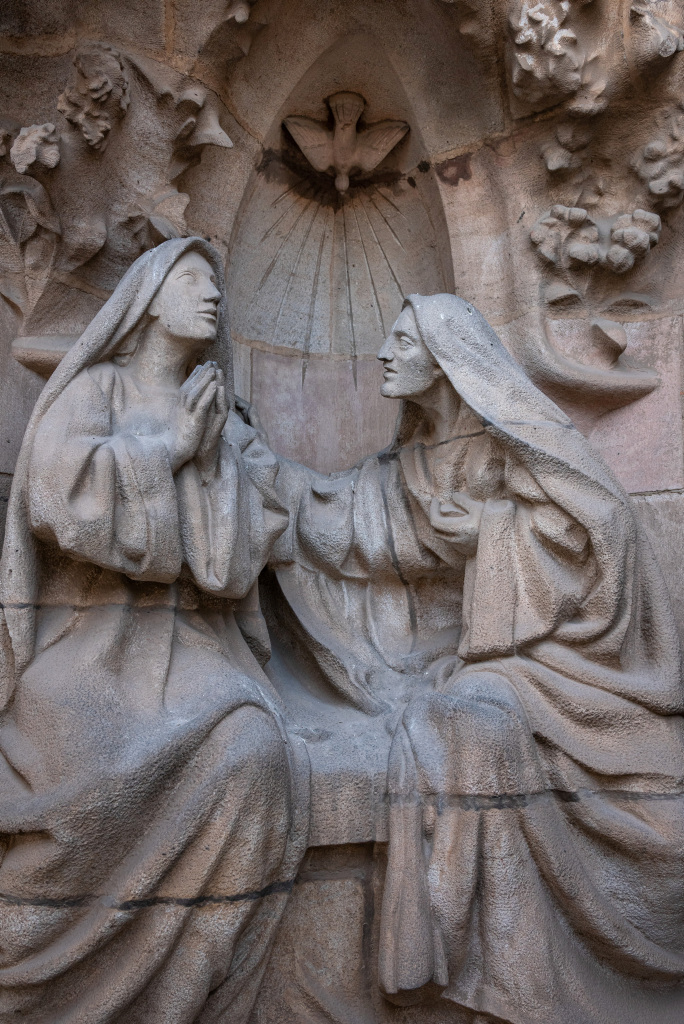
The sculpture group on the lower left of the portal shows Mary visiting Elizabeth, that was pregnant.
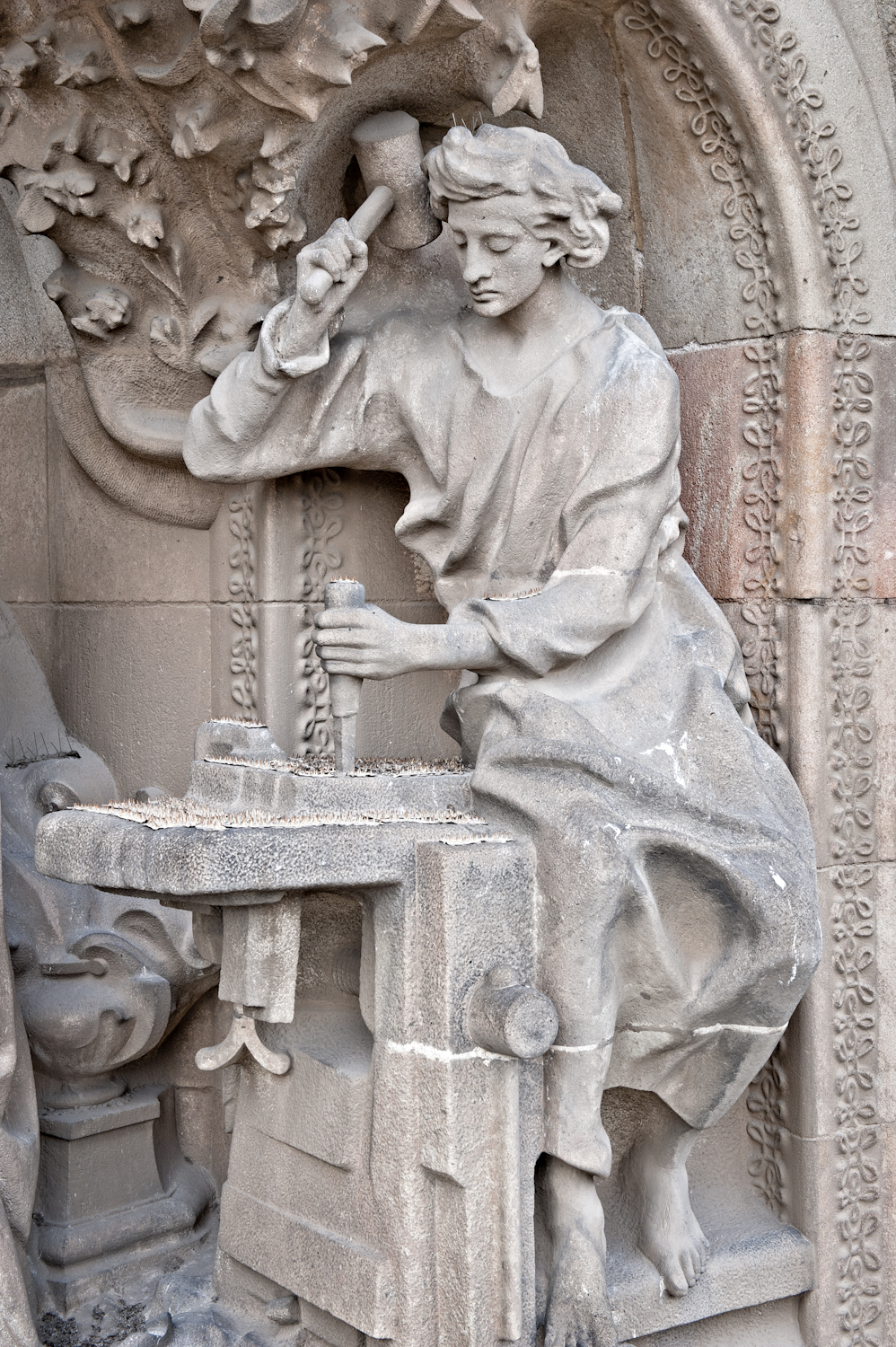
2. Jesus working as a carpenter
In this sculpture, the young Jesus is working in his father’s woodworking shop.
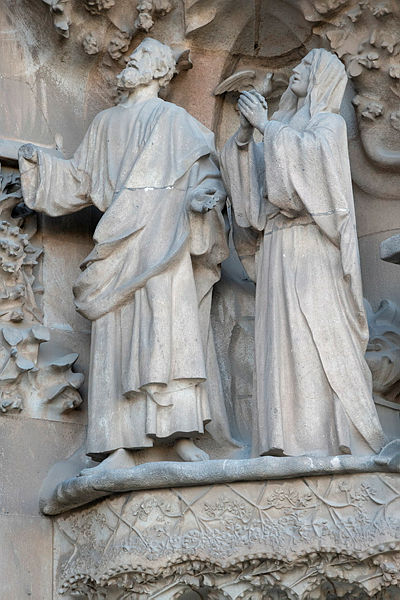
3. Jesus preaching at the temple
Amazed, Joseph and Mary watch their son, who according to the Gospel had gone to the temple of Jerusalem to listen to and ask questions of the religious teachers, who were surprised by his knowledge. A bit further up, we see Jesus preaching, with Zechariah on his left and John the Baptist on his right.
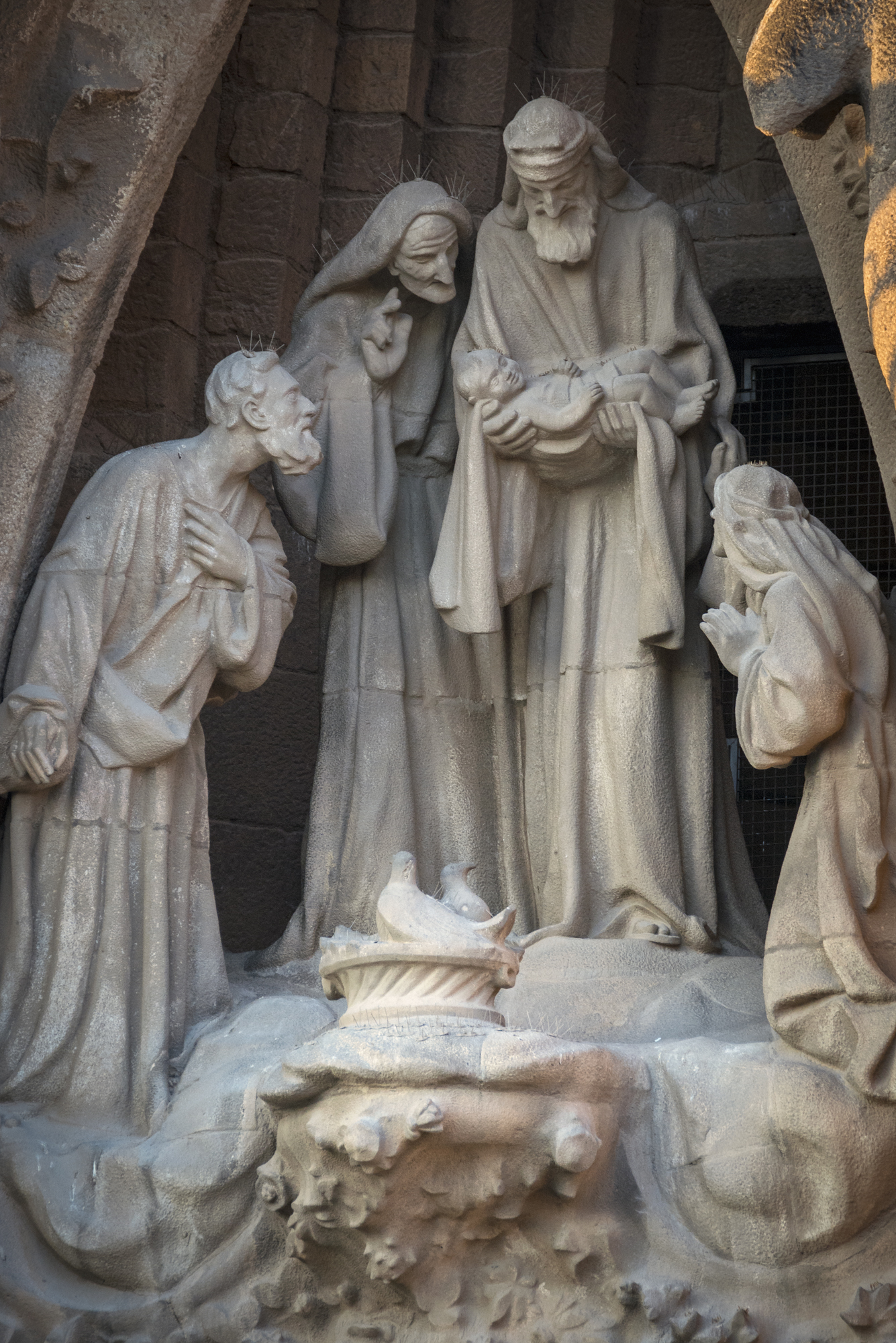
4. Presentation of Jesus at the temple
The Gospel explains that Jesus was presented at the temple by his parents forty days after his birth. The priest Simeon was there and took him into his arms and blessed him. Anna the Prophetess, an elderly woman who was also there, completes the scene.
5. Immaculate Conception of Mary
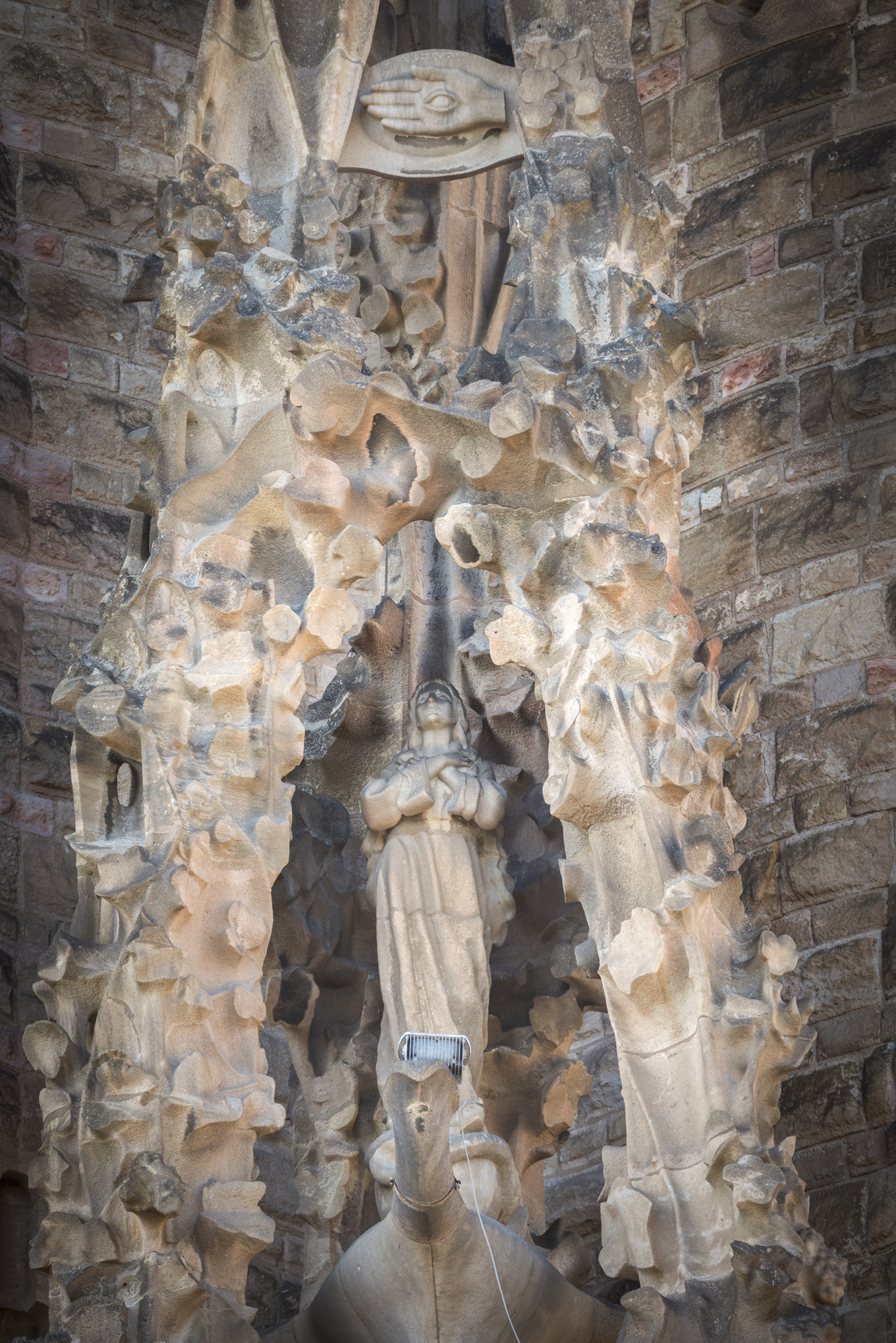
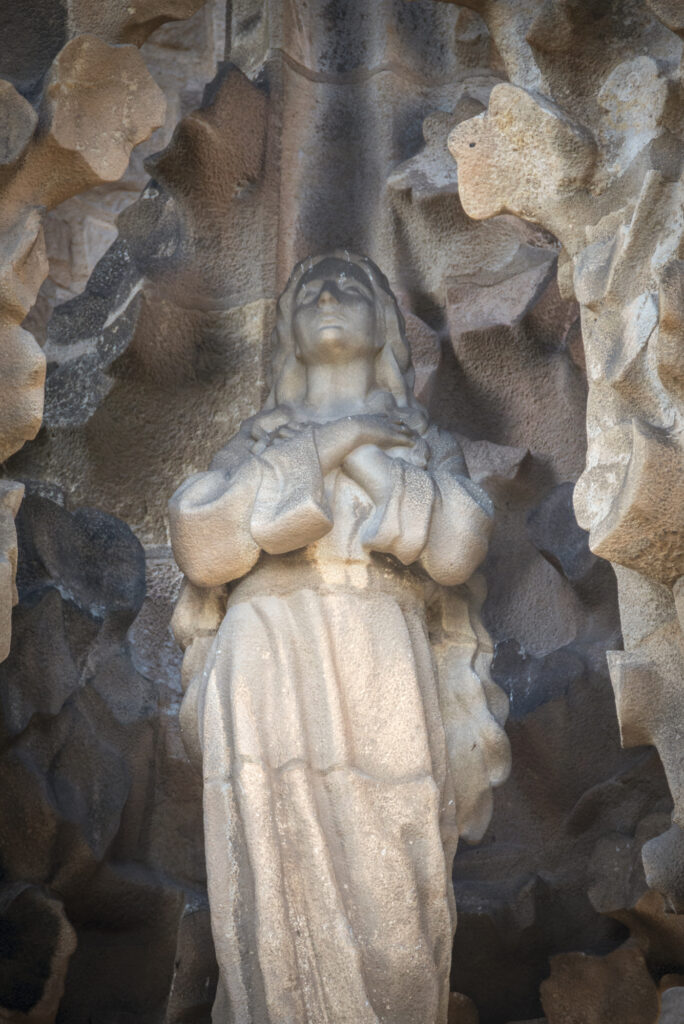
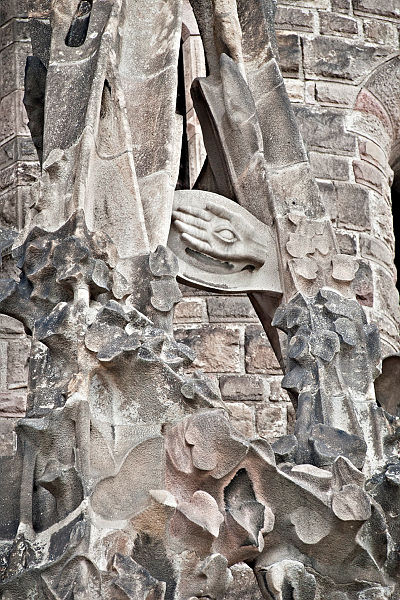
The sculpture of the Immaculate Conception, the Catholic doctrine that Mary was born free of original sin so she could conceive the Son of God, is a traditional pose in Christian iconography: the Virgin with her arms crossed over her chest resting on a lamp with three spouts alluding to the Trinity. Above her, the Divine Providence, represented by an all-seeing eye and a guiding hand. The group is topped with shafts of wheat and bunches of grapes, symbolising the Eucharist, which crown the portal of Faith.
2 comments
Laura Muns Criville
Molt bon dia, treballo de guia a la SF i no trobo mai cap informació sobre les escultures, de dins l’arc del portal de la caritat i on es veuen clarament, un toro, uns bessons, un xai etc. Són el horòscops ? Quan n’hi ha ?
Moltes gràcies
laura
Diana Fernández
Bon dia Laura, i moltes gràcies pel teu comentari.
Les escultures col·locades a la part superior de l’arquivolta del portal central, formant part de la ojiva, són les constel·lacions que es poden veure la nit de Nadal.
Aquestes constel·lacions, d’esquerra a dreta mirant la façana frontalment, són: Verge, Lleó, Cranc, Bessons, Taure i Àries.
Gaudí les col·loca per a indicar quan és el naixement de Jesús; la nit del 24 de desembre, ja que és en aquesta nit, que es poden veure aquestes sis constel·lacions al cel.
Per identificar-les, col·loca el símbol dels signes del Zodíac, que es corresponen a aquestes constel·lacions, i perquè quedi ben clar que no són signes del Zodíac sinó constel·lacions, les embolcalla amb multitud de petits estelets.