Textos: extrets de l’exposició «La Sagrada Família, Gaudí i Barcelona. Cent quaranta-quatre anys de camí compartit
The exhibition “The Sagrada Família, Gaudí and Barcelona. 144 years on the same path” is on now in the gardens at Palau Robert. It explores the historic and symbolic ties between the Temple of the Sagrada Família and the city of Barcelona as part of the Gaudí Year celebrations. The exhibition features 14 interpretive signs that show how the Basilica has grown alongside, reflecting and in dialogue with Barcelona’s great social, urban and cultural milestones. The result is a visual storytelling on community, persistence and a collective vision.
In today’s post, we’re looking at some of the Sagrada Família archive photos that are in the exhibition, in chronological order.
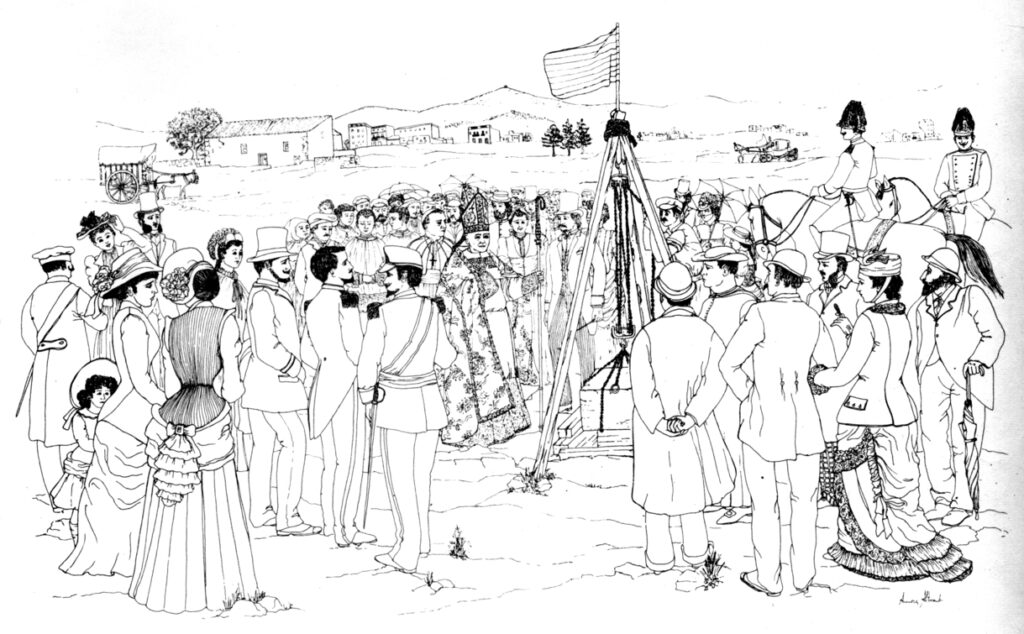
On 19 March 1882, the feast of Saint Joseph, the cornerstone of the Temple was laid a plot of land surrounded by gardens and paths in Sant Martí de Provençals, now the Eixample district. The event was presided over by José María de Urquinaona y Bidot, Bishop of Barcelona, and Josep Morgades i Gili, Bishop of Vic, accompanied by city authorities. Francisco de Paula del Villar was the architect originally commissioned for the project and, although his time was brief, he laid the groundwork for a building that would be completely transformed after he stepped down in 1883.
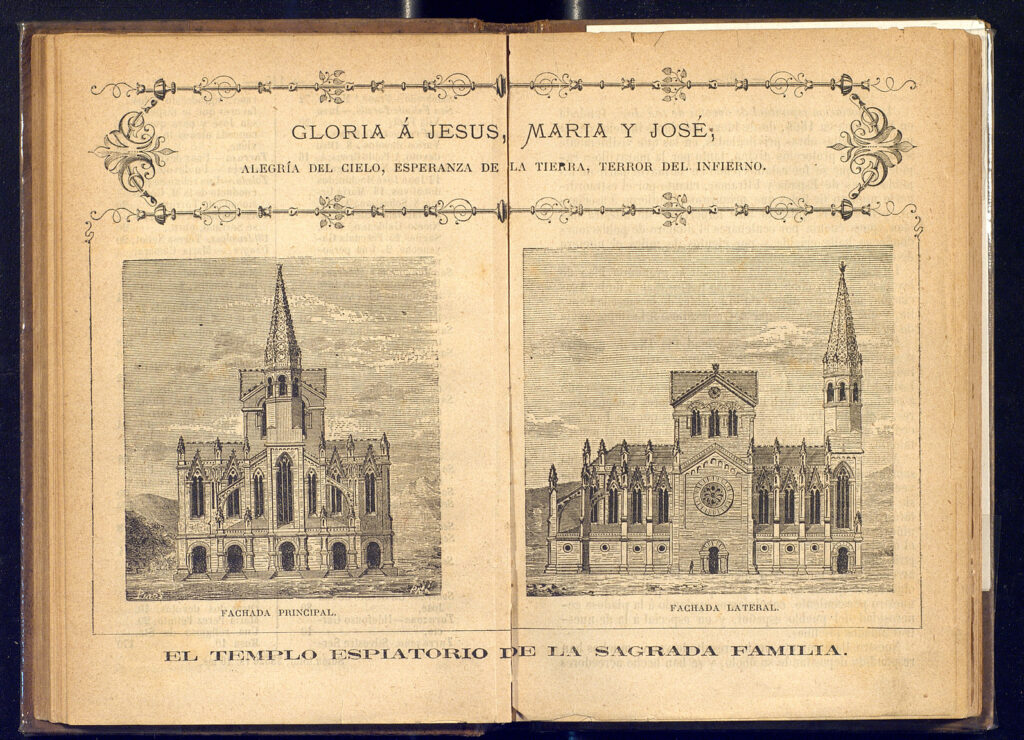
Project by Francisco de Paula del Villar, initial architect of the Sagrada Família
On 3 November 1883, young Antoni Gaudí took over the project and proposed a Temple that strives to be universal. The Chapel of Saint Joseph, one of the seven in the crypt ambulatory, was consecrated in 1885. It is the origin of a living Temple, a place of spiritual contemplation, loaded with symbolism, and the spiritual and architectural seeds of the Temple that would follow.
While the 1888 Barcelona Universal Exposition showcased the city for the world to see, the Temple emerged as a spiritual reflection of a city of dreams that was becoming the cultural, social and artistic capital of Catalonia. On 20 April 1897, Barcelona issued a decree annexing the towns of Sant Martí de Provençals, Sants, Sant Gervasi, Les Corts, Gràcia and Sant Andreu. This suddenly gave the city 70,000 new inhabitants and made it exponentially larger.
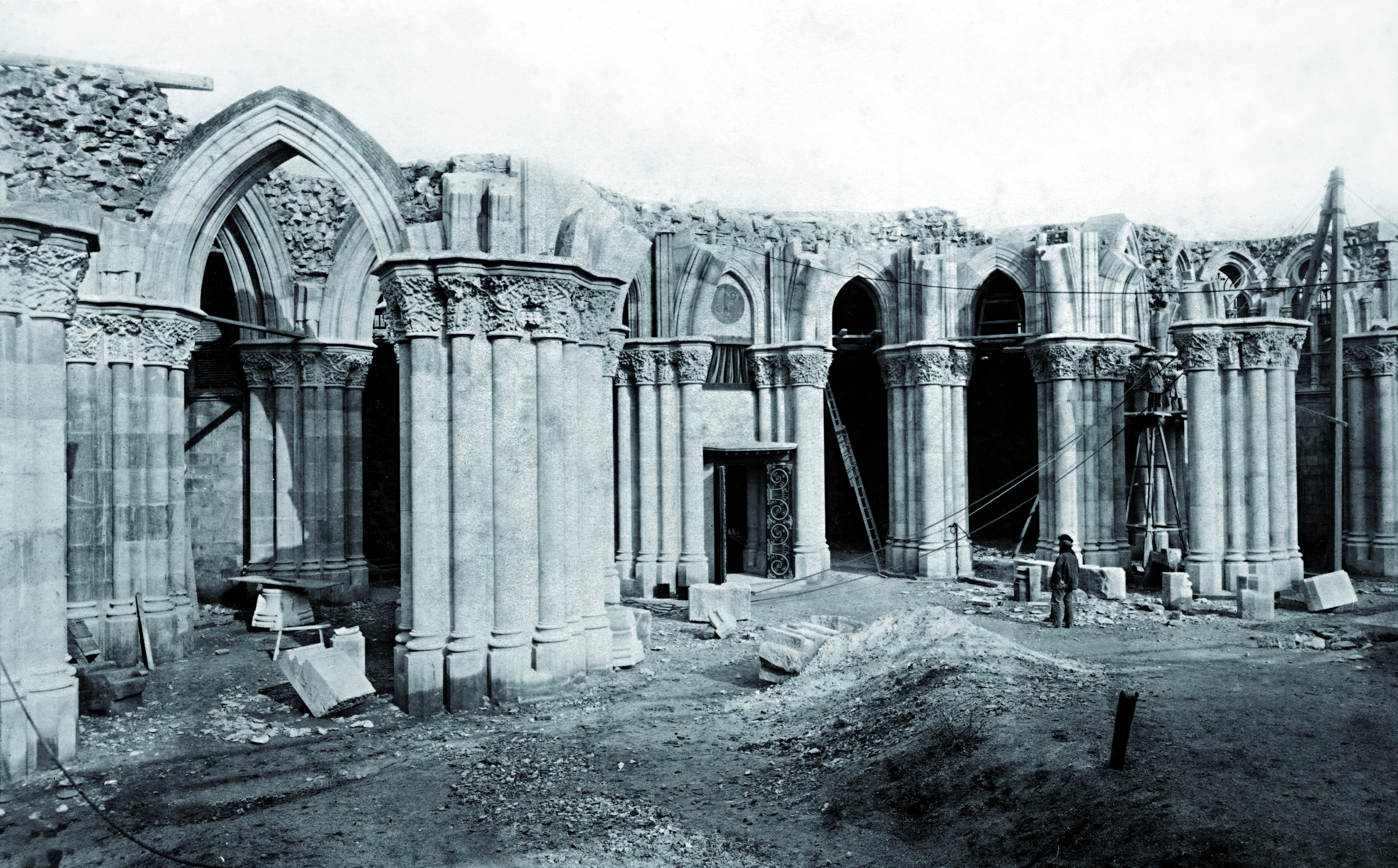
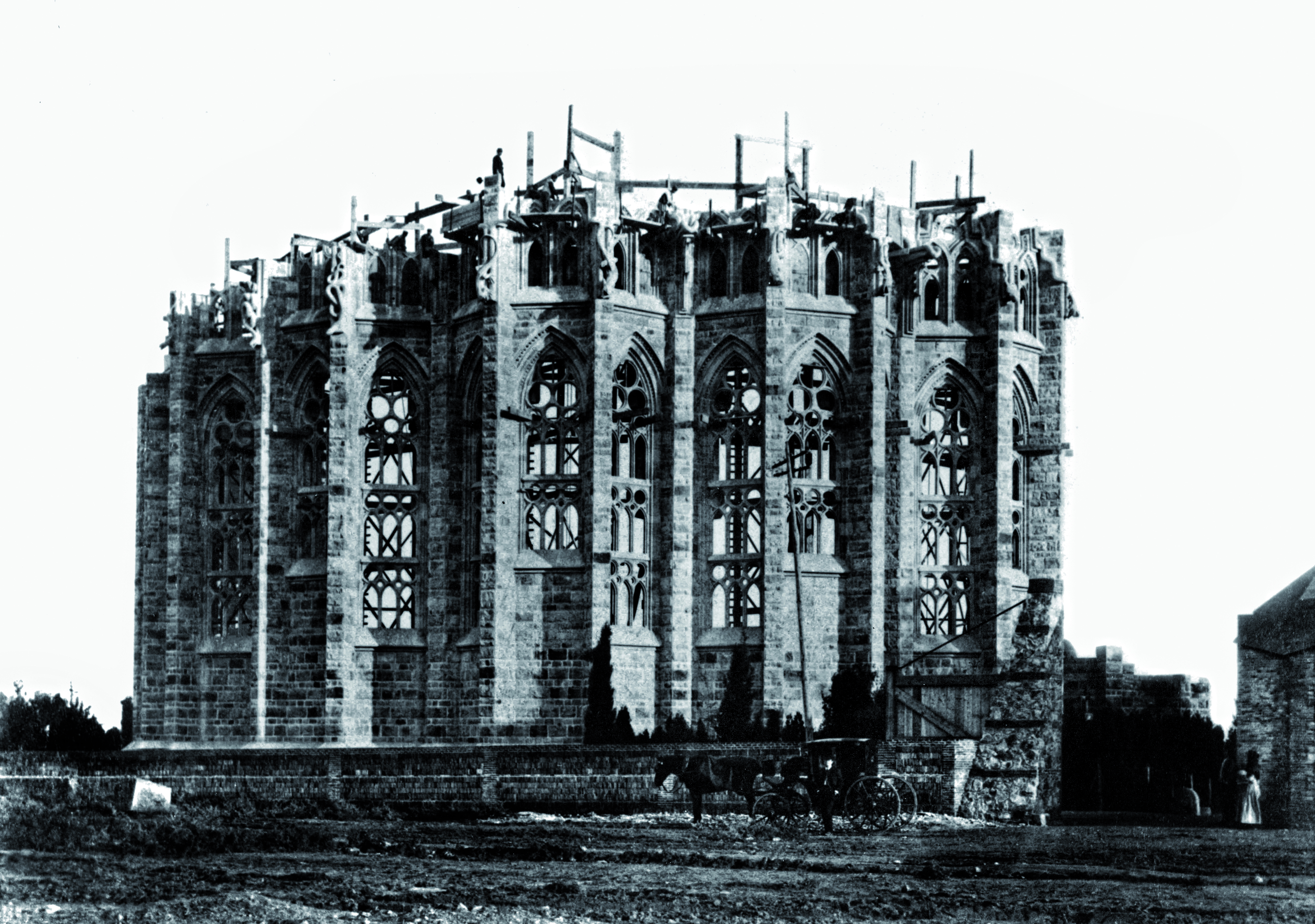
View of the Chapel of Saint Joseph in the crypt, 1885 (left) and view of the apse in 1892 (right). Fotos Aleu
In the early 20th century, Gaudí designed and built the Schools at the Sagrada Família, a place for the children of the Temple workers and other kids in the neighbourhood to study.
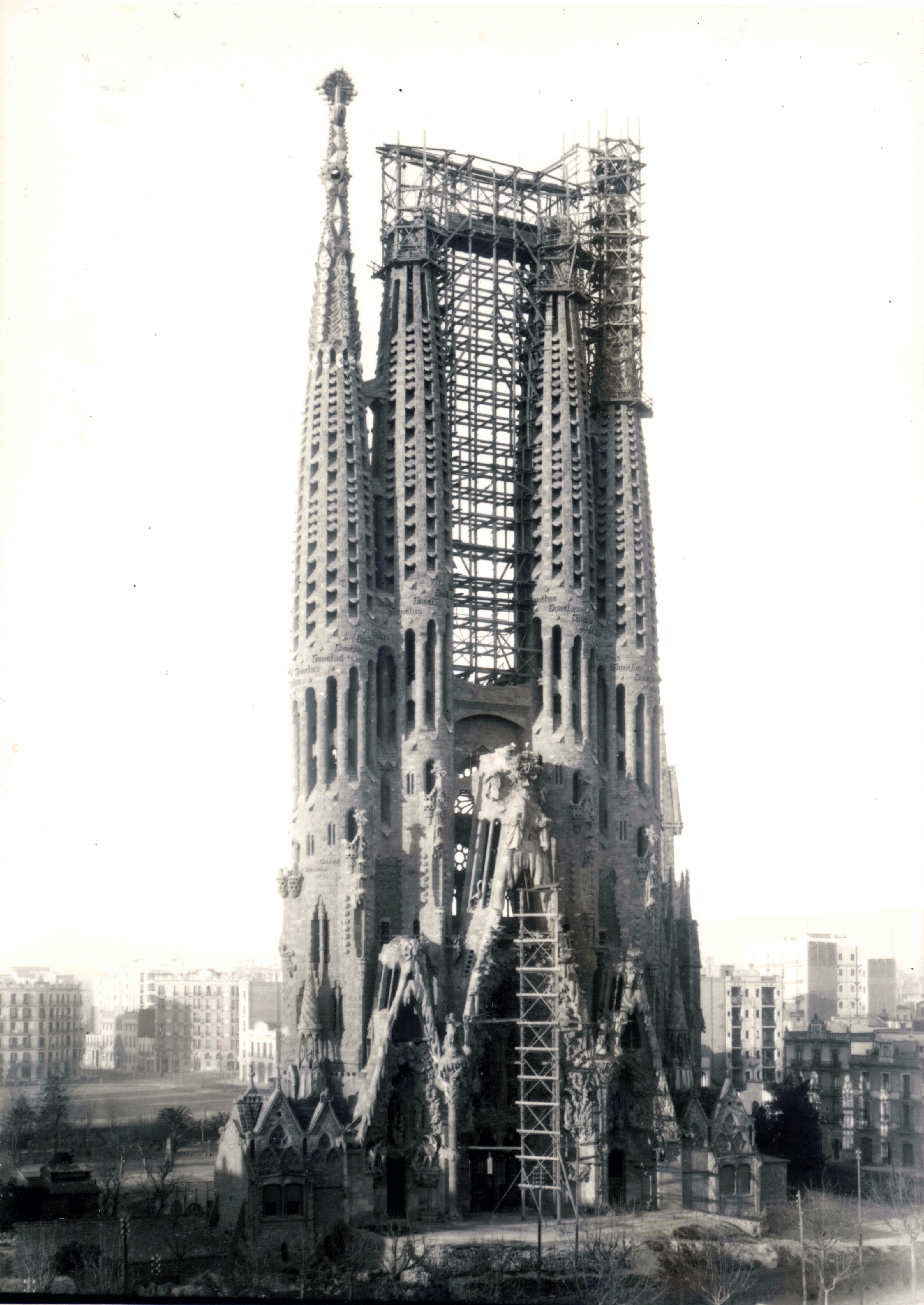
At the Temple, work progressed on the Nativity façade, and the Saint Barnabas tower was completed in 1925. It was the first of the towers dedicated to the apostles and the only one Gaudí ever saw finished. With this milestone, the vertical silhouette of the Temple began to emerge, reshaping the city skyline.
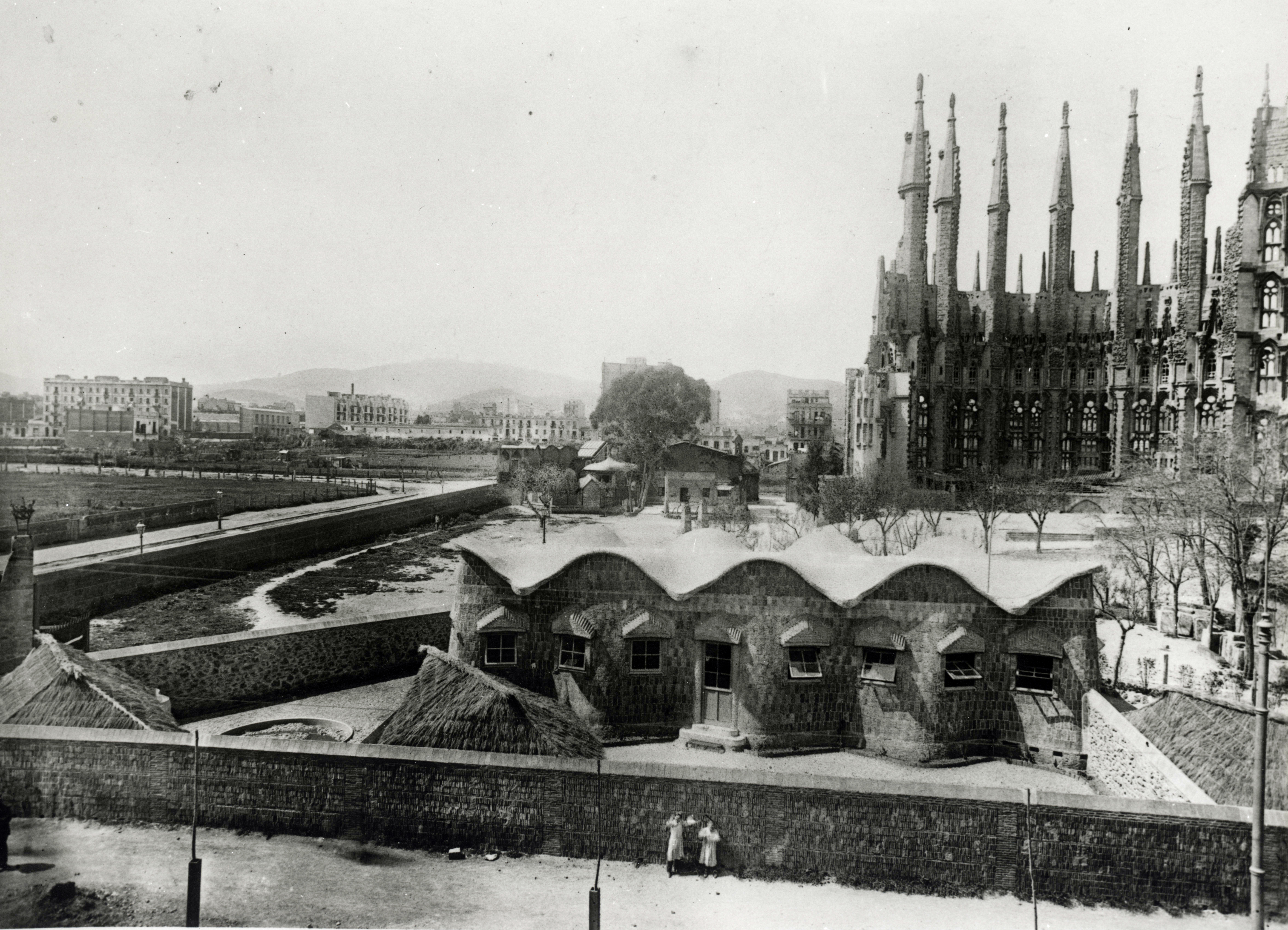
Sagrada Família Schools building, a centre for the children of the Temple workers and other kids in the neighbourhood to study, 1913
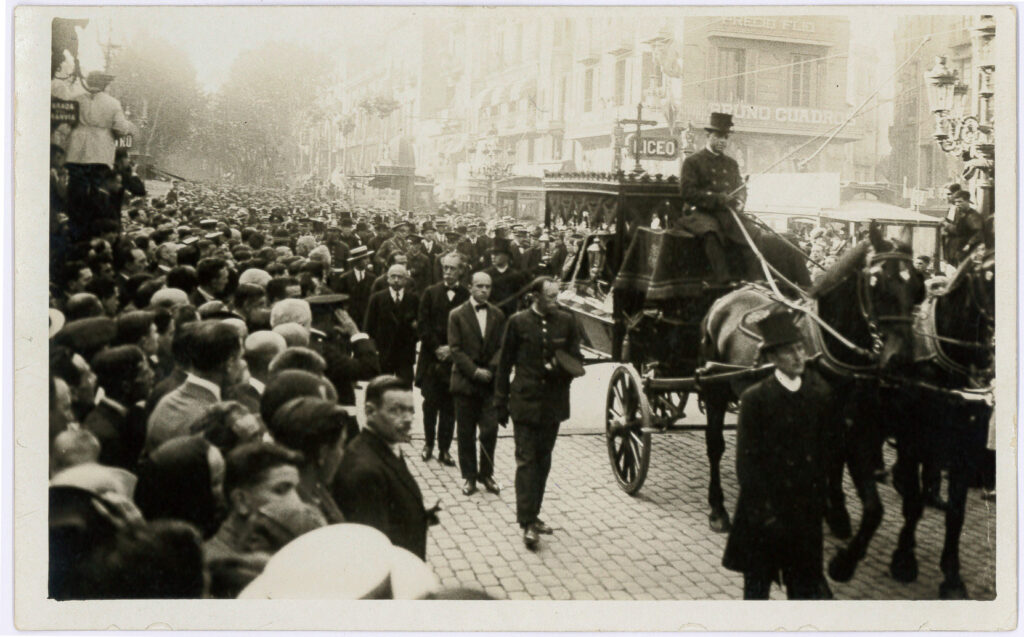
On 7 June 1926, Gaudí was run over by a tram and three days later, on 10 June, he died at Hospital de la Santa Creu in the heart of Barcelona’s old town, which is now the Library of Catalonia.
The funeral procession passed through most of Barcelona and ended up at the Sagrada Família, with the streets full of people turning out to say their goodbyes. This was the end of an era, but the beginning of his legend. The Temple, still unfinished, became a living monument to his legacy. Gaudí is interred in the Chapel of Our Lady of Carmel, in the Temple crypt.
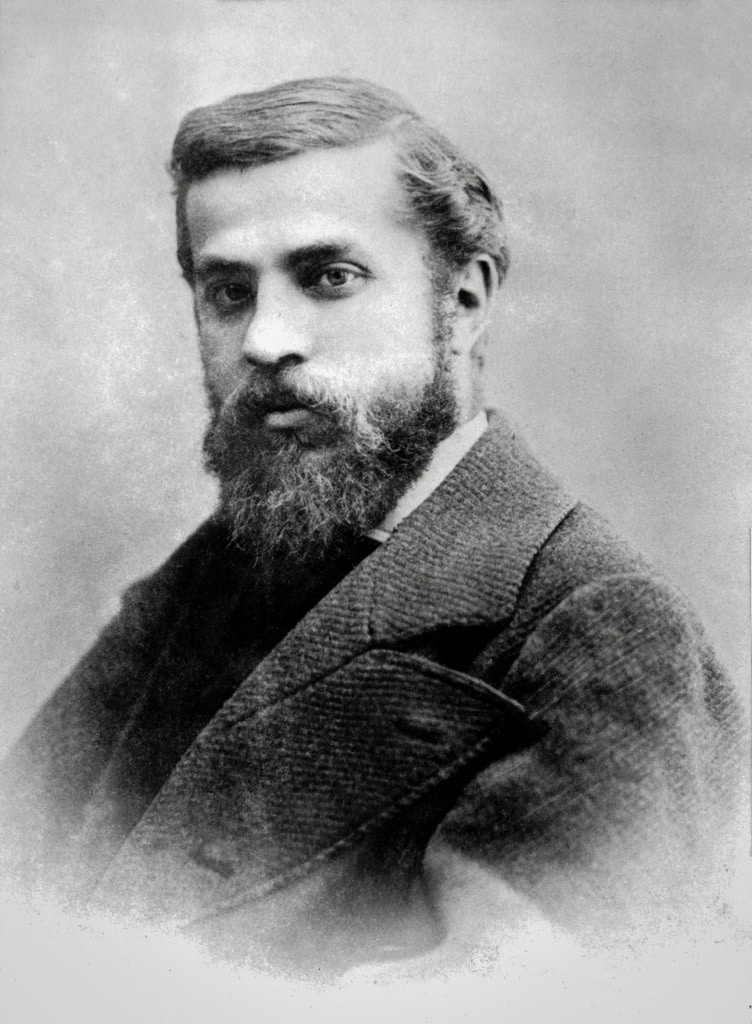
“It is not a disappointment that I will not be able to finish the Temple. I will grow old, but others will come after me. What must be always preserved is the spirit of the work; its life will depend on the generations that transmit this spirit and bring it to life.”
Antoni Gaudí. Adaptation
In 1930, the four bell towers of the Nativity façade were completed. This was a decisive moment: for the first time, the city could see what the project was meant to look like. The Temple began to rise into the heavens. In the sculpture workshop, residents, children and artisans from the neighbourhood were used as models, under the leadership of sculptor Llorenç Matamala.
This façade is an ode to light, nature and the persistence of a collective dream. At the same time, Barcelona was undergoing profound urban changes and opening up to the world, marked by the 1929 Barcelona International Exposition. Amidst public works, social tensions and political changes, the city was showcased to the world as a modern capital while fighting for its identity.
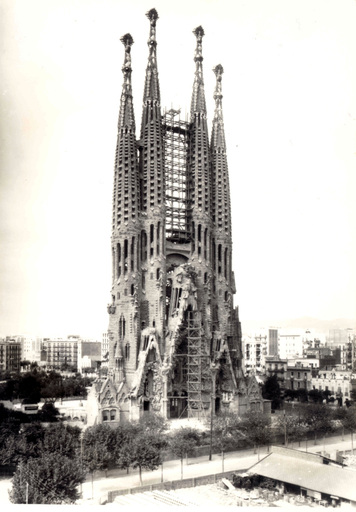
View of the four finished bell towers on the Nativity façade, 1930. Mas Archive
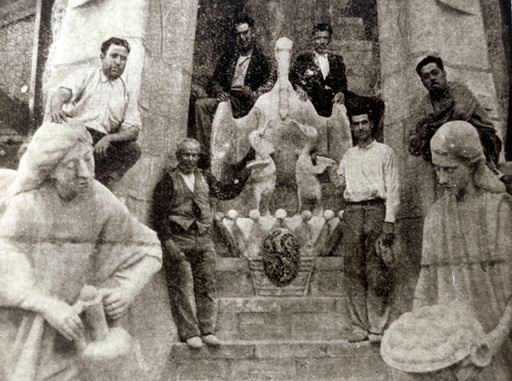
In 1936, Gaudí’s workshop burned down with the original plans and models, but that didn’t stop the project. His former collaborators, aware of the great value of his work, protected the fragments that remained. This gesture of bravery and discretion, and their often-anonymous dedication afterwards, allowed Gaudí’s dream to survive and be pieced back together years later. This period highlighted the importance of memory and carefully conveying a legacy that is the constant undercurrent of the project.
In a period marked by heightened social and political tensions, the Sagrada Família fell into silence: construction work stopped, but the Temple still stood as a symbol of persistence.
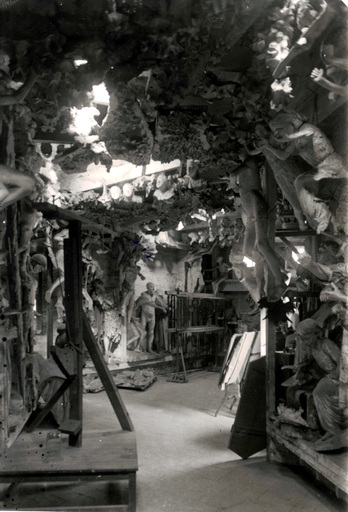
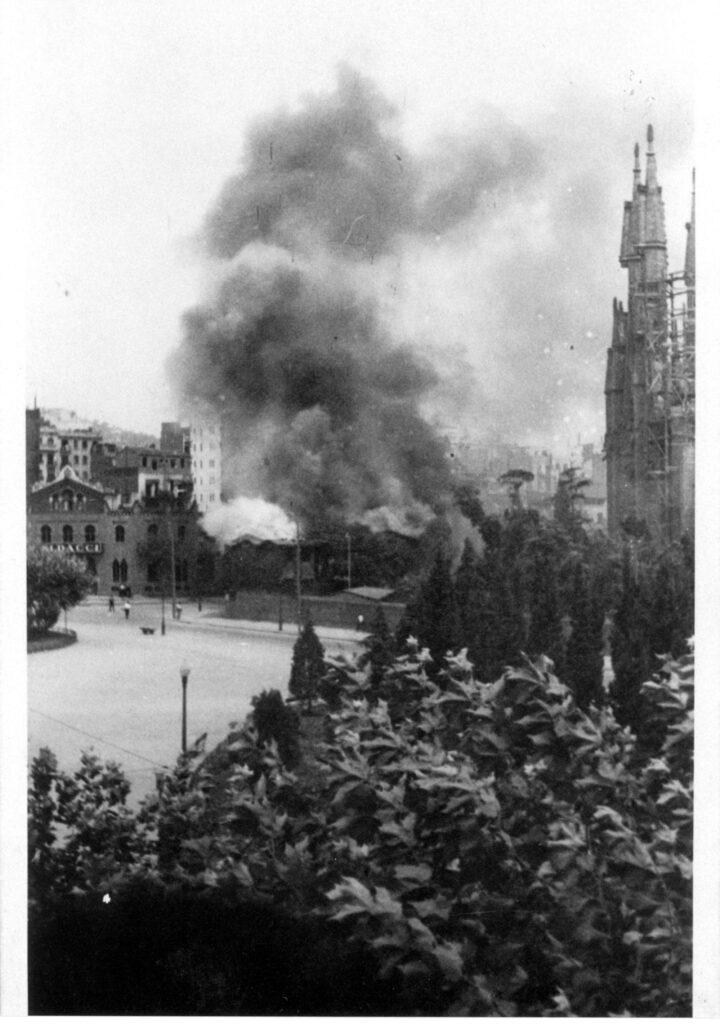
Model storage in Antoni Gaudí’s workshop at the Sagrada Família before the fire (left). Mas Archive. Sagrada Família Schools in flames from the riots, 1936 (right). Unknown
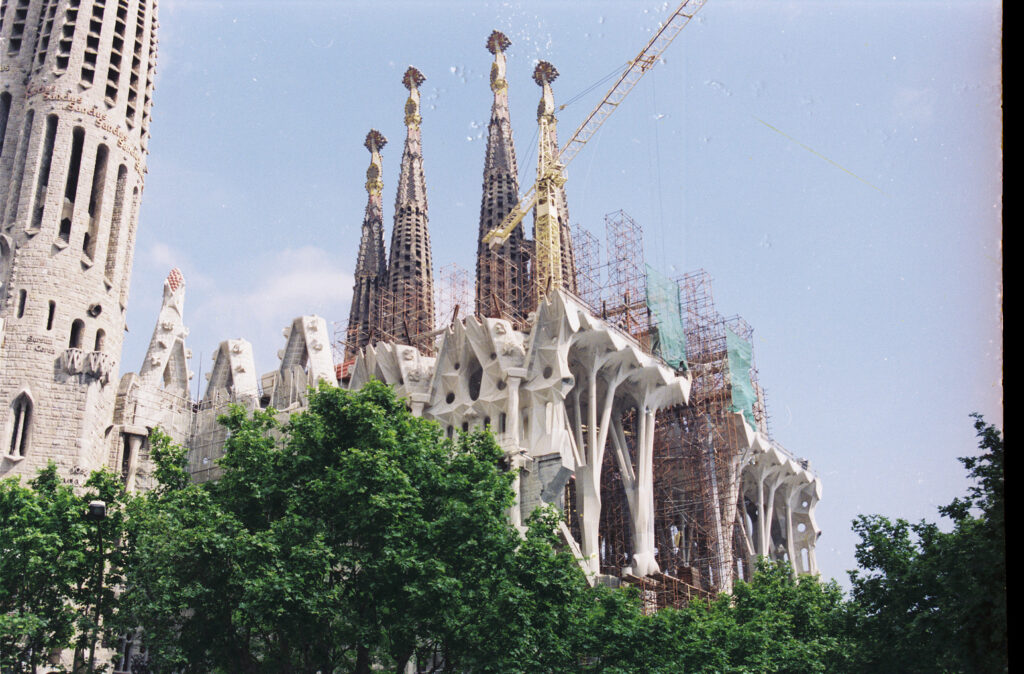
Thanks to the dedication of Gaudí’s disciples, construction of the Temple began again progressively. In 1954, works began on the Passion façade, advancing slowly but surely. In 1976, the four bell towers on this façade were completed. This time was marked by hard work that, with limited resources, kept Gaudí’s legacy alive.
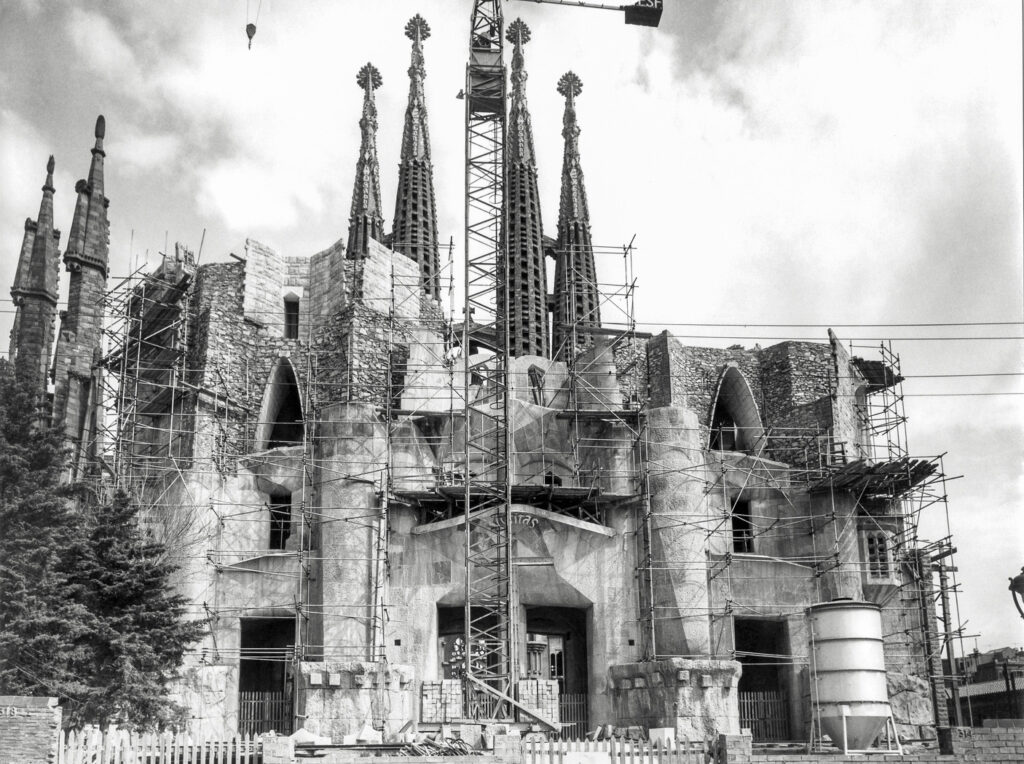
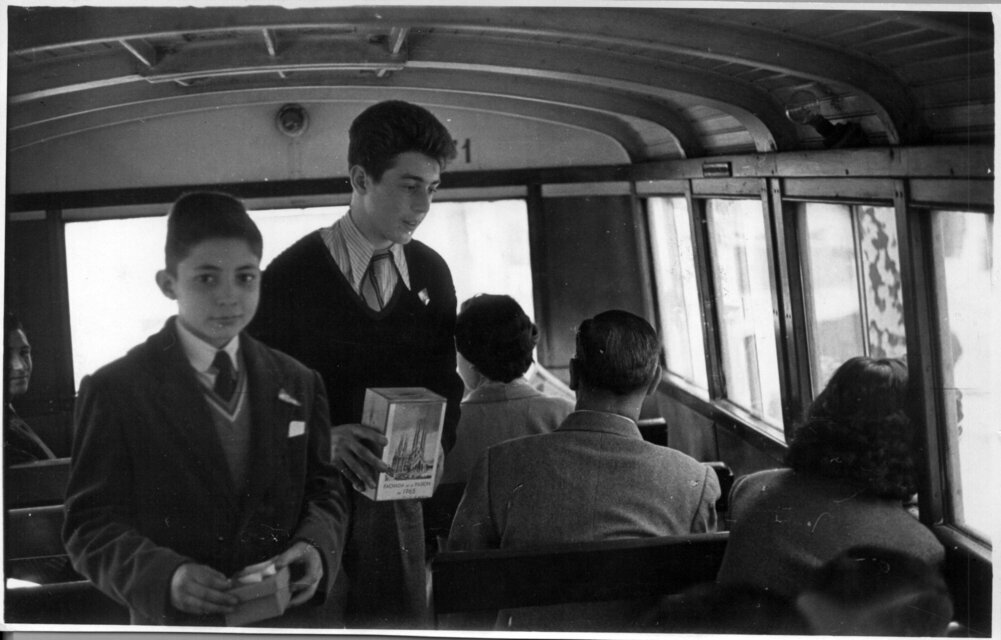
View of the Passion façade, 1966 (left). Foto Aleu. Fund-raising for the Passion façade in 1955 (right). Foto Salvador
With the restoration of democracy, construction also returned to the Sagrada Família, beginning to work on the façades and the vaults of the side naves. Pope John Paul II visited the Temple in 1982, which became the symbol of a city reawakening. New, modern techniques and a renewed collective confidence made this period a turning point and Josep Maria Subirachs was commissioned to create the sculpture groups for the Passion façade.
At the same time, the city was preparing for a new international spotlight, culminating in October 1986 when Barcelona was chosen to host the 1992 Olympic Games. This milestone set off a thorough modernisation of the city and opened it up to the world.
In 2005, the Sagrada Família Nativity façade and crypt were named UNESCO World Heritage, making the Temple a universal architectural benchmark and an icon of the new, cosmopolitan city.
In 2010, after the interior of the Temple was completed, Pope Benedict XVI consecrated the Sagrada Família and granted it the status of a Minor Basilica in a celebration that was followed around the world. That same year, the interior of the Basilica received the Barcelona City Award in Architecture and Urban Planning from the Barcelona City Council.
From 2010, work began on the central lantern: the tower of the Virgin Mary, the four towers of the Evangelists and the tower of Jesus Christ. New technology and the growing number of visitors brought the resources needed to keep up a steady pace on the construction site.
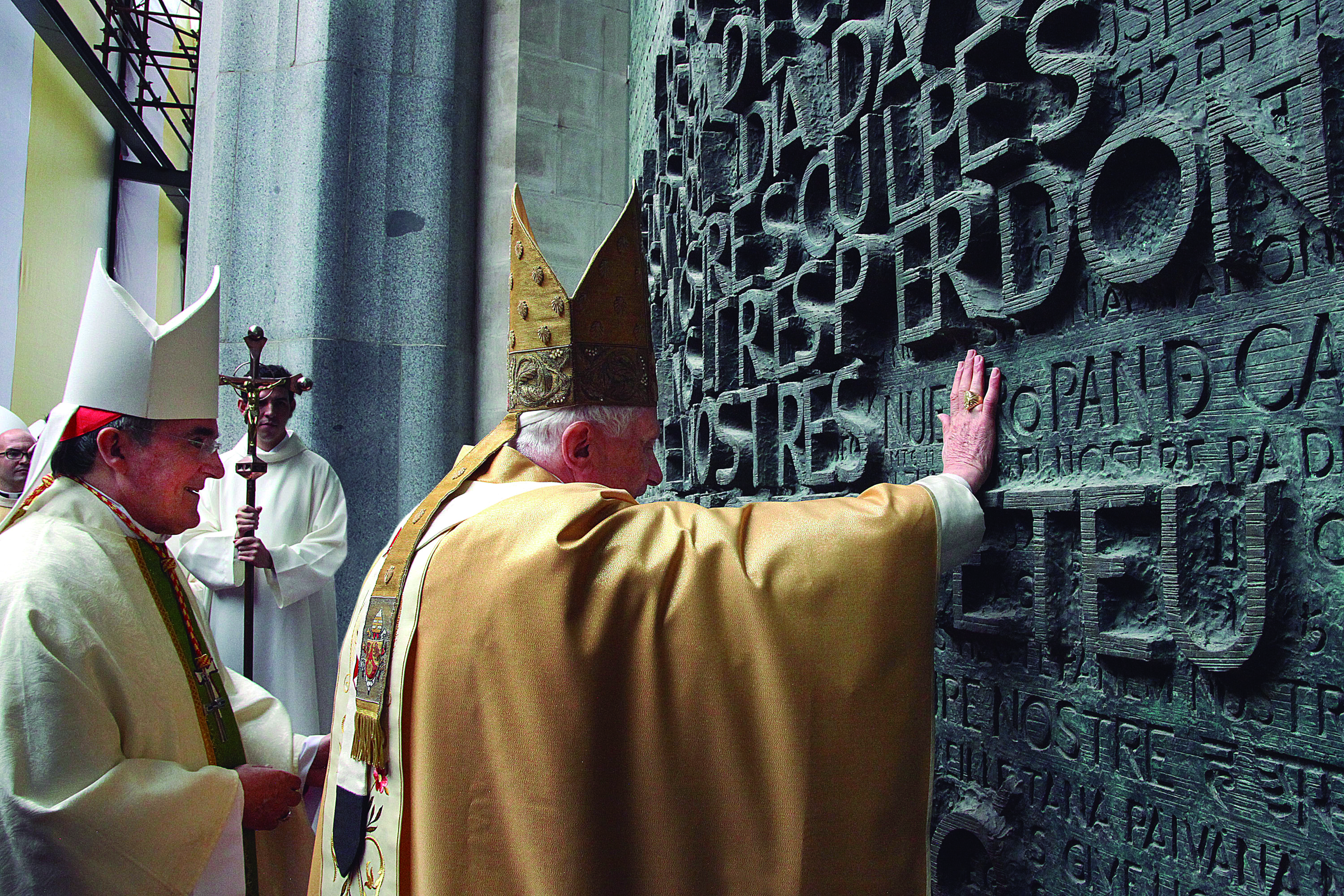
Pope Benedict XVI entering through the door on the Glory façade, 2010 (right). Agustí Codinachs
From 2011 to 2020, progress on the Sagrada Família was intense. In 2015, works finished on the sacristy. Three years later, in 2018, the Passion façade was completed when the cross was put in place atop the pediment. Meanwhile, work was progressing on the tower of the Virgin Mary and the towers of the Evangelists. They began rising up and paving the road to completion of the six central towers, with the tower of Jesus Christ in the centre.
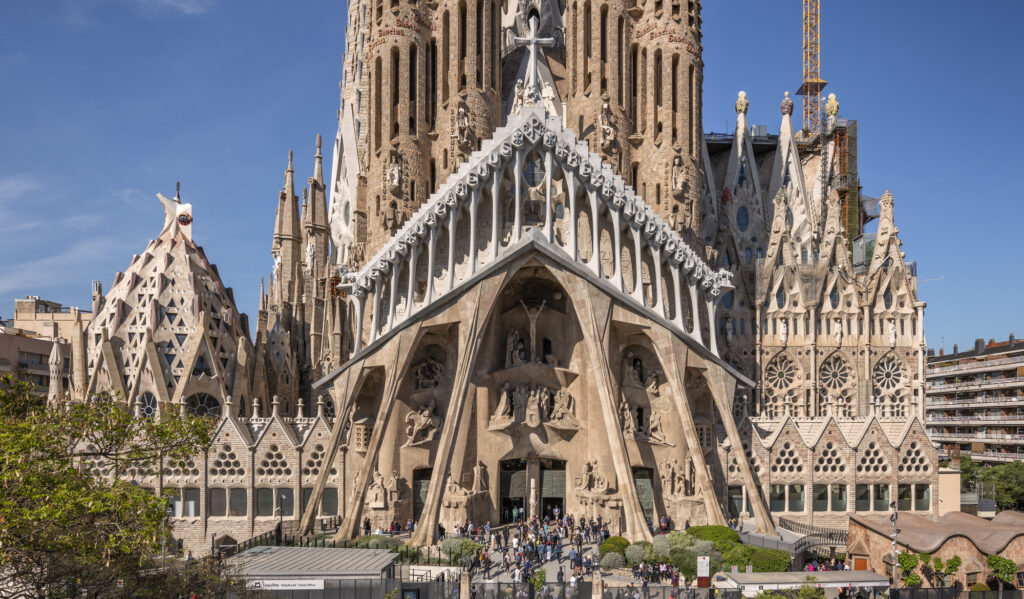
At the height of the pandemic, the Sagrada Família Board of Trustees decided to finish the tower of the Virgin Mary. They made this decision at this especially difficult time to help give people hope. The star on the tower lights up the sky over Barcelona as a new symbol of hope, representing a shared dream.
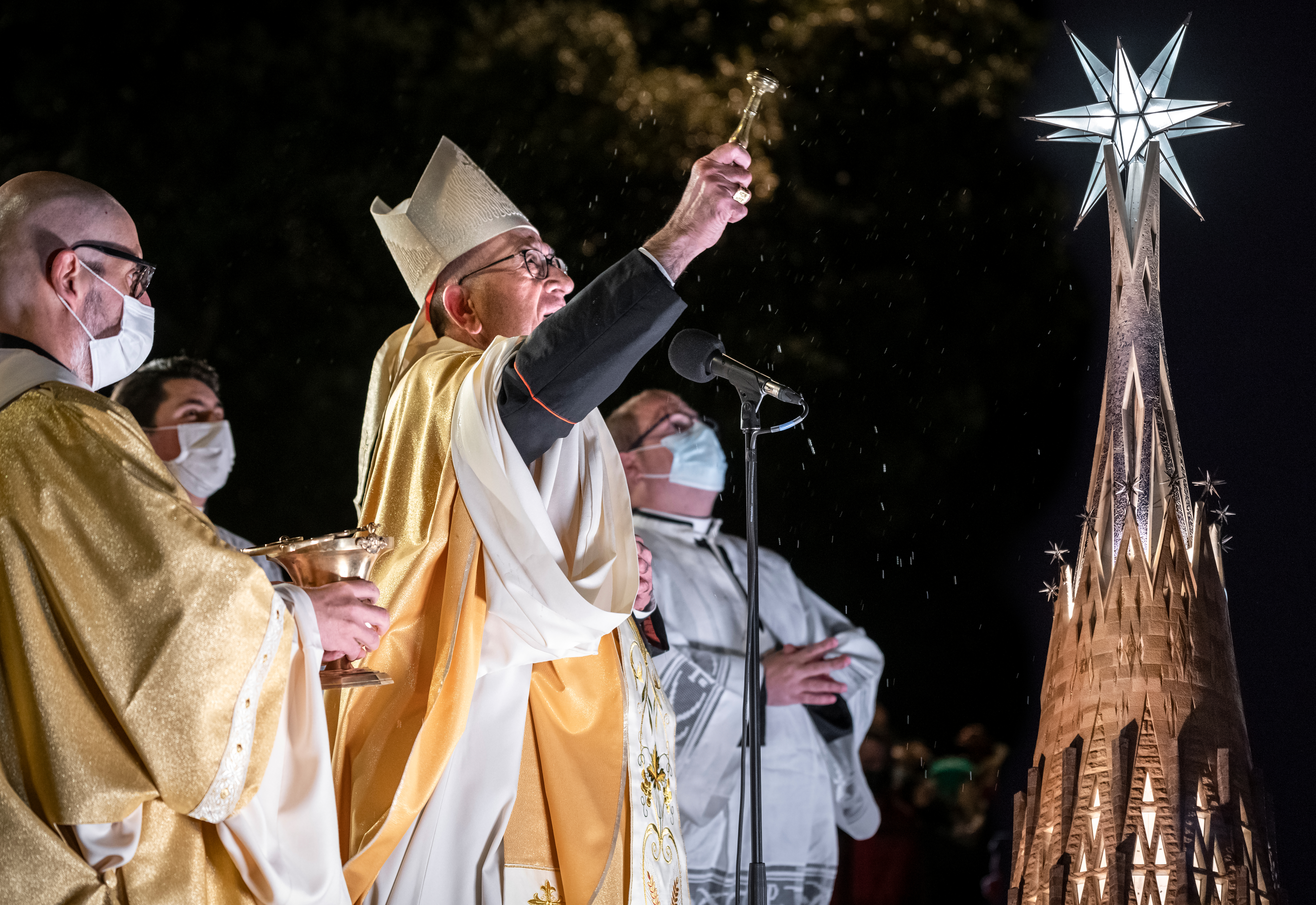
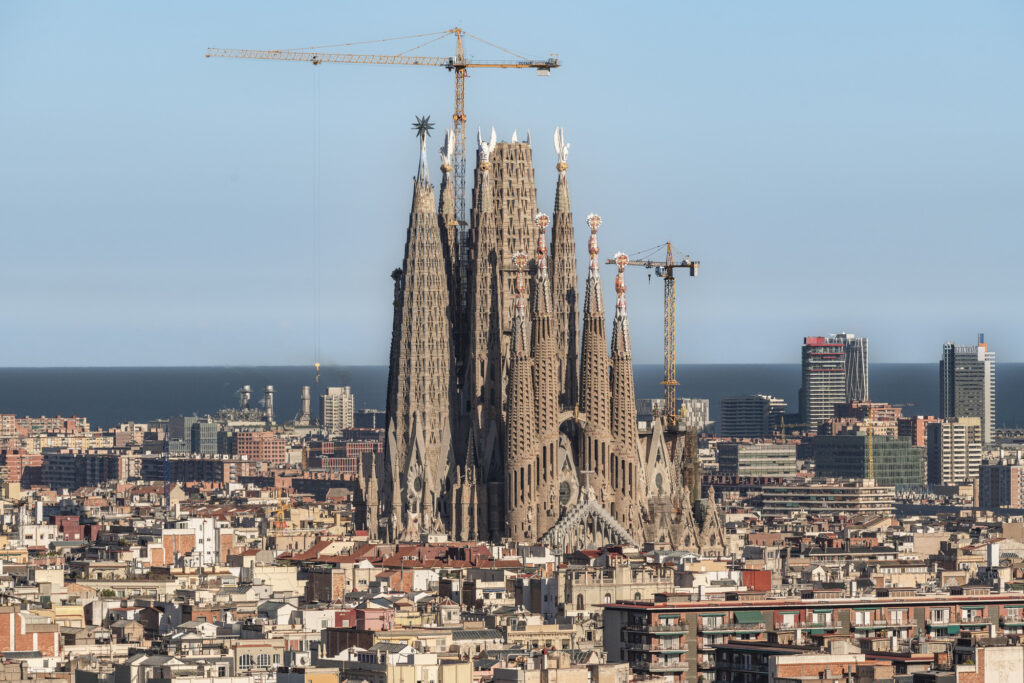
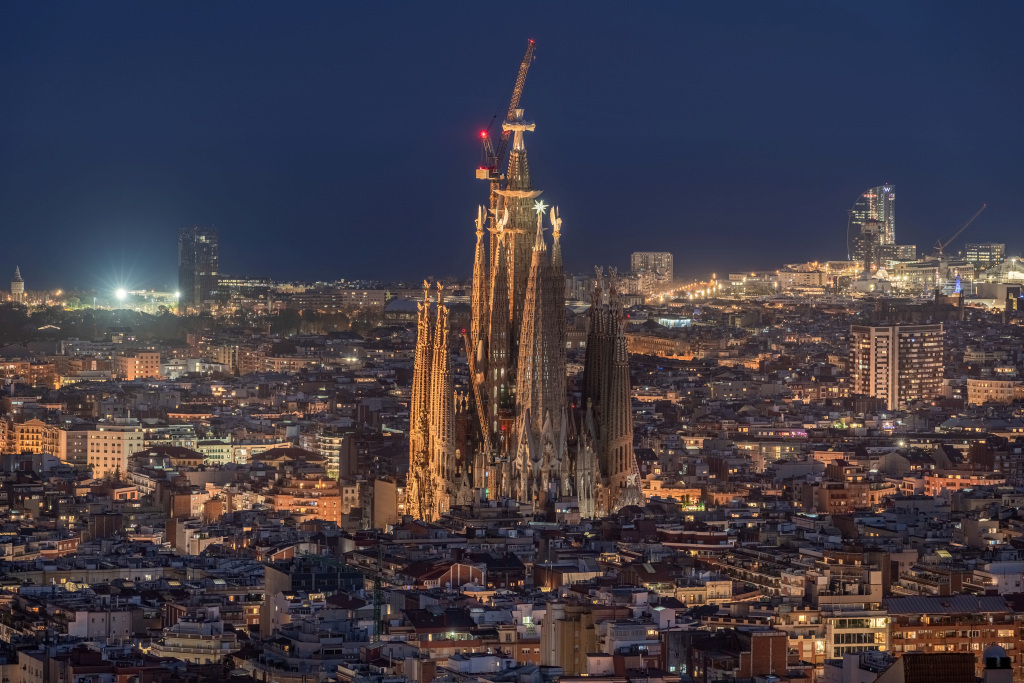
Cardinal Joan Josep Omella i Omella, Archbishop of Barcelona, blessing the tower of the Virgin Mary, 2021 (right). Pep Daudé. View of construction of the central towers, with the tower of Jesus Christ in the centre surrounded by the four towers of the Evangelists and the tower of the Virgin Mary over the apse, 2023 (left). Pep Daudé .
After nearly a century and a half on the same path, the Sagrada Família and Barcelona continue advancing towards their shared destiny. The Temple, born out of faith and teamwork, and the lively, ever-changing city, share the same driving force: looking up to the heavens and building a city based on trust.
In a world that is moving non-stop at breakneck speed, the Temple reminds us of the value of hard work and perseverance. Its construction over the past five generations is an act of faith in time. Contrary to the accelerated pace of modern life, the Sagrada Família is a place to slow down and reflect, designed for silence, contemplation and communion.
The Sagrada Família and Barcelona, symbols of the same methodology, continue their dialogue. A work passed down from generation to generation, existing outside of time and beyond personal interests, yet united by the love of a shared goal.
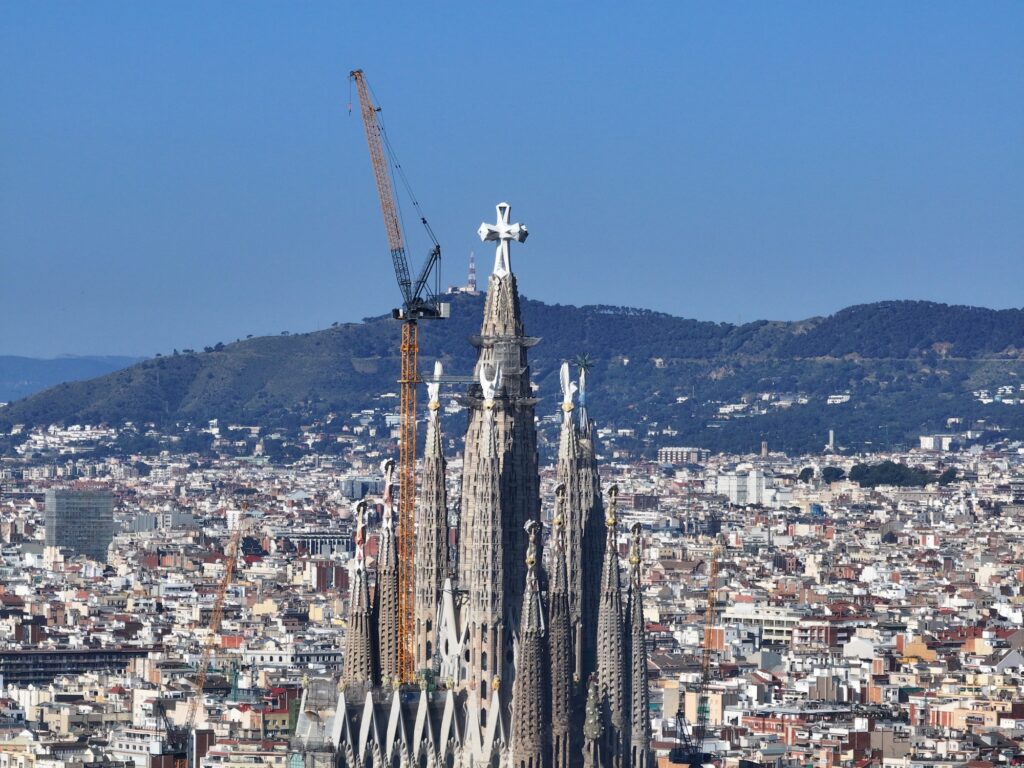
View of construction of the central towers, with the tower of Jesus Christ in the centre surrounded by the four towers of the Evangelists and the tower of the Virgin Mary over the apse, 2026. Pep Daudé