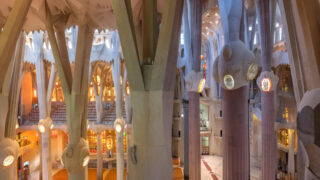
Singing was always a big part of Antoni Gaudí’s project for the Sagrada Família. In the previous post, we saw how the architect imagined and laid out the choirs (the spaces for the singers) and studied the acoustics for the interior of the Basilica. This time we’re going to look at his musical tastes and connections to Lluís Millet and Orfeó Català.
Gaudí’s musical references: a return to the origins
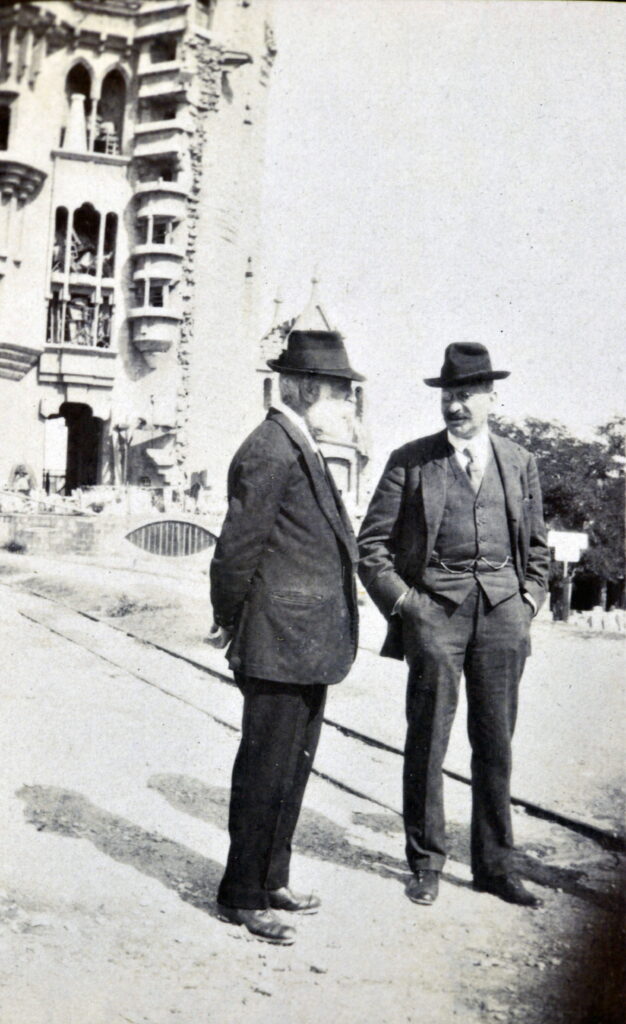
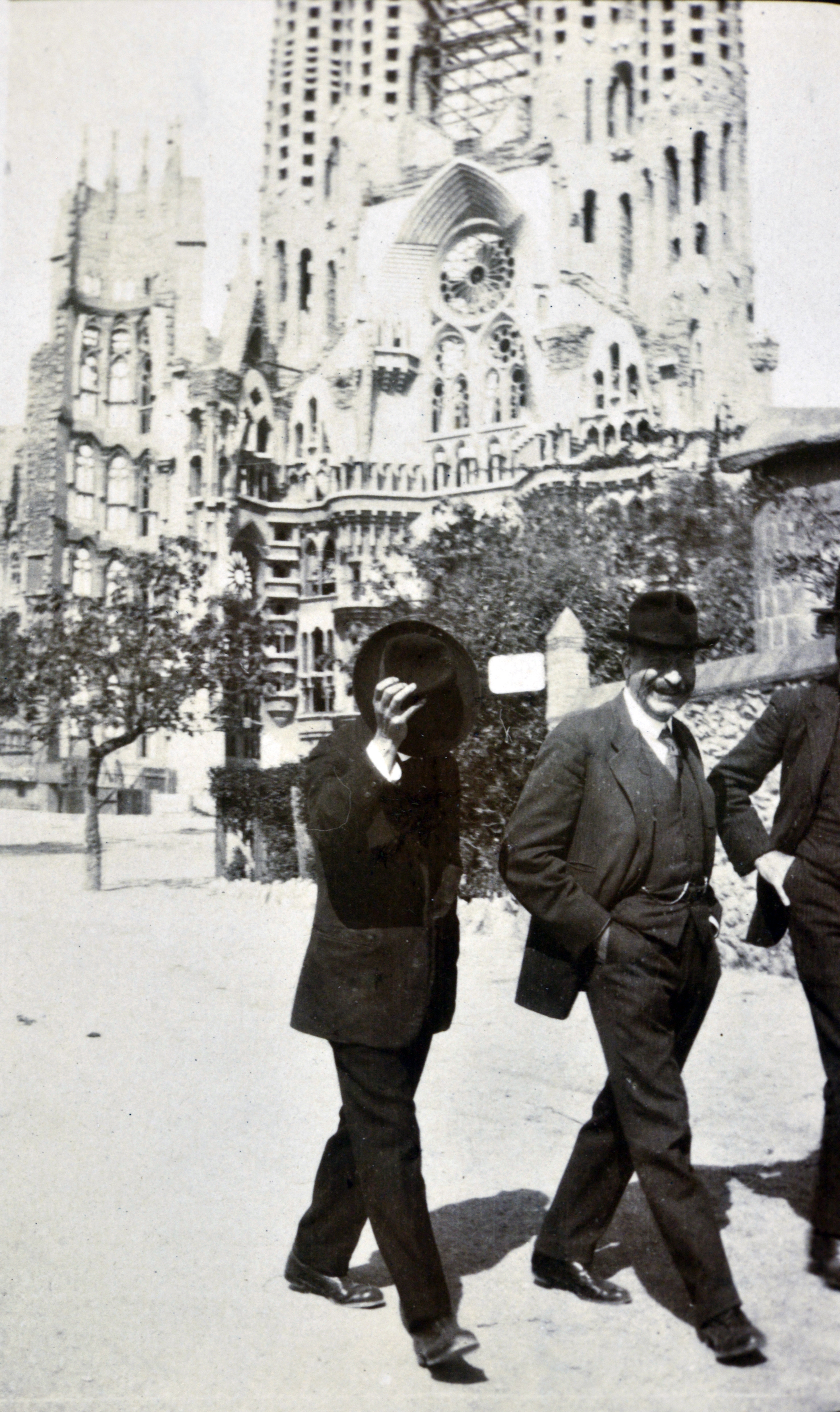
One of Gaudí’s goals for the Sagrada Família was to bring religious music to the faithful, in line with the trend Pope Pius X (1835-1914) promulgated in his motu proprio Tra Le Sollecitudini. To do so, the architect wanted to return to the origins, to Gregorian chants, the traditional music of the Catholic Church from medieval times, and popular Catalan music. He shared these two musical influences with his friend Lluís Millet i Pagès, founder and director of Orfeó Català. Their relationship probably began as a result of the architect’s visits to Sant Felip Neri church, where Millet was the chapel master. The two friends also met at the Sagrada Família, as these photos show:
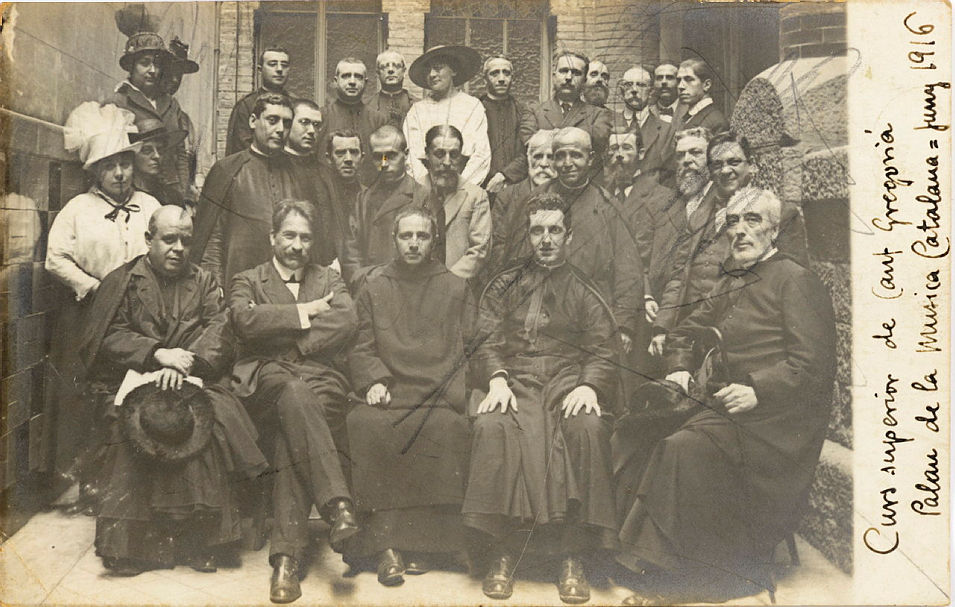
The musical affinity between Gaudí and Millet became clear in 1916, when they attended the first course on Gregorian chants at the Palau de la Música Catalana. “This was when the architect learned about the traditional Church songs and the Liturgy of the Hours, knowledge that he later wanted to share through the Sagrada Família,” explains Narcís Laguarda, Junta Constructora de la Sagrada Família architect. There is a class photo from the course, taught by Gregori Maria Sunyol, a monk from Montserrat:
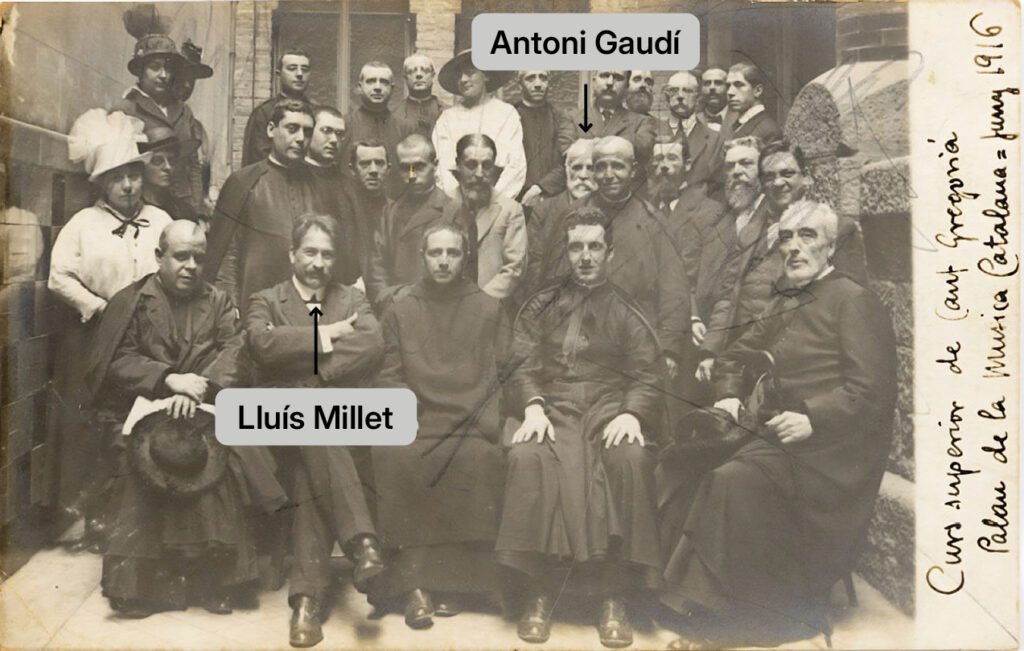
Students in the course on Gregorian chants at the Palau de la Música Catalana in 1916, including Lluís Millet and Antoni Gaudí. Source: Orfeó Català documentation centre
Antoni Gaudí also felt a connection to Orfeó Català de Barcelona, a choir group founded in 1891 by his friend and Amadeu Vives to share the universal and Catalan choral repertoire. On 29 June 1922, during a visit to the Palau de la Música Catalana on the feast of Saint Peter, he showed his appreciation for this group when they asked him to sign their book of honour. The architect, who loved to draw, improvised an allegory of Orpheus (hero of ancient Greece) playing the lyre, surrounded by animals. Below the drawing, which is still in the group’s archives, he wrote the following dedication: “In Heaven, we will all be orpheonists.”

Antoni Gaudí’s dedication to Orfeó Català in the book of honour. Source: Orfeó Català documentation centre
Orfeó Català and its director took part in various concerts, celebrations and other important events at the Temple, as explained in articles from the time published in El Propagador de la Devoción a San José and newspapers as La Veu de Catalunya. The closing concert for Saint Joseph Jubilee Year in December 1921 drew quite the crowd, featuring several choirs and choral groups from Catalonia.
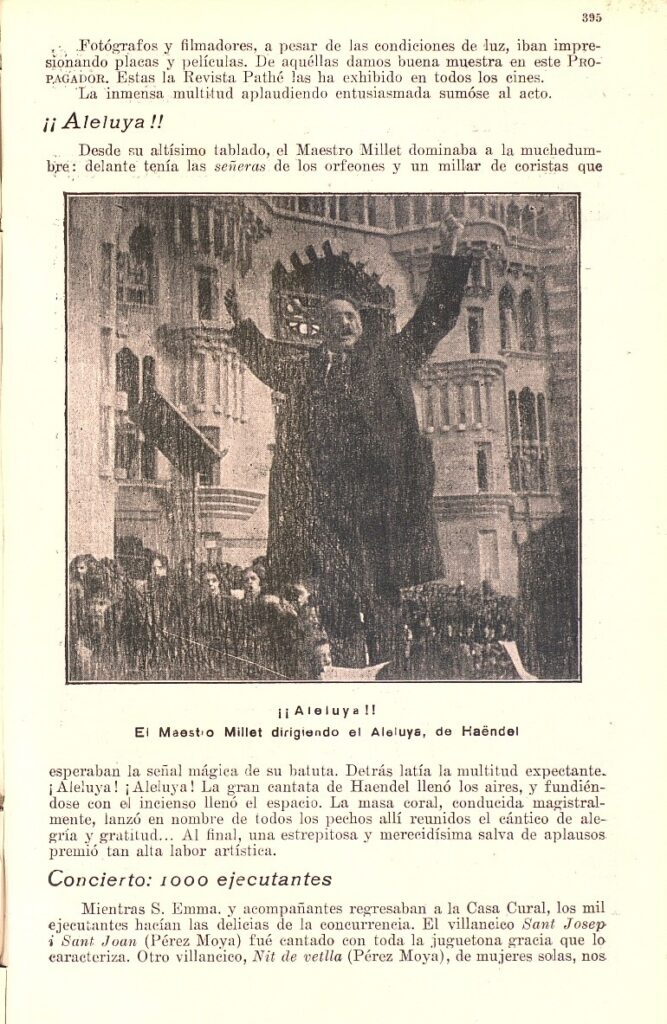
Lluís Millet conducting Handel’s Hallelujah at the closing concert for Saint Joseph Jubilee Year at the Temple in December 1921. Source: El Propagador de la Devoción a San José
Another curious story about the two friends can be found in the book Gaudí i la música by architect and Gaudí collaborator Joan Baptista Serra de Martínez. For one of the visits to Barcelona Lluís Millet organised for musicians from all over Europe, Bach’s St. Matthew Passion was performed at the Palau de la Música Catalana. Soon after the event, while visiting the Sagrada Família, Alsatian musician Albert Schweitzer asked Antoni Gaudí for his opinion, as he had also attended the concert. The architect, who wasn’t a big fan of German composers, ever present in the Modernisme era, expressed his admiration for the work and added, “I think I liked it so much because you, my friend Millet, changed the arrangement a bit.” (Gaudí i la música. Joan Baptista Serra de Martínez, page 33)
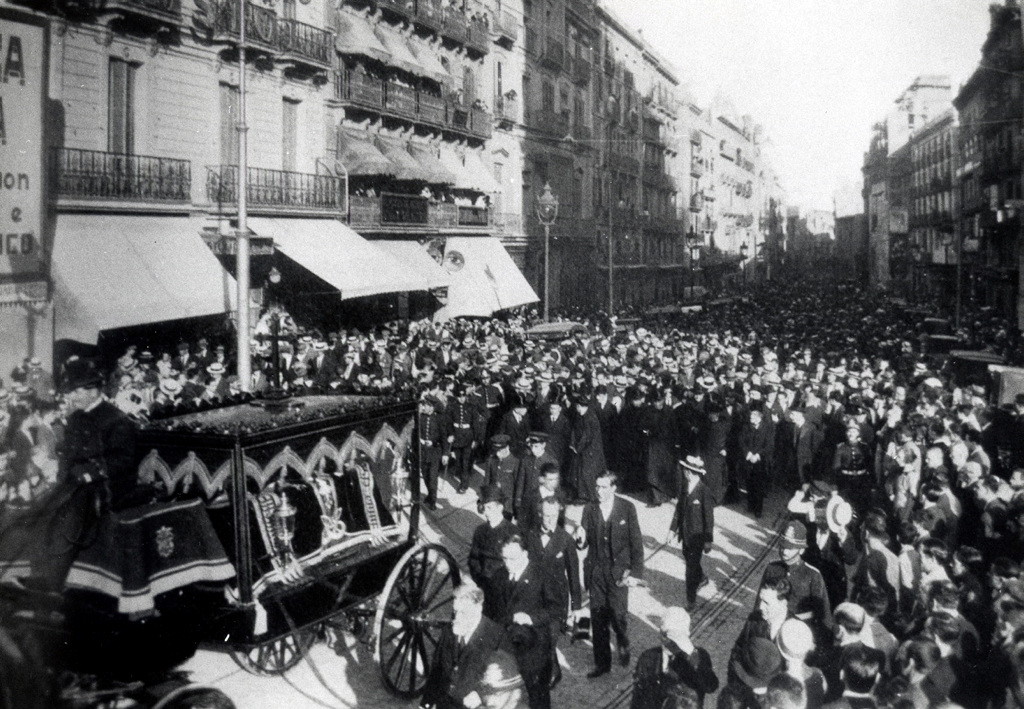
Gaudí and Millet remained friends until the architect’s death on 10 June 1926, three days after being hit by a tram. The composer was one of many to accompany his coffin in the funeral procession through the streets of Barcelona from Hospital de la Santa Creu to the Sagrada Família, walking by his side as he had done so many times before. Once at the Basilica, Millet paid tribute to his friend by conducting the Orfeó Català men and boys choir in Requiem by Tomás Luis de Victoria, one of the most well-known composers of the Spanish Renaissance.
Part of this melody will be heard inside the Basilica again on 19 March, the feast of Saint Joseph, this year marking the hundredth anniversary of Antoni Gaudí’s death. It will be part of the Orfeó Català Lent concert that the Sagrada Família is hosting to commemorate the laying of the cornerstone, reinforcing the choral spirit and historical ties between the two institutions.