
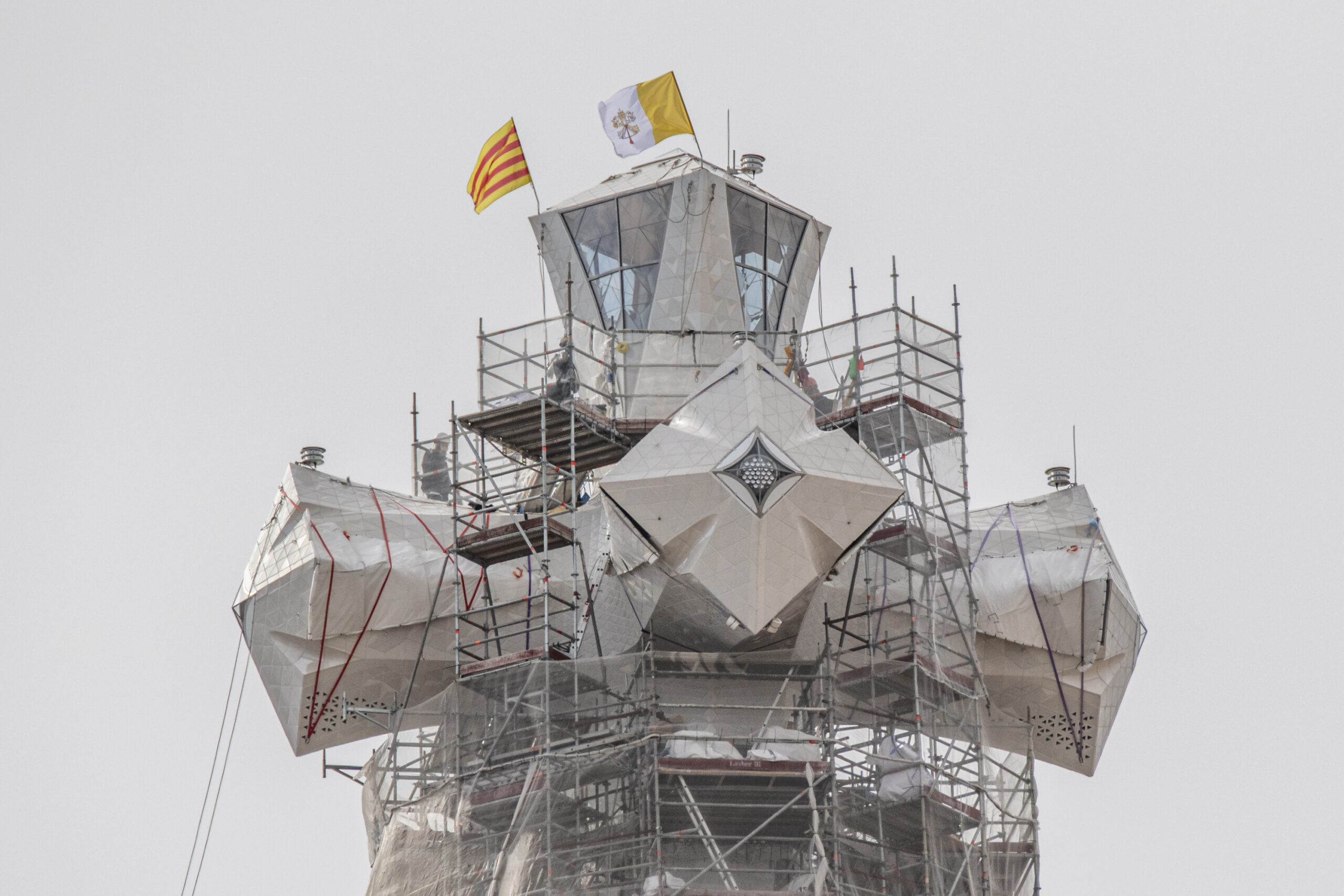
The Sagrada Família has reached 172.5 metres, the Temple’s highest point, with the installation of the upper arm of the cross on the tower of Jesus Christ, which completed works on the exterior of this tower. After the twelfth level of panels and the base of the tower pinnacle were put in place, for the past few months work has focused on building and assembling the pieces of the cross. The structure was manufactured in Germany and sent to the Temple in fourteen prefabricated concrete and stainless steel pieces, which were assembled on a work platform 54 metres above the ground. The cross is covered in white enamelled ceramic, made in factories and workshops in Catalonia, as were the windows and the stone interior. These materials achieve Antoni Gaudí’s vision: for the cross to shine both day and night. This article looks back at the phases of construction of the cross so far.
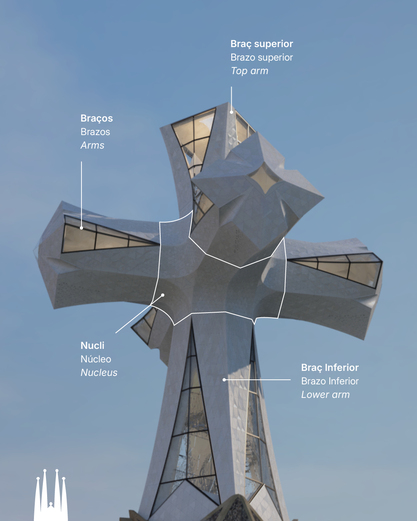
Parts of the cross of the Jesus Christ tower
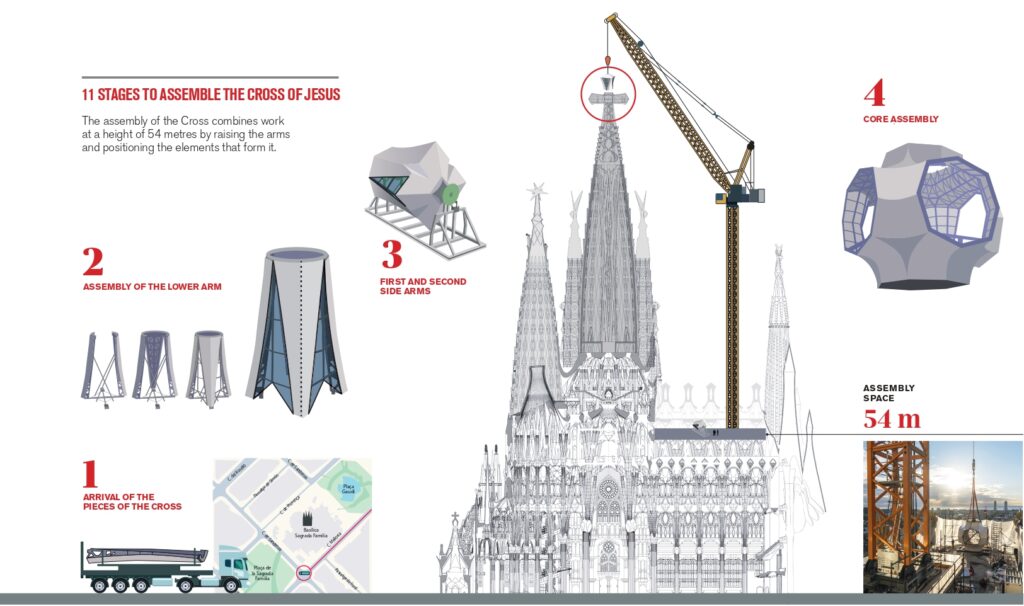
1. Pieces arrive
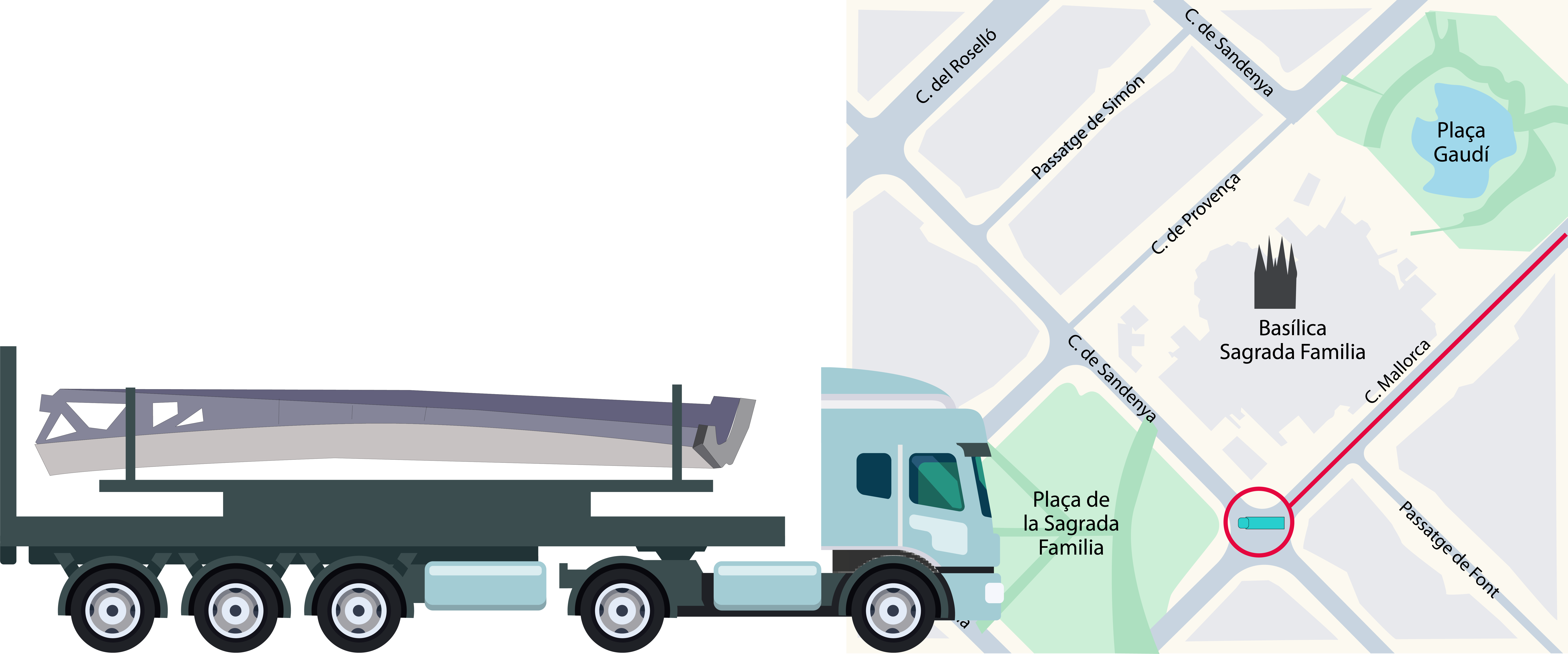
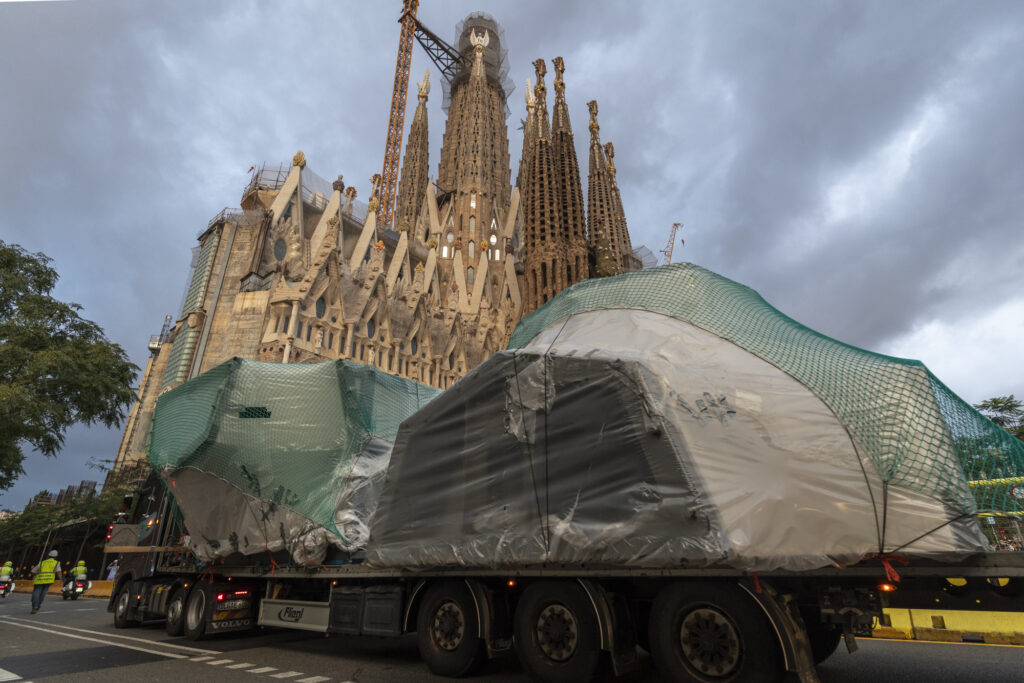
Over the past months, the various pieces of the cross arrived at the Temple via Carrer de Mallorca. Once at the Basilica, the crane lifted them up to the work area on the roofs.
2. Assembling the lower arm
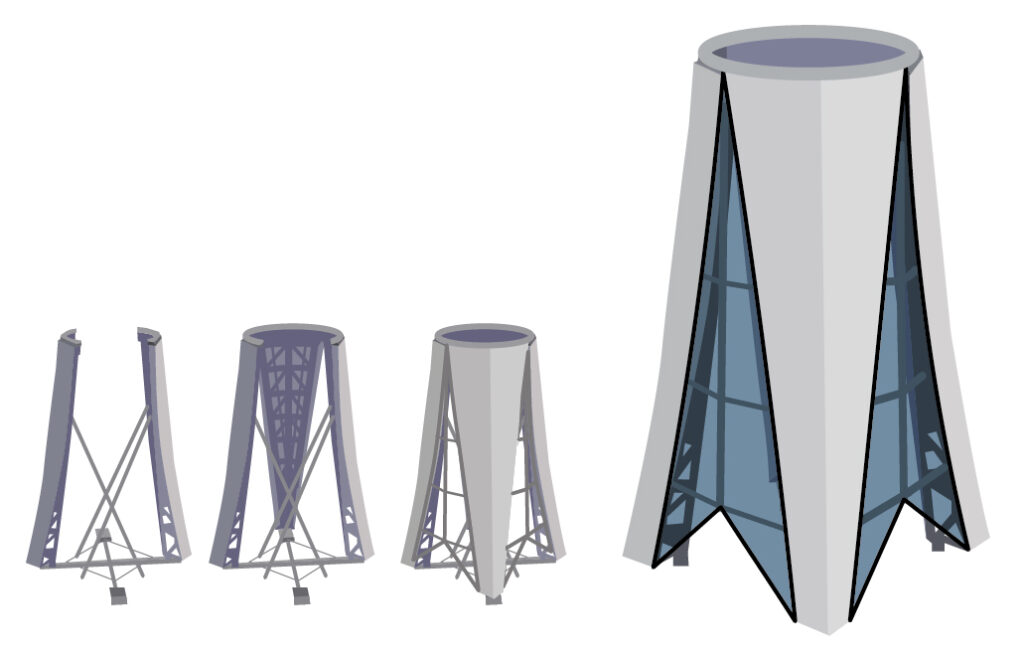
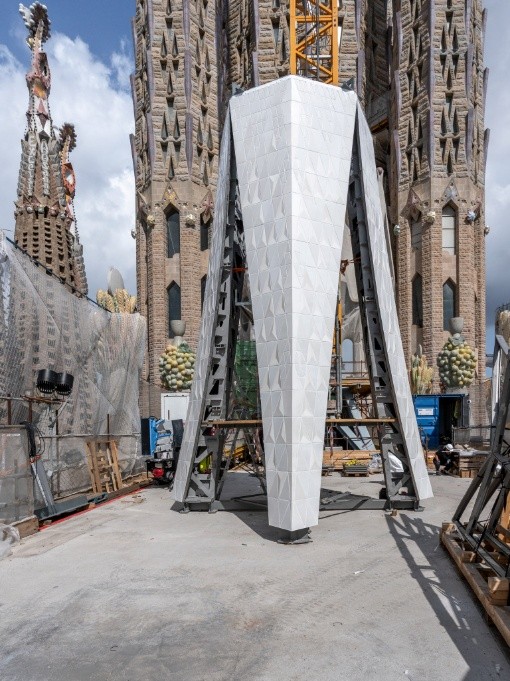
The first part of the cross to arrive was the lower arm, which came in four parts that were assembled in the work area with the glass and other interior details.
3. Assembling the first and second horizontal arms and storing them in the transept until they could be raised into place
4. Assembling the core
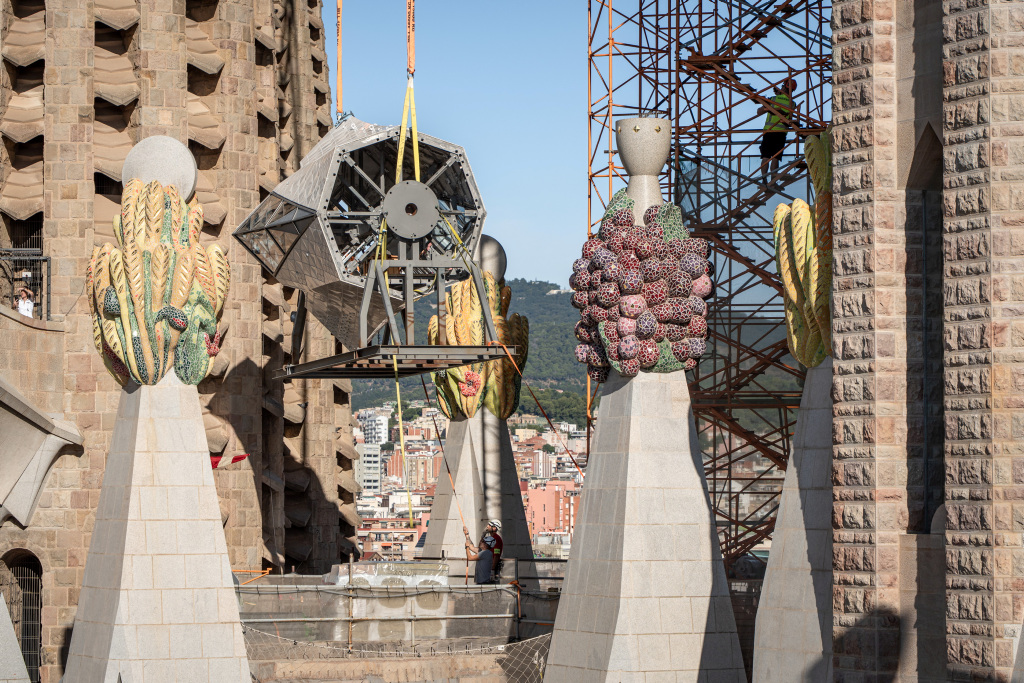
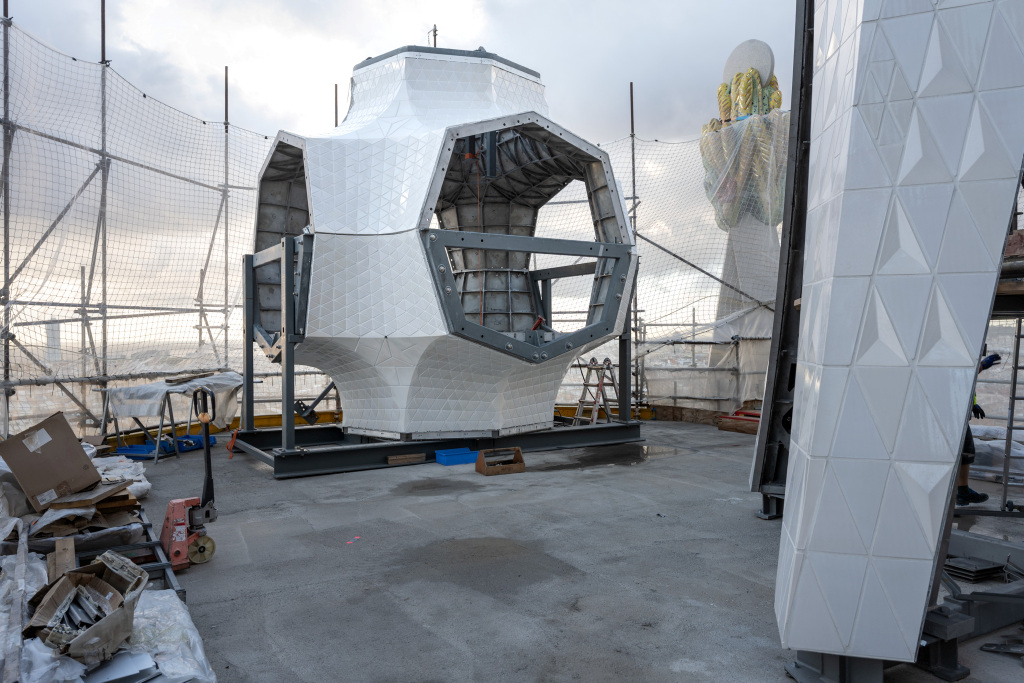
This piece, which joins all the arms of the cross, came in two parts that had to be assembled in the work area. This was the only piece that had to be transported by both ferry and lorry from Germany.
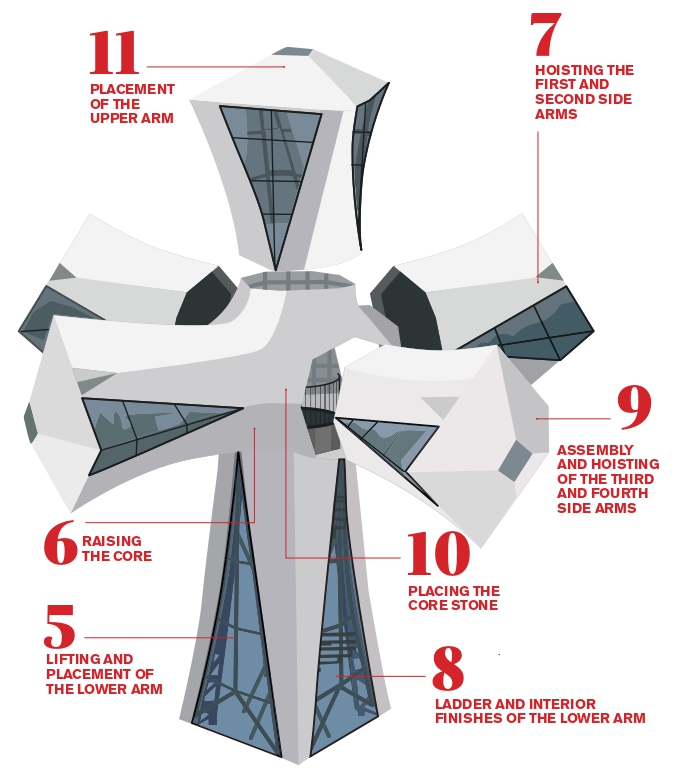
5. Raising and placing the lower arm
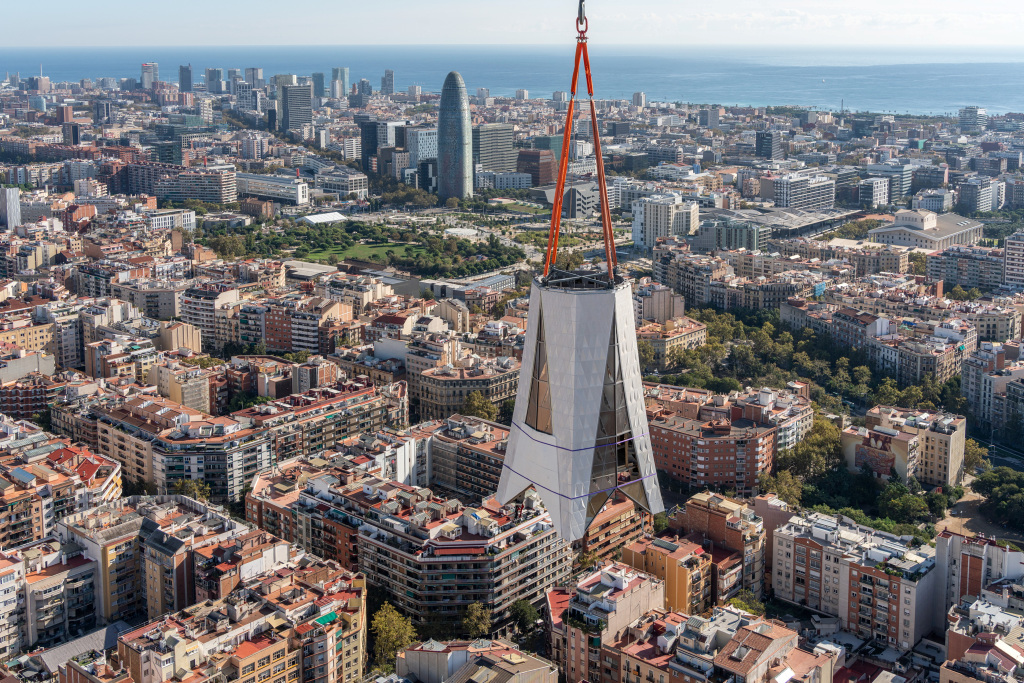
With a height of 7.25 meters and weight of 24 tonnes, the lower arm was the first element of the cross to be put in place. The piece was fitted onto the diamonds on the outside of the ring beam.
6. Raising and placing the core
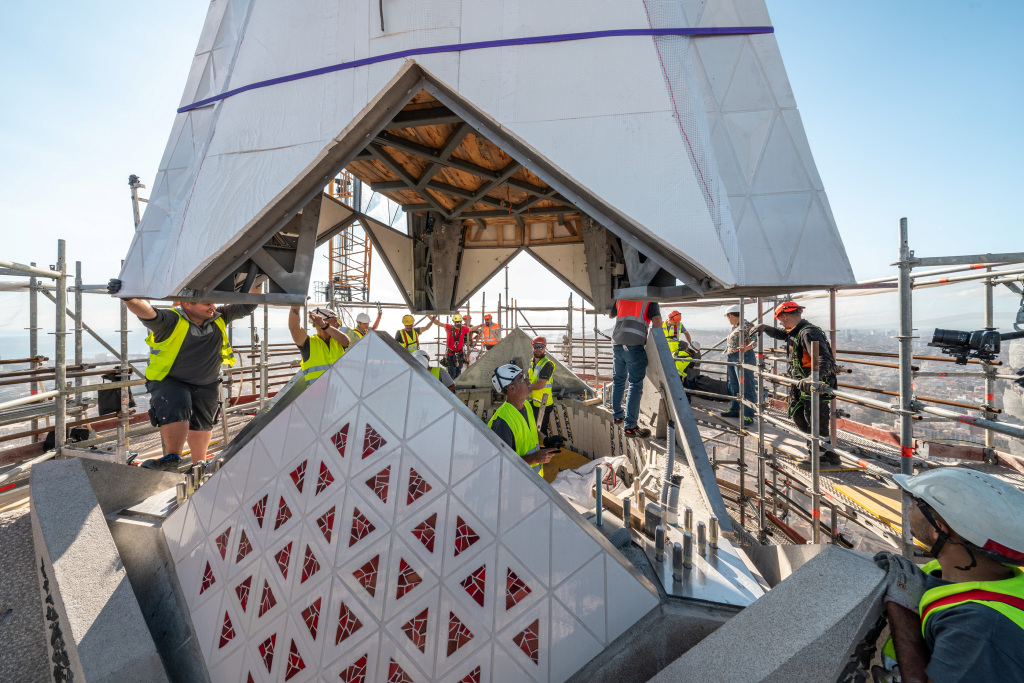
Directly afterwards, the core was put in place on top of the lower arm. This element has six octagonal sides that connect the arms of the cross. Each side of the piece is 4.7 metres and it weighs 16.5 tonnes in total. Once the inside of the tower is ready, the stairs will lead into this space and it will open onto each of the four arms.
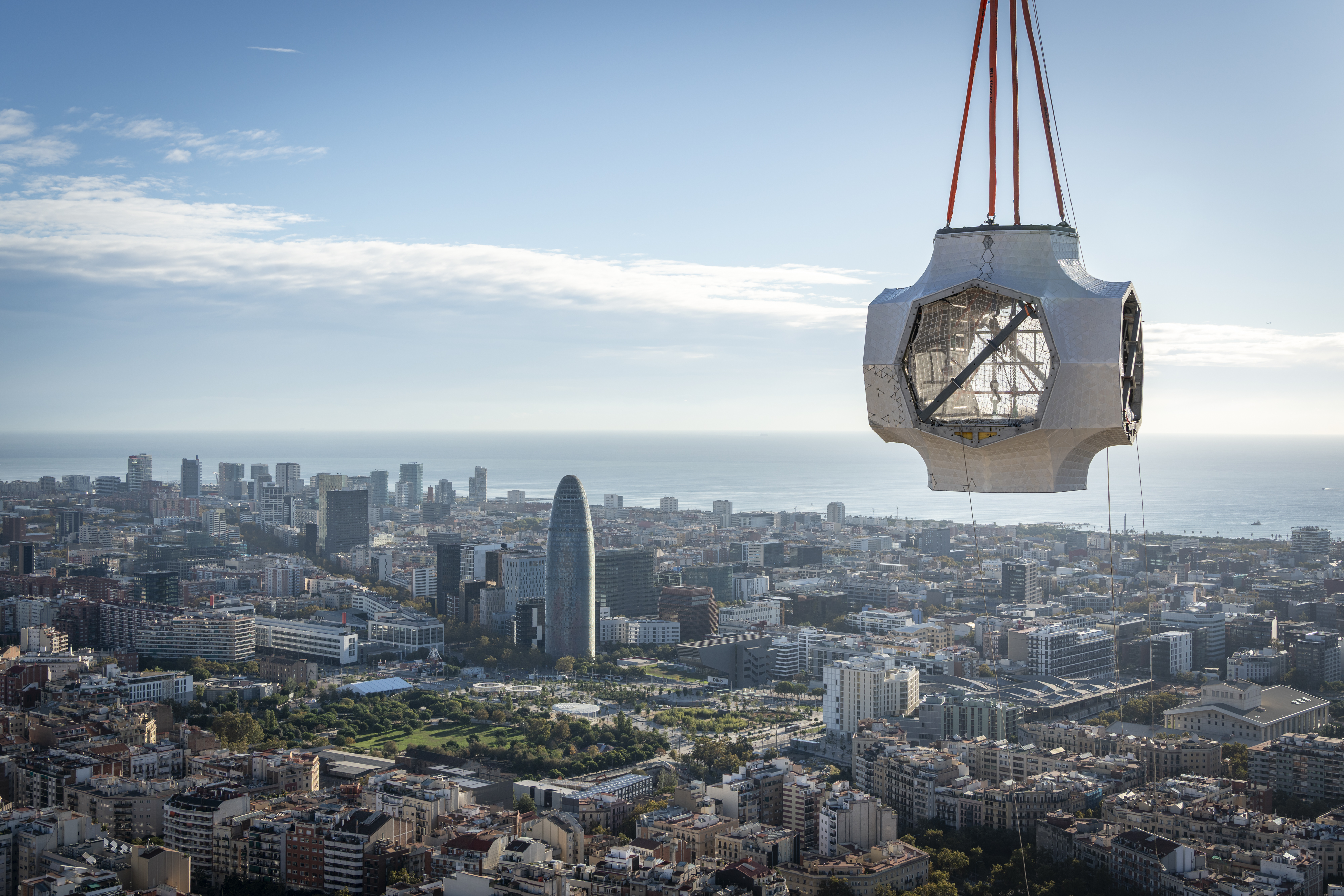
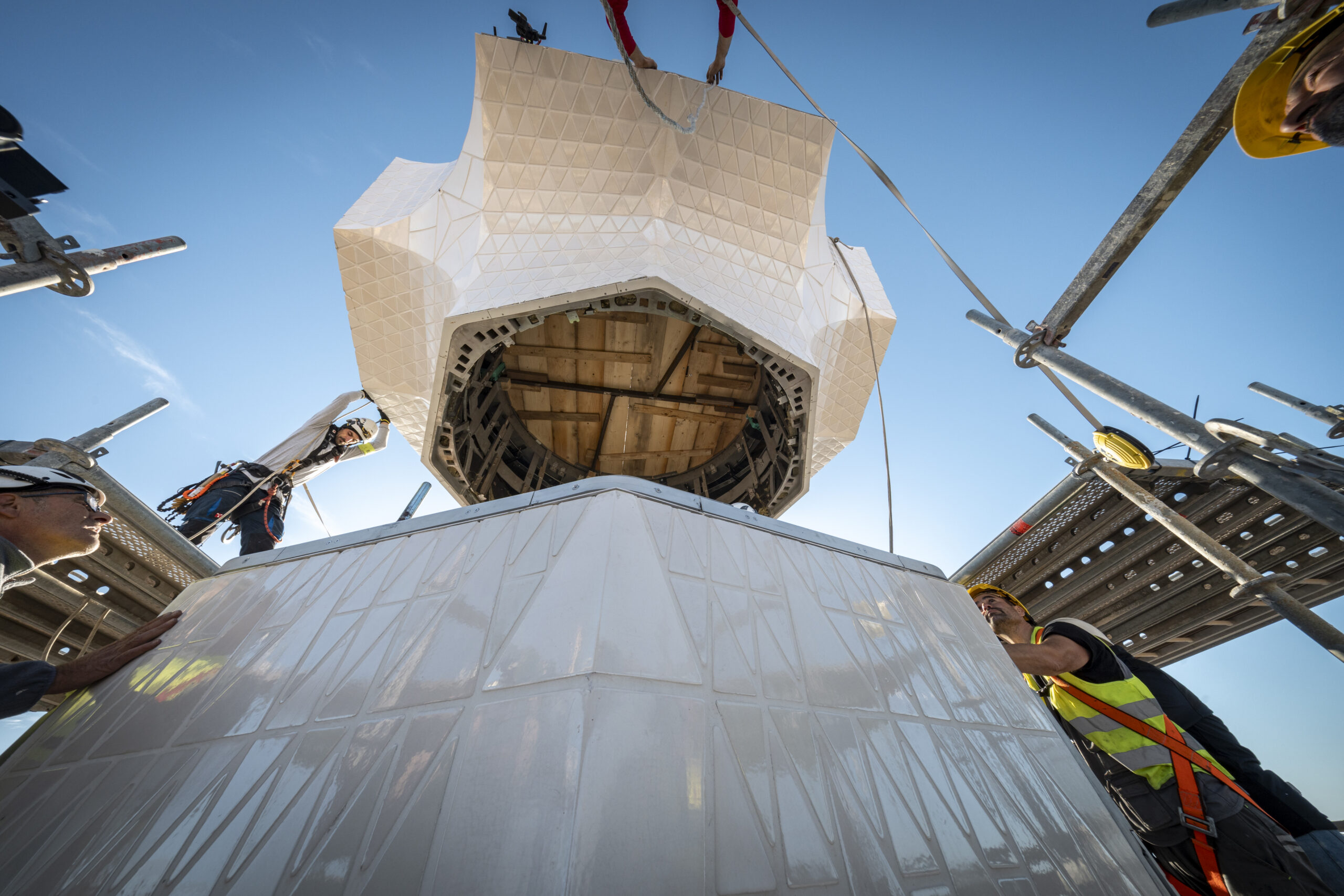
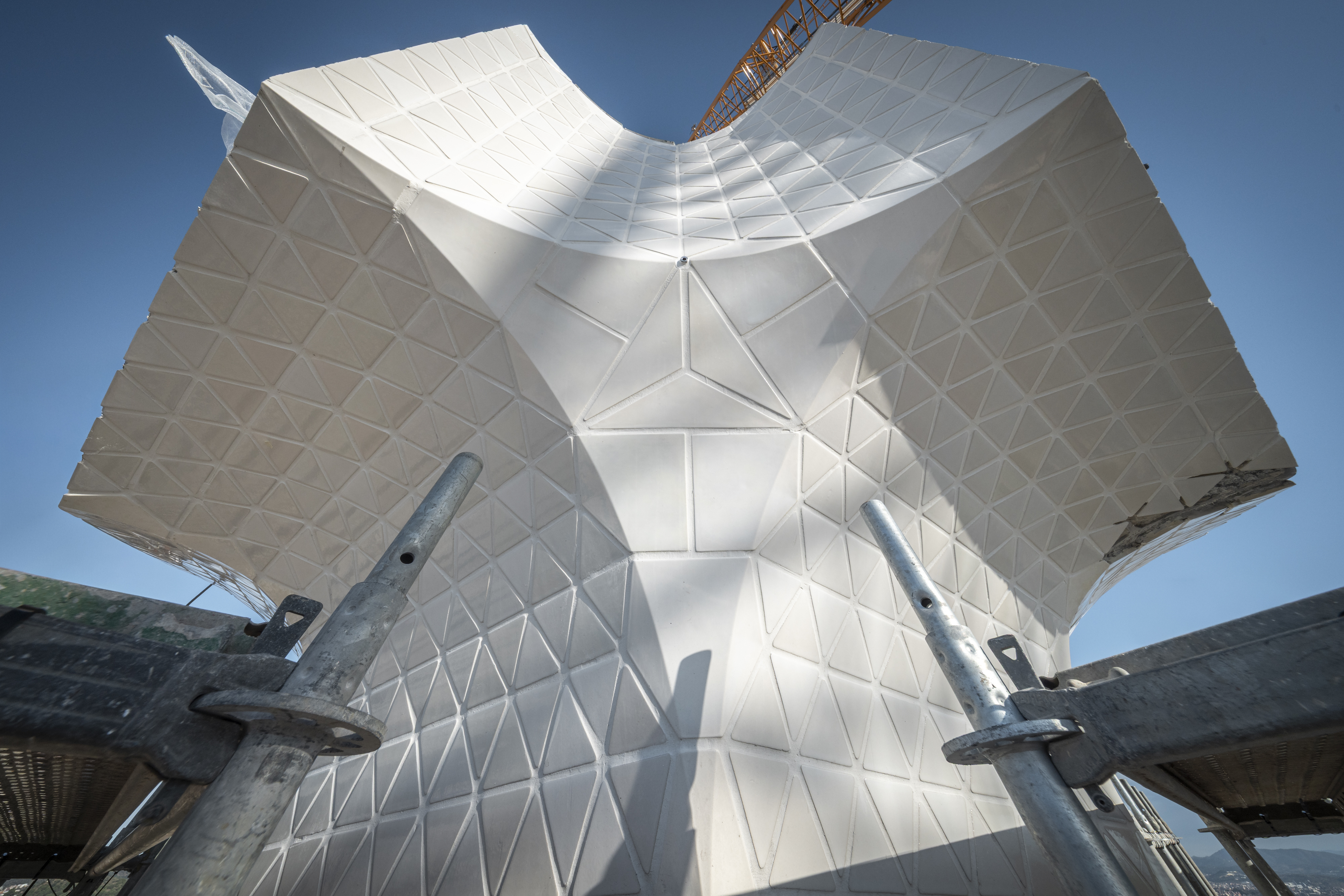
7. Raising and placing the first and second horizontal arms
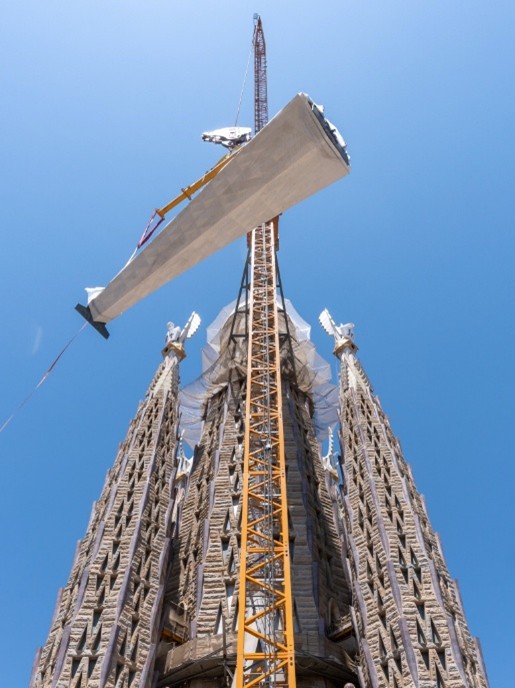
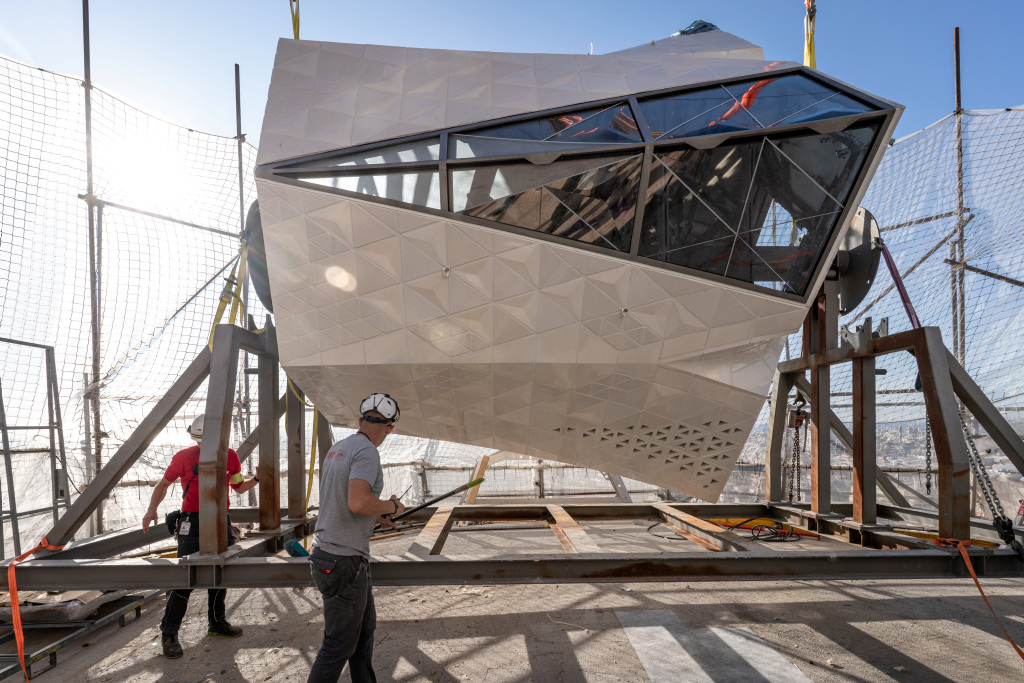
Next, the horizontal arms on opposite sides were put in place to ensure stability. First was the one on the Nativity façade side and then the one on the Passion façade. The inner end of the arms, connecting with the core, is octagonal and the outer end is square, following the double twist geometry that characterises the whole piece. Each piece weighs roughly 11.3 tonnes and measures 4.4 metres by 4.5 metres by 4.5 metres.
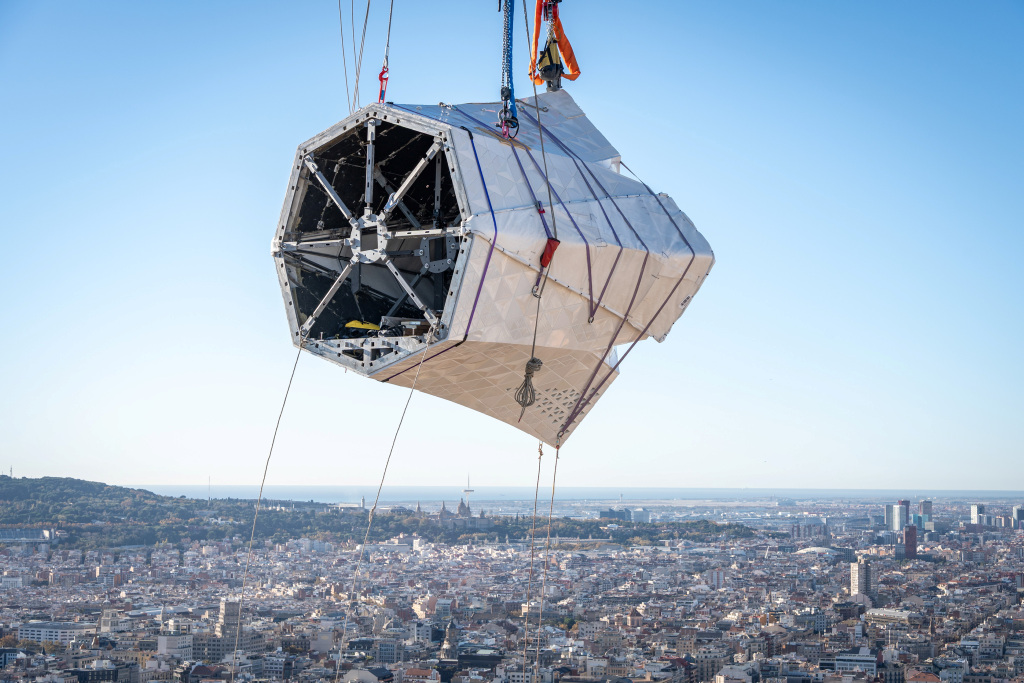
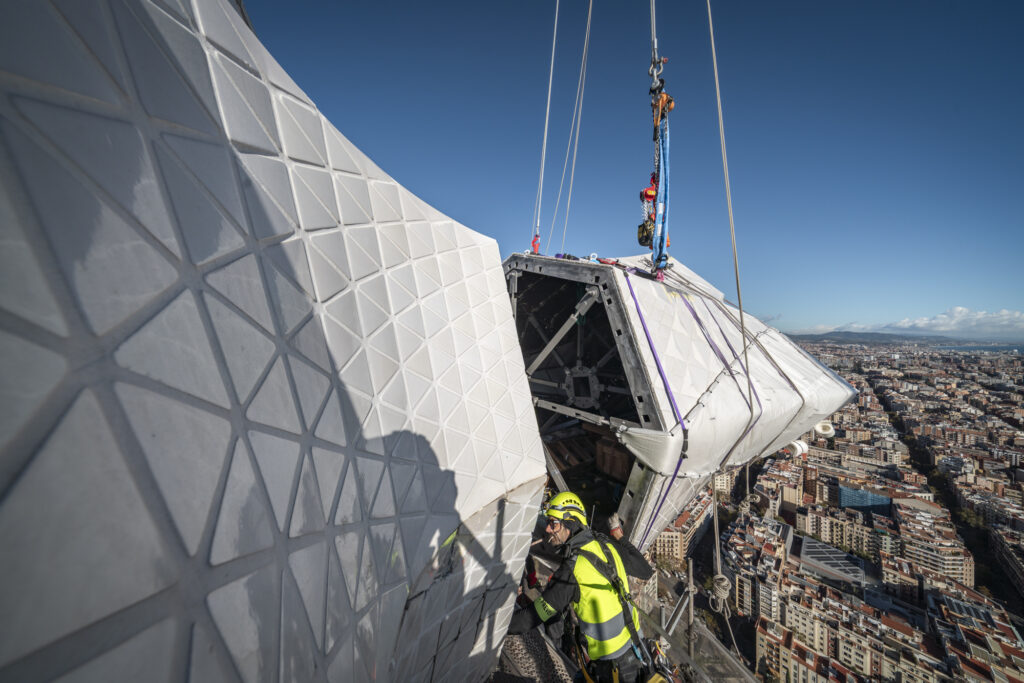
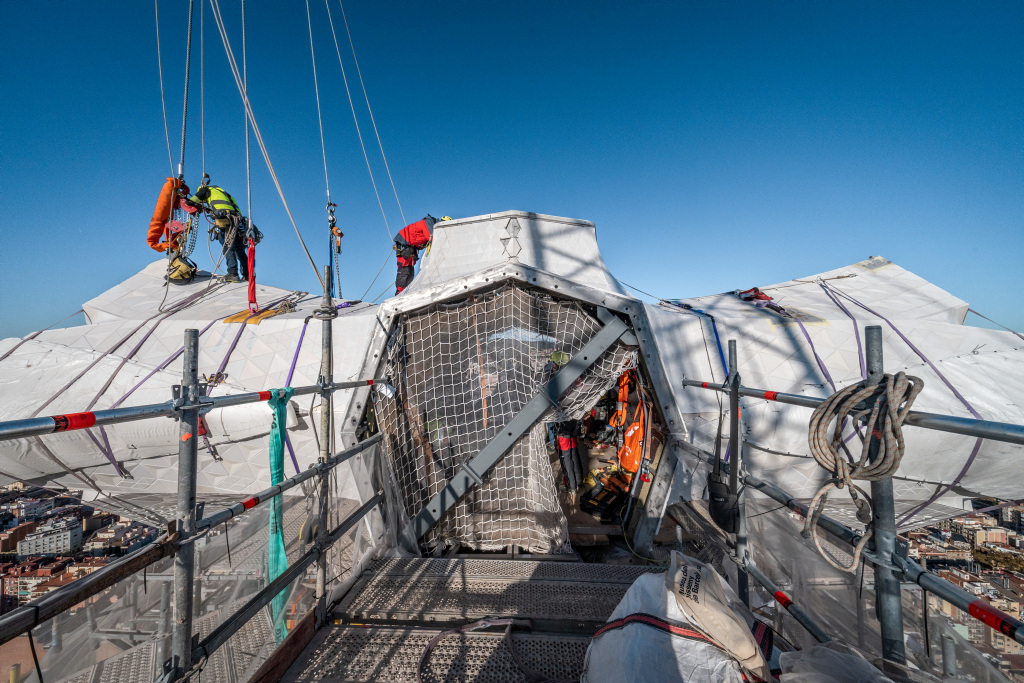
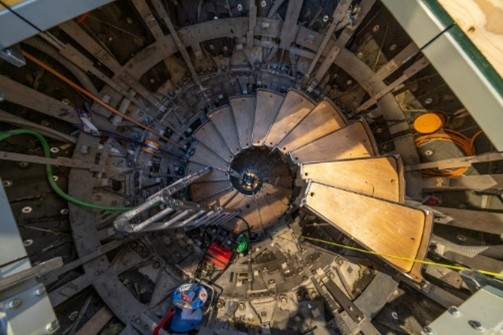
8. Installing the stairs and cladding on the lower arm
While work was under way outside, the stairs into the core of the cross from the lower arm and its cladding were put in place.
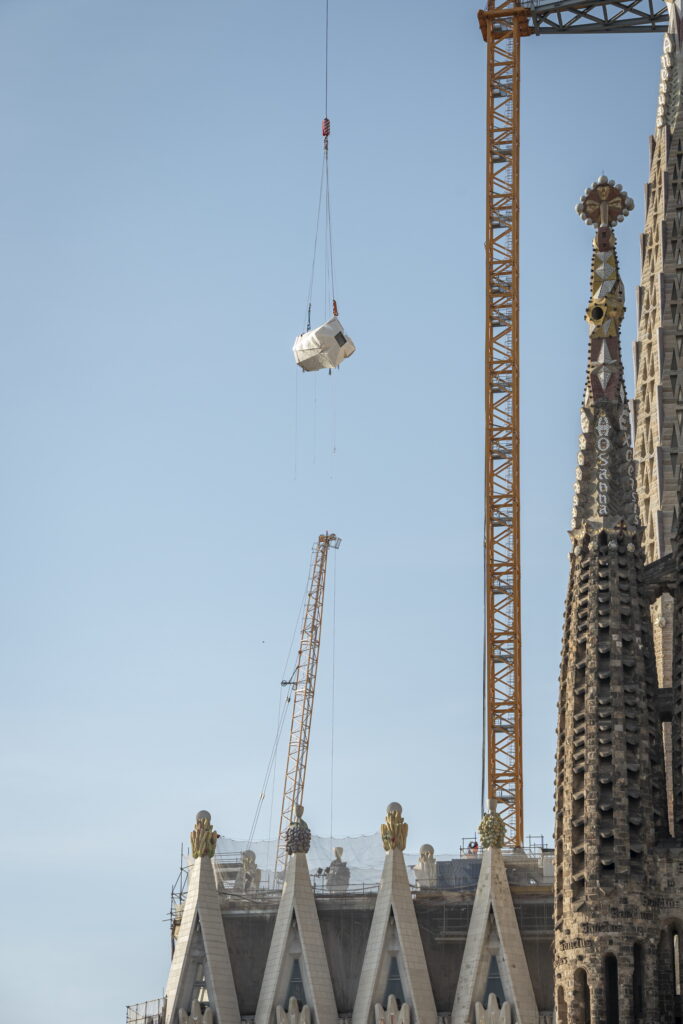
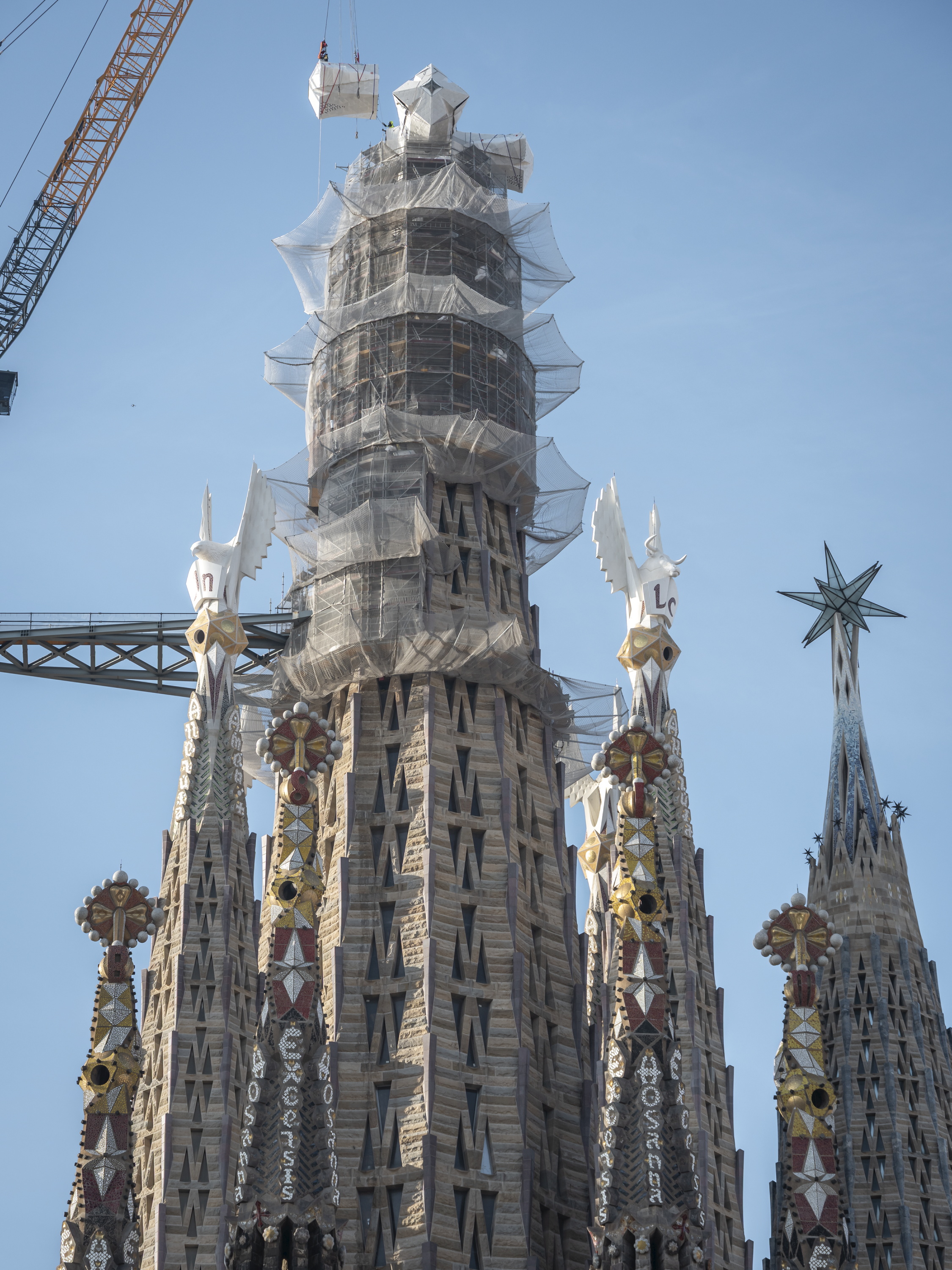
9. Assembling, raising and placing the third and fourth horizontal arms
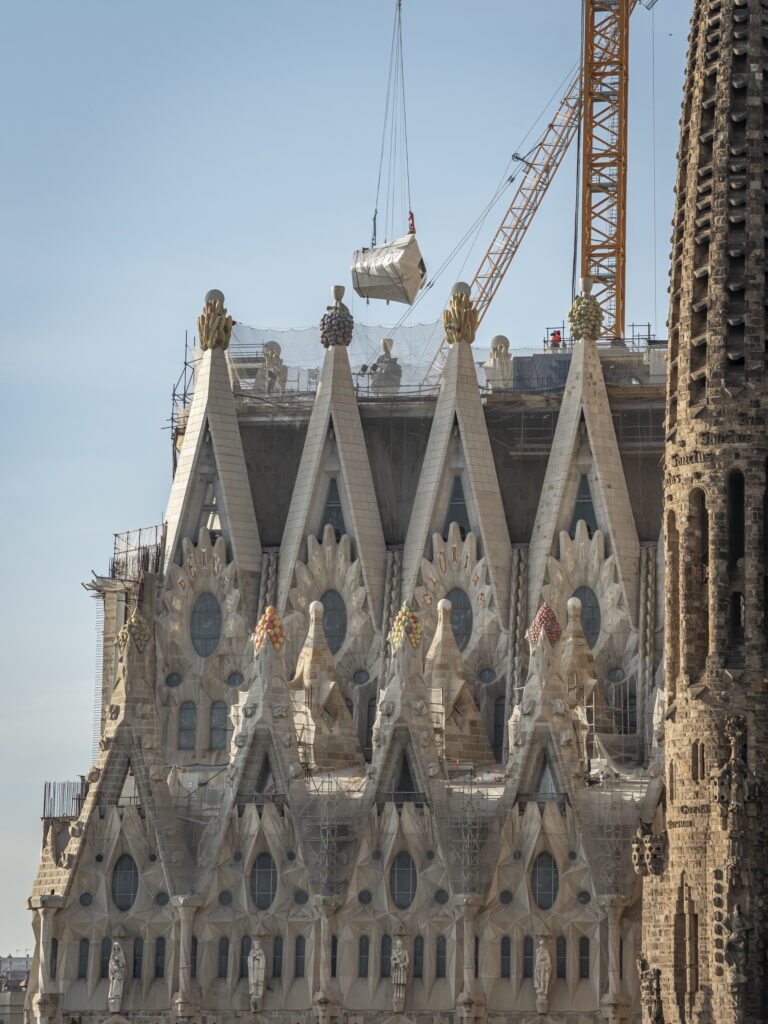
10. Putting in the stone on the core and arms
Meanwhile, the interior was clad in white onyx and alabaster stone, contrasting with the black slate flooring.
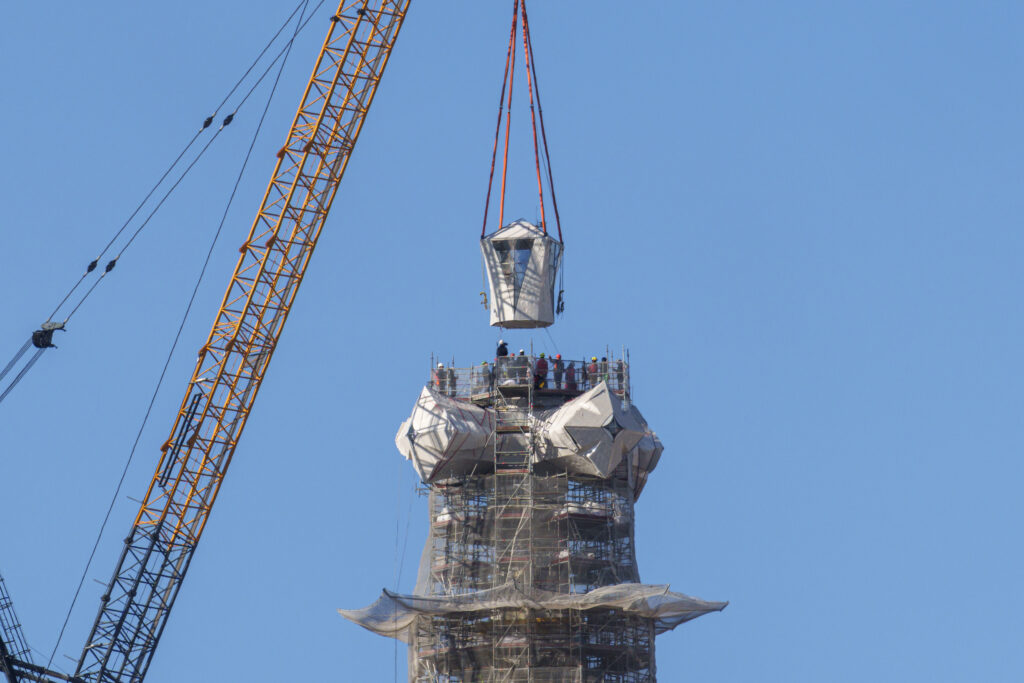
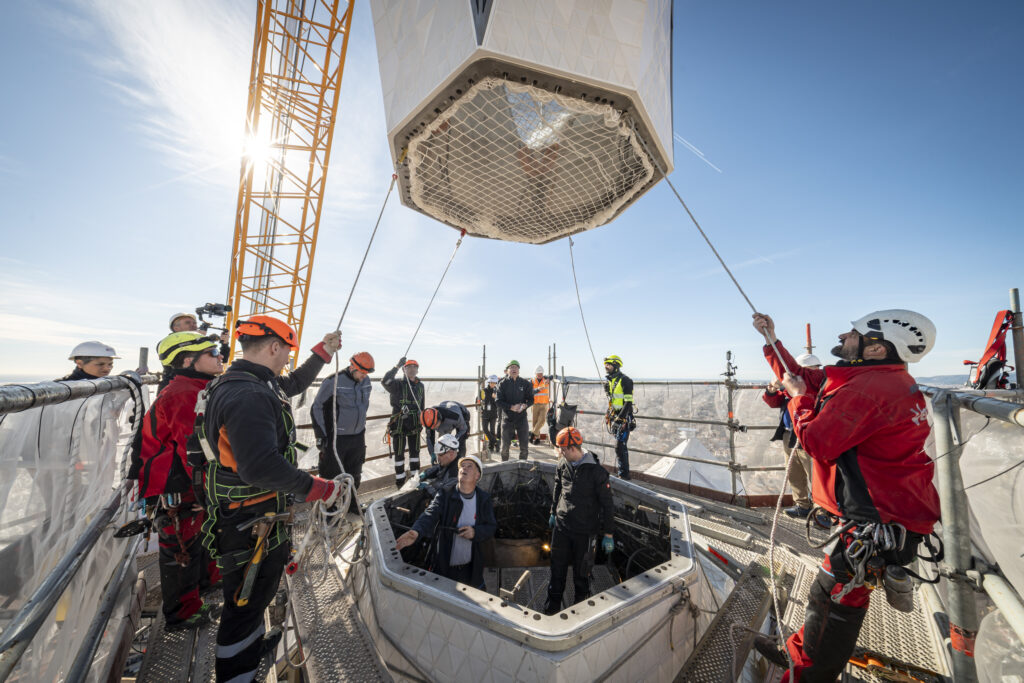
11. Raising and placing the upper arm
The final piece of the cross on the tower of Jesus Christ to be put in place was the upper arm, which is 4.5 x 4.5 x 4.9 metres tall. This brings the Temple to its highest point, 172.5 metres, and culminates construction of the exterior of the tower of Jesus Christ, although works will continue inside in 2027 and 2028.
In terms of the cross, the cladding on the arms will be completed in the coming weeks and the Agnus Dei sculpture will be put in place, as Antoni Gaudí wanted. The Lamb of God, by Italian artist Andrea Mastrovito, will hang from the upper arm, surrounded by slanted golden rays forming a hyperboloid. From the outside, it will be visible through the windows on the upper arm.
Work is also under way on the scenes from Jesus Christ’s life that will go inside the four tips of the arms, with the following names for Christ: Son of God, Saviour of the World, Lord and Messiah-King; and representations of the Transfiguration, Crucifixion, Resurrection and Final Judgement, respectively. These pieces are also the work of Mastrovito.
The following infographic shows a summary of the phases of assembling and installing the cross:
2 comments
Mercedes Cárdenas
Una belleza siempre admirada por mi, así como al Maestro Arquitecto Antonio Gaudí
David López
No hay igual en todo el mundo equiparable a esta maravilla!